- Published On: November 2nd, 2026Categories: Democrats, Election 2026, PAC, Politics, Republicans, Uncategorized

NH Senate candidate Chris Pappas shows off a pair of NCPSSM boxing gloves
As our Social Security on the Ballot campaign draws to a close, polling suggests that midterm candidates who support strengthening the program (and oppose benefit cuts) will largely prevail on Tuesday.
“Even if Social Security isn’t voters’ top issue, per se, it plays into the number one concern in this campaign: Affordability,” says Max Richtman, NCPSSM President and PAC board member. “Social Security is a lifeline for seniors on fixed incomes who are being squeezed by ever-rising prices in Trump’s economy. Ditto for younger voters struggling to afford housing, health insurance, and student debt payments — who will need every dollar of their earned benefits when they retire.”
Battleground state voters who will decide control of the U.S. Senate say that Social Security will be a deciding factor in their choice, according to a report by CNBC. Voters surveyed in Georgia, Michigan, North Carolina, Ohio and Texas say they are “far more likely” to vote for candidates who have a plan to protect Social Security.
“Social Security is much more top of mind for voters than in past election cycles,” says NCPSSM PAC director Luke Warren, mostly because the program’s trust fund reserves will become depleted in 2032 unless Congress takes action. “It’ll fall on the shoulders of the next Congress to deal with this,” says Warren, “That’s why WHO we send to Washington this cycle will determine Social Security’s future.”
Meanwhile, says Richtman, voters are worried about the anticipated 22% automatic benefit cut in 2032 if Congress fails to act. “They’re nervous, and they have a right to be.”
NCPSSM President Max Richtman endorses Democrat Josh Turek for Senate in Iowa
NCPSSM’s PAC has endorsed more than 60 candidates for House and Senate this cycle. At in-person events, representatives of the PAC have handed each candidate a pair of red boxing gloves, cementing their status as fighters for seniors. “What unites these candidates?” asked Richtman in an October 30 Substack post, “A commitment to strengthening Social Security for the future – without cutting benefits or gambling workers’ contributions on Wall Street.”
Here are some of the candidates our PAC has endorsed in key races around the country:
Senate:
Sherrod Brown (OH) vs John Husted
Roy Cooper (NC) vs. Michael Whatley
Abdul El-Sayed (MI) vs Mike Rogers
Dan Osborne (NE) vs Pete Ricketts
Jon Ossoff (GA) vs Mike Collins
Chris Pappas (NH) vs John Sununu
Mary Peltola (AK) vs Dan Sullilvan
James Talerico (TX) vs Ken Paxton
Josh Turek (IA) vs Ashley Hinson
House:
Rebecca Bennett (NJ-07) vs Tom Kean, Jr.
Christina Bohannon (IA-01) vs Mariannette Miller-Meeks
Matt Dunlap (ME-02) vs Paul LePage
Sam Forstag (MT-01) vs Aaron Flint
Will Lawrence (MI-07) vs Tom Barrett
Tom Perriello (VA-05) vs John McGuire
Denise Powell (NE-02) vs Brinker Harding
Manny Rutinel (CO-08) vs Gabe Evans
Stefany Shaheen (NH-01) vs Anthony DiLorenzo
Mike Thompson (CA-04) vs Eric Jones
For a complete, state-by-state list of the candidates we’ve endorsed, visit www.ncpssm.org/pac.
As we mentioned in an October blog post, many of these candidates’ Republican opponents have histories of supporting positions to privatize Social Security or raise the retirement age, including Ken Paxton (TX), Ashley Hinson (IA), John Sununu (NH), and Mike Rogers (MI). “Now, some of those candidates conveniently disavow those positions, but the record is clear,” says NCPSSM director of government relations and policy, Dan Adcock.
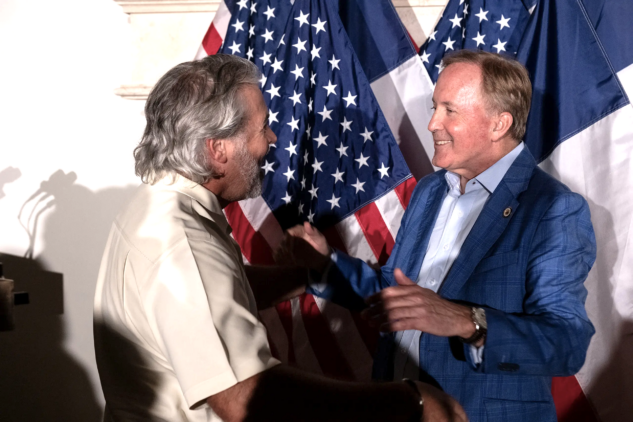
These candidates don’t always state their true intentions in public. Take GOP Senate candidate Ken Paxton, who is running against Democrat James Talerico for an open Senate seat in Texas. At a private fundraiser hosted by Washington lobbyists in September, Paxton said “we have to suck it up” and cut mandatory spending, which includes Social Security and Medicare. (Incumbent candidates’ records on Social Security can be vetted using our Congressional Scorecard.)
Texas GOP Senate candidate Ken Paxton told lobbyists we have to “suck it up” and cut Social Security
Overwhelming majorities of the public across party lines oppose benefit cuts and have consistently told pollsters that they want Social Security’s finances shored up by making the wealthy pay their fair share. Adjusting or scrapping the payroll wage cap, which currently limits how much higher earners pay into Social Security, would go a long way toward restoring the system to full solvency; so would including some of high earners’ investment income in Social Security revenues.
All of the candidates we have endorsed support one or both of those solutions — while many of their opponents either want to hide behind a ‘fiscal commission’ that could suggest cuts to Social Security — or slash and privatize the program outright. Up to now, there has been a disconnect between many politicians’ rhetoric on Social Security and what Americans say they want. This election represents a historic opportunity to align voters and their representatives in Washington on what, for some, is an existential issue — the future of Social Security.
- Published On: October 23rd, 2026Categories: Democrats, DOGE, Social Security, Social Security Administration (SSA), Trump, Trump Administration
It’s funny, because when Donald Trump was re-elected, we didn’t hear a hew and cry from the voters to prioritize “waste and fraud” at the Social Security Administration (SSA). In fact, we remember Trump promising voters multiple times “not to touch Social Security.” The opposite has happened. He and Musk and DOGE ‘touched it’ in ways that affect everyone who relies on the SSA.
The latest cause for alarm is news from the SSA that it has “fixed” millions of people’s Social Security records and is working on even more. It’s an odd priority for an agency that gutted its own staff when Trump came into office and undermined customer service, as part of a phony hunt for ‘waste and fraud.’ In other words, SSA has scrambled its remaining employees to try to plug holes created by massive firings and buyouts, but somehow finds the resources to scrub Social Security records.
SSA, under Commissioner Frank Bisignano, says that it is updating people’s death and citizenship statuses. President Trump made bogus claims in 2025 that 360 year-olds were somehow collecting Social Security after DOGE bros raided and misconstrued agency data. As for the citizenship part, we already know that Trump is obsessed with harassing immigrants, legal and otherwise.
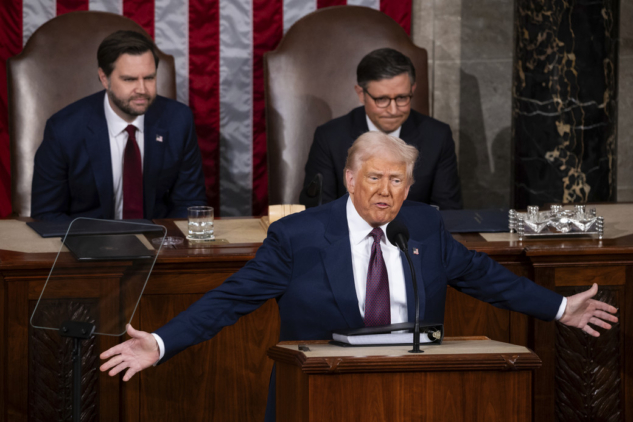
In his 2025 address to Congress, Trump claimed 360 year-olds were receiving Social Security
In order to “fix” Social Security’s citizenship records, the agency is using The Department of Homeland Security’s controversial SAVE database. As part of its campaign against immigrants and concomitant voter suppression efforts, the Trump administration has tried to compel states to compare their voter rolls with SAVE data.
Everyone from voting rights groups to civil rights organizations have warned that the SAVE database is incomplete and prone to errors. “The SAVE database is notorious for having inaccurate data,” says our president and CEO, Max Richtman. “Now, some of the SAVE inaccuracies will be transferred into SSA’s files, doubling down on the use of inaccurate data and making it even more difficult to find an uncorrupted file to check data against.”
The SAVE system has mistakenly flagged eligible U.S. citizens—including naturalized citizens whose records have not been fully updated across every federal agency. Those same people could now be denied their rightful Social Security benefits.
“Everyone wants accuracy, but this administration has a track record of carelessness with people’s personal data and seems less concerned about accuracy,” NCPSSM senior Social Security analyst, Maria Freese.
Since Trump took office again, there have been numerous reports of the administration misusing Social Security data, including: a stated intent to transfer living people to the agency’s Death Master file; uploading Americans’ private data onto an unsecure cloud server; and DOGE staffers offering Social Security data to a right-wing political operative, among other abuses. Democrats in Congress have demanded accountability from the administration, but none has been forthcoming.
Long lines at Social Security field offices after Trump/DOGE cutbacks in 2025
Meanwhile, seniors who have seen their local field offices practically shut down or haven’t been able to reach a human being on the agency’s 1-800 phone lines (because of drastic cutbacks) have every right to ask how SSA can afford to focus on ‘fixing’ records right now.
“Where did they find the staff hours to do this?” Freese wonders. “They either pulled people off of other duties, leaving customers hung out to dry, or they’re using AI, which we know is far from foolproof.” If we sound skeptical, it’s because Trump, Bisignano, and DOGE have not earned the trust of Social Security advocates or the millions of people who expect SSA to focus on administering their earned benefits instead of the President’s craven political agenda.
- Published On: October 16th, 2026Categories: Medicare, Medicare Advantage
This year’s Medicare open enrollment season – which began October 15th and runs through December 7th – should come with the warning: “Buyer Beware.” The Trump administration and its allies in Congress have made health coverage less affordable and accessible by prioritizing insurance company profits — especially when it comes to the privately-run Medicare Advantage (MA) program.
More than half of Medicare patients are enrolled in Advantage plans, unaware of the major Disadvantages they may discover when it’s already too late. These include limited networks of providers (their own doctors may not participate in these plans), sudden withdrawal from certain markets, and frequent denials of coverage for procedures and care their doctors order. By the time MA patients realize the downside of these plans, it may be difficult for them to switch to traditional Medicare.
Traditional Medicare isn’t perfect. It doesn’t yet cover basic dental, vision, and hearing care – something President Biden tried to add in his Build Back Better Act that was scuttled on Capitol Hill. We still advocate for those coverages as they are important to senior’s overall health. But traditional Medicare offers a much wider network of doctors, hospitals, and other providers – regardless of where patients live. In traditional Medicare, coverage decisions are made without the profit motive that is built into Medicare Advantage — and, unlike MA, the program is administered with minimal overhead. Data from the Congressional Budget Office indicates that “private insurance is increasingly less efficient than Medicare.”
One reason MA has captured a growing share of the market is its misleading advertising, with celebrity pitchmen promising lower premiums and extra goodies – while most enrollees are unaware they are joining a glorified HMO with limited choices. The Biden administration began cracking down on MA’s deceptive ad practices, but next year the Trump administration will be rolling back several marketing safeguards.
“Medicare Advantage plans are being given more room to market aggressively at the very moment that patients face higher premiums, more paperwork, and tighter eligibility rules,” said Anne Montgomery, NCPSSM’s senior health policy expert. “That imbalance could leave people with less coverage, higher costs, and fewer places to turn for care.”
Dynasty’s William Devane in a 2023 Medicare Advantage ad
Medicare Advantage was supposed to provide coverage more efficiently than traditional (or “Original”) Medicare — and save the government money. The opposite has happened. MA is costing taxpayers more per patient, partly because insurers have been overbilling the government to the tune of billions of dollars a year.
The Trump administration has talked about clamping down on MA excesses, but at the same time is rewarding Big Insurance giants like United Health Care, Aetna, and Cigna with more cash. The administration gifted MA insurers a 5.1% payment increase in 2026, far above the 2.2% increase initially proposed under the Biden administration.
In 2027, the administration landed on a 2.48% increase for 2027. In total, these decisions will unlock an additional $38 billion in payments for MA providers who are essentially bilking the federal government and Medicare patients at the same time. The cruel irony is that even this lobbyist-stamped infusion of cash is still not enough to prevent insurers from pulling out of some markets entirely(claiming they can’t make enough money),completely stranding Medicare Advantage patients. Those patients will be forced to find new plans during this year’s enrollment period.
In sum: Trump and the GOP have done everything they can do to make health coverage less accessible and affordable for people of all ages, including seniors. Beginning in 2027, the Medicaid cuts and work requirements enacted in Trump’s “Big, Ugly Bill” will take full effect, threatening coverage for many adults (including ‘near seniors’ aged 55-65) who receive coverage through the Affordable Care Act (ACA). Trump/GOP healthcare policies are projected to strip millions of Americans of health coverage in the coming years.
There are also signs that the Trump regime is trying to make traditional Medicare more like Medicare Advantage. Last year it announced a pilot program to use AI bots for determining prior authorizations in traditional Medicare. In July, Republicans blocked a Democratic-led effort to prohibit this practice, which MA plans have been using for a few years now.
“Rather than having trained medical reviewers assess whether a doctor-prescribed treatment or service is necessary, an artificial intelligence algorithm would apparently decide whether Medicare will pay for it. That is scary for beneficiaries. If Medicare denies payment, patients could be left to cover the cost out of pocket.” – Anne Montgomery on the “You Earned This!” podcast
Health care advocates advise that everyone should at least take stock of and review their Medicare plan — the open enrollment period is not only for people who know they want to switch plans. Even beneficiaries who like their current coverage should review their Annual Notice of Change and other plan materials, because plans can change from year to year, especially in this political environment.
When comparing options, we encourage beneficiaries to check:
*Monthly premiums, deductibles, copays, and out-of-pocket maximums;
*Whether their doctors, hospitals, and other providers are in network;
*Whether their prescriptions are covered, and whether they require prior authorization or other restrictions;
*Whether their preferred pharmacy is in the plan’s preferred network;
*The actual limits and costs of supplemental benefits such as dental, vision, and hearing coverage.
A plan that looks inexpensive on paper can become costly if it does not cover certain medications, excludes your preferred providers, or requires burdensome approvals for necessary care. For more information, beneficiaries can call 1-800-MEDICARE, use the Medicare Plan Finder at Medicare.gov, or contact their State Health Insurance Assistance Program (SHIP) for free advice. Setting some time aside to review the options now can prevent unwelcome surprises in 2027.
*********************************
Listen to our Podcast, HERE
Read some of our past blogs on Medicare Advantage HERE
- Published On: October 9th, 2026Categories: Election 2026, Republicans, Senate, Social Security, Social Security Administration (SSA), Trump
Iowa GOP Senate candidate Ashley Hinson scolds Millennials for not saving enough for retirement
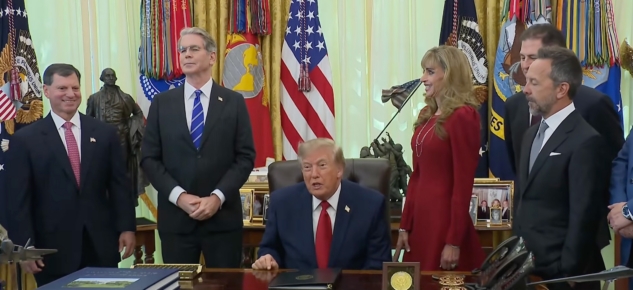
It’s been quite a week for Republicans telling us how they really feel about Social Security – from the President to GOP candidates in key races. On Wednesday, President Trump admitted that he wanted to privatize Social Security “so badly” after he won in 2016, but “Democrats and some Republicans” stopped him, because it was “risky.” You think?
“I wanted to ride with Social Security being fully invested in the stock market, in the first month of my first year. I wanted to do it so badly.” – Trump, 9/7/26
Read here why gambling workers’ earned benefits on Wall Street is such a terrible idea – albeit one that would line the pockets of Trump’s pals in the financial sector.
Trump made the privatization remarks at an Oval Office event touting his so-called “Trump Accounts” for children, which the President has described as “a version” of what Social Security privatization could look like. It wasn’t reassuring that Social Security Commissioner Frank Bisignano – who has overseen the decimation of the agency (SSA) that administers the program – stood beaming by Trump’s side.
Meanwhile, GOP Senate candidates in key races seemed anxious to share their own reckless ideas about Social Security. Houston Public Media reports that Texas Republican senate candidate Ken Paxton called for “cuts to mandatory spending,” which includes Social Security. (Paxton’s comments were captured on audio during a private fundraiser with Washington lobbyists.)
Paxton’s Democratic opponent, James Talerico, opposes benefit cuts and supports raising more revenue for Social Security by requiring wealthy earners to pay their fair share. “Every Texan deserves to know they’ll be able to retire and reap the benefits of Social Security,” Talerico told AARP. “I will fight to ensure all Americans can afford to retire and stand up against any and all attacks on Social Security.”
In Iowa, Republican Senate candidate Ashley Hinson, now a member of the U.S. House, said in 2020 that she was “open” to raising the Social Security retirement age for today’s younger adults – a huge lifetime benefit cut. In an apparent attempt to alienate younger voters even more, Hinson chastised Millennials for failing to save for retirement, calling them “the worst group of savers” during a debate segment this week about Social Security.
The subtext is that we could cut Social Security if only these youngsters would save more money! Apparently, no one has told Hinson that many Millennials are grappling with exorbitant living costs, crushing student debt, and unaffordable home prices that just might affect their ability to sock money away for retirement. Absent employer-provided pensions (increasingly rare), Millennials will depend on Social Security even more than today’s seniors do. But Hinson is open to making them wait longer to retire.
During the Iowa debate, Hinson’s Democratic opponent, Josh Turek, advocated for strengthening Social Security by adjusting the payroll wage cap. “Let’s make sure that billionaires and large corporations are paying their fair share. That will move the needle in a very serious way to keep Social Security solvent.”
Iowa Democratic Senate candidate Josh Turek says: Make the wealthy pay their fair share for Social Security
Hinson and Paxton are not alone among Republican candidates. Michigan Senate contender Mike Rogers “pushed for overhauling Social Security, including supporting measures to privatize the program” as a member of Congress. Yahoo! news reports that “Rogers’ various campaign committees have accepted more than $1.4 million from businesses that would benefit from the privatization of Social Security.”
In New Hampshire, Republican Senate candidate John Sununu helped lead the charge on Capitol Hill during George W. Bush’s campaign to privatize Social Security in 2005, co-authoring a privatization bill with Rep. Paul Ryan. Thankfully, that effort stalled in the face of massive public pushback. But do we want a Social Security privatizer in the next U.S. Senate?
When it comes to Social Security, Democrats are squarely aligned with the public. Polling during the past two years indicates that large, bipartisan majorities of voters support Social Security and do not want to see it cut or privatized. These polls further suggest that people are willing to pay more for Social Security if it means the program will be preserved for the future.
Many Republicans say they “support” Social Security. But they push proposals – germinated in corporate and billionaire-funded think tanks – to cut and privatize it, which would only jeopardize workers’ retirement security. House Speaker Mike Johnson said, rather cryptically, that Republicans have a “plan” to “fix” the program next year, but hasn’t disclosed exactly what that plan is. This is why we say that Social Security is most definitely on the ballot in November.
With the Social Security trust fund reserves projected to become depleted in 2032 (triggering a huge automatic benefit cut) absent congressional action, members of the next House and Senate must determine the future course of Social Security. We know what the financial elites want: to end the program as we know it. Likewise, we know from polling where the majority of the public stands — but it’s up to voters who want Social Security strengthened to make their voices heard in November.
*************************************************************************************
Check our ratings of your elected representatives on our 2026 Legislative Scorecard.
Instead of meaningful action to lower Americans’ health care costs, Trump has announced yet another publicity stunt. He just promised some 20 million Medicare Part B enrollees a one-time, $90 rebate. Of course, this does effectively nothing to lower Americans’ health care costs, which Trump/GOP policies have made increasingly unaffordable.
The Republicans’ Big, Ugly bill slashed nearly $1 trillion from Medicaid – and the GOP-controlled Congress refused to extend Affordable Care Act tax credits. These actions have put immense upward pressure on Americans’ health care premiums.
NCPSSM’s president, Max Richtman, says the rebates will be ineffective in solving the real problem:
“Trump’s $90 payment will not even begin to offset Americans’ increased health costs, which have been exacerbated by Trump and his party’s policies.” – NCPSSM President and CEO Max Richtman.
Many seniors probably won’t even notice the $90 rebate. Standard Medicare Part B premiums are $2,435 per year in 2026 – and current estimates suggest premiums could increase by about $80 in 2027. $90 is hardly a drop in the bucket.
The Trump rebate joins other sketchy plans masquerading as real policy. TrumpRx comes immediately to mind – a website that simply repackages existing discounts on certain drugs, instead of directly addressing Big Pharma price gouging.
Senator Elizabeth Warren noted that prices for one in four drugs on TrumpRx are actually higher than consumers could get elsewhere. “TrumpRx is one more Trump scam right up there with Trump University, Trump Water, and Trump Steaks,” she said. The same can likely be said for Trump’s Medicare rebates.
Funding for the Trump rebates is suspect, too. The money for the rebates reportedly will be siphoned from a $2 billion fund that was set aside to improve Medicare’s hospital and medical insurance programs.
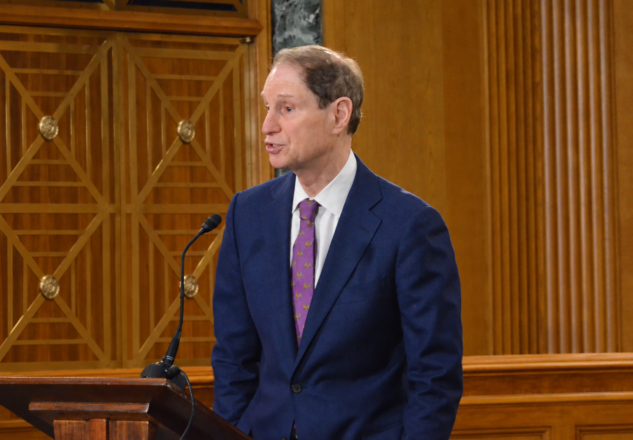
Ranking Senate Finance Committee member Ron Wyden (L) called Trump’s rebate plan “desperate”
As the Washington Post reports, it isn’t even clear that the administration can legally use these funds to issue Trump’s rebates.
“The White House and the Department of Health and Human Services, which oversees the Medicare Improvement Fund, did not respond to questions about the administration’s legal authority to issue the payments.” – Washington Post, 10/5/26
Democrats were quick to dismiss the scheme. Senator Ron Wyden, ranking member on the Senate committee overseeing the Medicare program said, “This is another desperate attempt by a failed president to escape Americans’ revulsion with his failed agenda, amounting to one tank of Trump-inflated gas.”