


New reporting shows Affordable Care Act (ACA) premiums are set to spike by an average of 14% in 2027, on top of last year’s double‑digit hike. It’s exactly what you’d expect from a Trump administration that has made life more expensive and health care less secure for the most vulnerable Americans.
For millions of Americans who buy coverage on the ACA marketplaces, the story of the past two years is simple: the bill got bigger, the help got smaller, and people are walking away from coverage. As our health policy expert Anne Montgomery, puts it:
“For modest working‑ and middle‑class people — especially those ages 50 to 64 — premiums are jumping far more than 14%. It’s pure sticker shock. If the policy suddenly costs you that much more, many people simply cannot swing it and decide not to buy or continue coverage.” – Anne Montgomery, NCPSSM
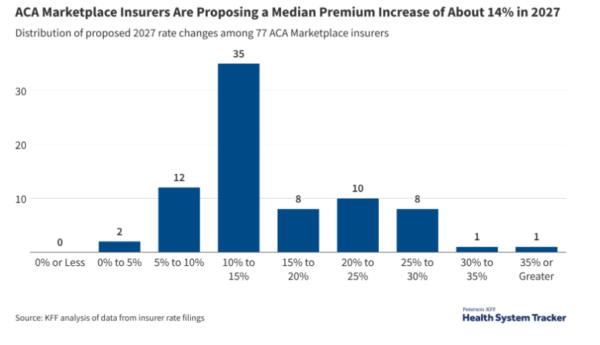
The latest premium spikes are not a fundamental flaw of the ACA; they are a direct consequence of reckless policies in today’s Washington. Congressional Republicans purposely let enhanced ACA tax credits expire – making coverage more expensive. Those temporary subsidies, originally expanded during the pandemic, were designed to make premiums affordable for low‑ and middle‑income households.
When the subsidies disappeared, the monthly amount people had to pay out of pocket jumped — for some people by 100, 200, or even 300%. No wonder ACA enrollment has tanked. Thanks to GOP hostility to the ACA, millions of Americans could no longer afford it.
While Trump’s party refused to extend ACA tax credits, his misguided tariffs and the deeply unpopular war in Iran has raised the cost of essential medical goods and prescription drugs. In response, insurers are passing these escalated costs along — in the form of higher premiums and cost‑sharing.
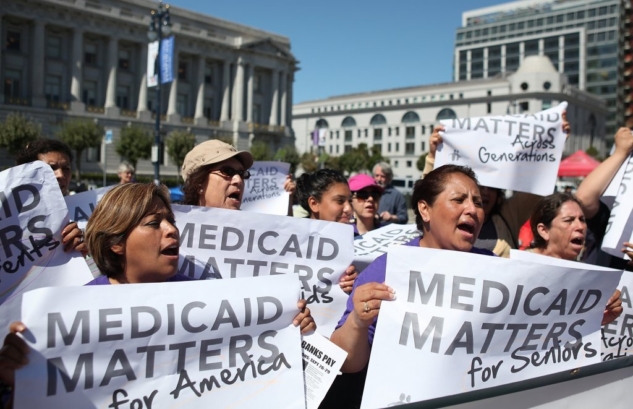
Trump’s Big, Ugly Bill – which slashed nearly $1 trillion from Medicaid — has only exacerbated the problem. The Kaiser Family Foundation reports that some 3.8 million people have lost Medicaid coverage since the bill passed in 2025. For someone who loses Medicaid, an ACA marketplace plan at today’s prices may not be a realistic option.
Getty Images
By definition, Medicaid beneficiaries are low‑income; if they are pushed off the program and told to “go to the exchange,” they will find premiums far beyond reach. On the flip side, people who drop their ACA coverage due to soaring premiums may try to fall back on Medicaid, only to run into reduced funding and bureaucratic obstacles designed to keep them out. Many will end up in the worst of all worlds: uninsured.
Instead of trying to mitigate these health coverage losses, the President and his allies in the GOP‑controlled Congress are escalating their crusade against Medicaid. HHS Secretary Robert F. Kennedy Jr. and CMS Administrator Mehmet Oz have announced they are cutting off more than $1 billion in Medicaid funding to California and Minnesota, citing “suspected fraud,” without providing concrete evidence. It’s the latest in a series of punitive actions aimed at Blue states, and it threatens the health and well-being of some of our most vulnerable citizens.
At the same time, Senate Republicans recently voted down a Democratic bill that would have outlawed the use of AI for prior authorization decisions in Medicare. This means that enrollees will continue to have robotic, AI entities make life-or-death coverage determinations.
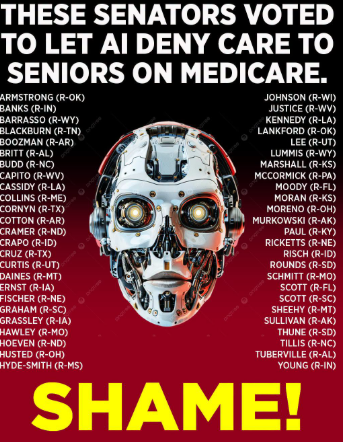
Source: Social Security Works
The good news is that the primary fix for the ACA affordability crisis is both clear and achievable. The next Congress could restore and expand the premium tax credits that have expired. This “absolutely would” translate into lower costs for consumers and bring many people back into the marketplace, according to our health policy expert, Anne Montgomery.
Restoring subsidies to the levels we saw a few years ago would make plans affordable again for working‑ and middle‑class families who have been forced to drop coverage. There is, “really [no] other fix” that can match that impact in the near term,” says Montgomery.
That’s the choice facing lawmakers. They can stay on Trump’s course, which prioritizes insurance company profits and tax cuts for the wealthy and large corporations — or they can change direction. November’s midterm elections will be a crucial fork in the road.
************
Listen to our podcast on the dangers of AI in Medicare prior auth HERE