



NH Senate candidate Chris Pappas shows off a pair of NCPSSM boxing gloves
As our Social Security on the Ballot campaign draws to a close, polling suggests that midterm candidates who support strengthening the program (and oppose benefit cuts) will largely prevail on Tuesday.
“Even if Social Security isn’t voters’ top issue, per se, it plays into the number one concern in this campaign: Affordability,” says Max Richtman, NCPSSM President and PAC board member. “Social Security is a lifeline for seniors on fixed incomes who are being squeezed by ever-rising prices in Trump’s economy. Ditto for younger voters struggling to afford housing, health insurance, and student debt payments — who will need every dollar of their earned benefits.”
Battleground state voters who will decide control of the U.S. Senate say that Social Security will be a deciding factor in their choice, according to a report by CNBC. Voters surveyed in Georgia, Michigan, North Carolina, Ohio and Texas say they are “far more likely” to vote for candidates who have a plan to protect Social Security.
“Social Security is much more top of mind for voters than in past election cycles,” says NCPSSM PAC director Luke Warren, mostly because the program’s trust fund reserves will become depleted in 2032 unless Congress takes action. “It’ll fall on the shoulders of the next Congress to deal with this,” says Warren, “That’s why WHO we send to Washington this cycle will determine Social Security’s future.”
Meanwhile, says Richtman, voters are worried about the anticipated 22% automatic benefit cut in 2032 if Congress fails to act. “They’re nervous, and they have a right to be.”

NCPSSM President Max Richtman endorses Democrat Josh Turek for Senate in Iowa
NCPSSM’s PAC has endorsed more than 60 candidates for House and Senate this cycle. At in-person events, representatives of the PAC have handed each candidate a pair of red boxing gloves, cementing their status as fighters for seniors. “What unites these candidates?” asked Richtman in an October 30 Substack post, “A commitment to strengthening Social Security for the future – without cutting benefits or gambling workers’ contributions on Wall Street.”
Here are some of the candidates our PAC has endorsed in key races around the country:
Senate:
Sherrod Brown (OH) vs John Husted
Roy Cooper (NC) vs. Michael Whatley
Abdul El-Sayed (MI) vs Mike Rogers
Dan Osborne (NE) vs Pete Ricketts
Jon Ossoff (GA) vs Mike Collins
Chris Pappas (NH) vs John Sununu
Mary Peltola (AK) vs Dan Sullilvan
James Talerico (TX) vs Ken Paxton
Josh Turek (IA) vs Ashley Hinson
House:
Rebecca Bennett (NJ-07) vs Tom Kean, Jr.
Christina Bohannon (IA-01) vs Mariannette Miller-Meeks
Matt Dunlap (ME-02) vs Paul LePage
Sam Forstag (MT-01) vs Aaron Flint
Will Lawrence (MI-07) vs Tom Barrett
Tom Perriello (VA-05) vs John McGuire
Denise Powell (NE-02) vs Brinker Harding
Manny Rutinel (CO-08) vs Gabe Evans
Stefany Shaheen (NH-01) vs Anthony DiLorenzo
Mike Thompson (CA-04) vs Eric Jones
For a complete, state-by-state list of the candidates we’ve endorsed, visit www.ncpssm.org/pac.
Many of these candidates’ Republican opponents have histories of supporting positions to privatize Social Security or raise the retirement age, including Ken Paxton (TX), Ashley Hinson (IA), John Sununu (NH), and Mike Rogers (MI). “Now, some of those candidates conveniently disavow those positions, but the record is clear,” says NCPSSM director of government relations and policy, Dan Adcock.
These candidates don’t always state their true intentions in public. Take GOP Senate candidate Ken Paxton, who is running against Democrat James Talerico for an open Senate seat in Texas. At a private fundraiser hosted by Washington lobbyists in September, Paxton said “we have to suck it up” and cut mandatory spending, which includes Social Security and Medicare. (Incumbent candidates’ records on Social Security can be vetted using our Congressional Scorecard.)
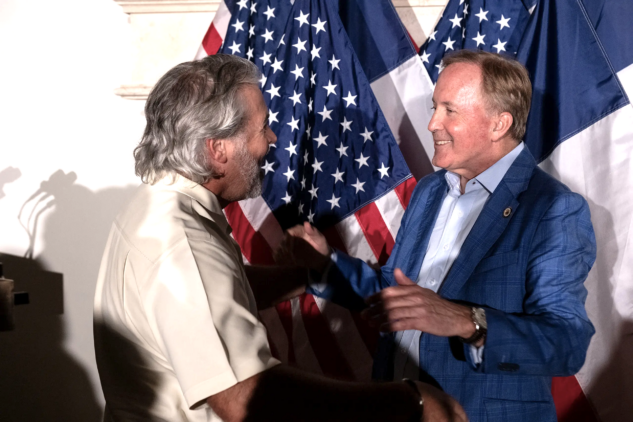
Texas GOP Senate candidate Ken Paxton told lobbyists we have to “suck it up” and cut Social Security
Overwhelming majorities of the public across party lines oppose benefit cuts and have consistently told pollsters that they want Social Security’s finances shored up by making the wealthy pay their fair share. Adjusting or scrapping the payroll wage cap, which currently limits how much higher earners pay into Social Security, would go a long way toward restoring the system to full solvency; so would including some of high earners’ investment income in Social Security revenues.
All of the candidates we have endorsed support one or both of those solutions — while many of their opponents either want to hide behind a ‘fiscal commission’ that could suggest cuts to Social Security — or slash and privatize the program outright. Up to now, there has been a disconnect between many politicians’ rhetoric on Social Security and what Americans say they want. This election represents a historic opportunity to align voters and their representatives in Washington on what, for some, is an existential issue — the future of Social Security.