- Published On: December 8th, 2022Categories: Congress, Democrats, Max Richtman, Social Security

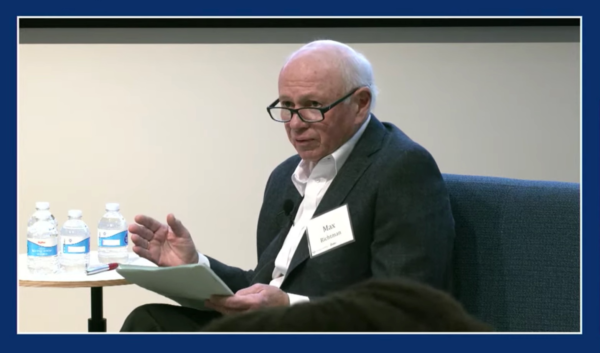
Some of the nation’s leading Social Security experts gathered in Des Moines, IA on Wednesday to discuss the future of a program buffeted by serious financial and political challenges. The forum, Roadmaps to Retirement, was presented by the Harkin Institute at Drake University and moderated by former U.S. Senator Tom Harkin (who also chairs the National Committee to Preserve Social Security and Medicare Advisory Board). NCPSSM President and CEO Max Richtman was among the experts on the panel, which also included Acting SSA Commissioner Kilolo Kijakazi and Assistant U.S. Labor Secretary Taryn Williams, among others.
During the forum, Senator Harkin asked Richtman to debunk several harmful myths which have undermined public perceptions of Social Security over the years – with many of these falsehoods perpetuated by conservative ideologues who have opposed the program from the beginning. Richtman told the audience that one of the most pernicious myths is that Social Security is “bankrupt” or “going broke”:
“While it’s true that the Social Security trust fund will become depleted in 2035 if Congress takes no preventative action, the program is not going bankrupt. Payroll taxes from workers will continue to cover 80% of benefits even if the trust fund is allowed to run dry. The only way Social Security could go “bankrupt” is if we had 100% unemployment and no one was working or paying into the program, which is unlikely to ever happen.” – Max Richtman, 12/7/22
Richtman also debunked the myth that the Social Security trust fund isn’t real — or that it consists of “worthless IOUs.” He explained that the $2.852 trillion in the trust fund is held in special interest-bearing Treasury bonds backed by “the full faith and credit of the United States of America.” He also pushed back on the notion that the government has been “stealing from Social Security” to pay for other expenses, a widespread belief which is patently untrue.
“Unfortunately, some of these myths have taken hold in the public’s mind. Many younger adults have bought into them and are cynical about the future of Social Security. Some young people believe that they are more likely to see Bigfoot or a U.F.O. than a Social Security check when they retire.” – Max Richtman, 12/7/22
Senator Harkin pointed out that, contrary to many younger adults’ perceptions, Social Security not only will be there for them when they retire, but the program provides insurance against disability and the loss of a family breadwinner to millions of young adults right now. In fact, workers have life insurance protection from Social Security worth over $725,000. Meanwhile, for a young disabled worker with a spouse and two children, the disability coverage they get through Social Security Disability Insurance (SSDI) is valued at over $580,000.
NCPSSM President Max Richtman: “The only way Social Security could go “bankrupt” is if we had 100% unemployment.”
Richtman and Senator Harkin agreed that more outreach to younger adults about Social Security is needed in order to maintain support for the program moving forward. “Hopefully there will be more education for young people as to how it works,” said Harkin. But the genesis of the forum was the Harkin Institute’s concern about financial security for current as well as future retirees. Experts have noted that the ‘three-legged stool’ of retirement security (retirement savings, employer provided pensions, and Social Security) is no longer strong enough for many workers to retire securely — mainly because it’s harder for working people to save for retirement and employers have largely stopped offering pensions.
This new reality, says Harkin, makes it even more important to preserve and strengthen Social Security, noting that 40% of Americans aged 65 and over rely on the program for at least half of their total income. Social Security Acting Commissioner Kijakazi pointed out that even higher percentages of women and communities of color depend on Social Security as their main income source. “Social Security was supposed to be a ‘floor’ for retirement income. But it was never intended to be the sole source of retirement income,” says Kijakazi.
Acting Social Security Commissioner Kilolo Kijakazi
Harkin and Richtman called on Congress to strengthen the program and expand benefits to reflect the realities of retiring in America in the 20th century. They both favor adjusting the payroll wage cap (which will be about $160,000 in 2023) so that high earners begin paying their fair share into the system. This measure, which is included in Rep. John Larson’s Social Security 2100 act, would boost the solvency of the trust fund beyond the 2035 depletion date. These proposals are overwhelmingly popular among the public. Senator Harkin cited a survey by the National Academy of Social Insurance (NASI), indicating that 83% of Americans agree it is critical to preserve Social Security benefits for future generations, even if it means increasing taxes paid by wealthier earners.
Acting Commissioner Kijakazi called on lawmakers to shore up Social Security sooner than later. “Congress does need to act to ensure we will be able to pay all benefits beyond 2035,” she said. “And we believe congress will act to take the steps needed to maintain the long-term solvency of the program.”
Related Posts
- Published On: December 2nd, 2022Categories: Election 2022, GOP, Medicare, Senate, Social Insurance
(photo from www.warnockforgeorgia.com)
While it’s true that a runoff win by Senator Raphael Warnock would give the Democrats a 51-50 majority, there is more at stake for voters – especially seniors. They need Senator Warnock to remain in the Senate to fight for their vital Social Security and Medicare benefits – and to continue advocating for lower prescription drug prices. That’s why the National Committee to Preserve Social Security and Medicare has endorsed Rev. Warnock for re-election as a “champion for seniors.”
He proved this during his first two years in office. Senator Warnock introduced legislation to cap seniors’ out-of-pocket drugs costs at $2,000 per year and limit insulin costs to $35 a month. Both provisions became part of the Inflation Reduction Act, which became law in late summer. He has been a fierce advocate for expanding Medicaid in Georgia, one of the holdout states that has refused to implement coverage for lower-income workers. Expanding Medicaid improves health outcomes for everyone – especially communities of color.
Mindful of the need to boost seniors’ benefits and put Social Security on a sound financial path, Senator Warnock cosponsored the Social Security Expansion Act. During the fall campaign, he pledged to fight GOP efforts to privatize seniors’ earned benefits. Senator Warnock is – and will continue to be – a key defender of Social Security and Medicare.
Perhaps at no other time since the Great Depression have seniors’ earned benefits been so crucial. The pandemic took a heavy toll on seniors – both physically and financially. Before and during this crisis, Social Security and Medicare have functioned as social insurance lifelines, which is, of course, their original purpose.
Without Social Security, the poverty rate in Georgia would be a whopping 44%. For Black and Latino seniors – who are especially reliant on Social Security for income – the poverty rate would approach or exceed 50% without their earned benefits.
Despite the crucial role that Medicare and Social Security play in seniors’ lives, Republicans insist that both programs must be “reformed” – which really means cut and privatized. High-profile members of Herschel Walker’s party, including Sen. Rick Scott (R-FL) and Sen. Ron Johnson (R-WI) have proposed subjecting seniors’ earned benefits to an up or down vote every five years and placing both programs at the mercy of annual budget battles. Herschel Walker campaigned with Sen. Scott in October and would be a rubber stamp for any GOP plans to undermine Social Security and Medicare.
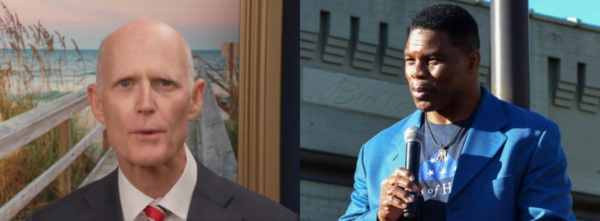
Sen. Rick Scott (L) and Herschel Walker (R)
Republicans have been crystal clear about their intentions. The House Republican Study Committee’s 2022 budget blueprint called for raising the retirement age to 70 (a huge benefit cut), reducing COLAs, and cutting benefits for “high earners,” an odd characterization since the cuts eventually could extend to workers earning $40,000 per year.
Seniors have suffered enough during the pandemic and post-pandemic economy. With inflation running over 7% this year and health care costs soaring, they depend on their Social Security and Medicare benefits now more than ever. Older Georgians need Democrats in Congress to continue fighting for lower prescription drug prices and better access to affordable health care. Voters should reject the pernicious policies of Hershel Walker’s party, which seems to care more about their wealthy and powerful patrons than working people – and re-elect Senator Raphael Warnock.
- Published On: November 30th, 2022Categories: Equal Time, GOP, Medicare, National Committee to Preserve Social Security and Medicare, Social Insurance, Social Security
Fiscal conservatives continue to promote the narrative that Social Security and Medicare must be “reformed” to reduce the federal debt, which basically means cutting seniors’ earned benefits. The latest foray in this propaganda campaign came in the form of an ‘analysis’ piece from Bloomberg’s Karl W. Smith, published last week in the Washington Post.
“The financial stakes are high. Rapidly rising interest rates means now is the time to act, before the burden of servicing the debt to fund these programs becomes a major barrier to deficit reduction.” – Karl W. Smith, Bloomberg/Washington Post, 11/21/22
The focus on deficits and debt reduction is misleading. Social Security and Medicare Part A are self-funded by workers’ payroll contributions and do not contribute to the debt. In fact, the biggest driver of the federal debt is ‘tax expenditures,’ with the 2017 Trump/GOP tax cuts as a prime example.
But conservatives claiming to be concerned about the debt never object to tax cuts for the wealthy and profitable corporations. Yet, they frame Social Security and Medicare as contributors to the debt and deficit instead of what they are: programs that provide financial and health security for tens of millions of older Americans.
The go-to solution, for Smith and others, is benefit cuts:
“The GOP wants to mitigate these costs by, among other things, raising the eligibility age for Medicare to match the Social Security retirement age, which is 67 for those born after 1960. In addition, Republicans would reduce Social Security benefits for those whose income was on the high end over their lifetimes and raise premiums for Medicare beneficiaries with higher incomes.” – Karl W. Smith, Bloomberg/Washington Post, 11/21/22
Raising the eligibility age for Medicare would leave tens of millions of seniors without insurance. (Republicans have also proposed changing the Social Security full retirement age from 67 to 70.) These are benefit reductions, plain and simple. Meanwhile, means testing Social Security in the way that Smith suggests would change the fundamental nature of the program, which has been working just fine for more than 80 years as a compact between workers and the federal government. In fact, a recent means testing proposal would have reduced Social Security benefits for people with average annual earnings of only $49,000.
It’s true that Social Security and Medicare face financing challenges that Congress must address. The Social Security Trustees project that, absent congressional action, the old age and disability trust fund will become depleted in 2035, with the Medicare Part A trust fund at risk of running out in 2028. Democrats have proposed (and in the case of Medicare, enacted) legislation to bring more revenue into both programs. But most Republicans refuse to consider revenue-based solutions, preferring to cut benefits. (Key members of the GOP proposed several drastic measures that would undermine Social Security and Medicare during the mid-term campaign season.)
Exhortations to cut benefits are part of a well-funded, right-leaning ideological movement to oppose government social programs, no matter how successful or popular. Not surprisingly, the author of the Bloomberg/Post analysis is previous Vice President of the Tax Foundation, whose “major funders include the conservative Koch Family Foundation and the foundation of the late Richard Scaife, a billionaire known as ‘the funding father of the right,’” according to Mother Jones.
Smith observes that “Republicans hoped that Americans would deliver a clear repudiation of President Biden’s economic policies when they went to the polls (in November).” But those hopes were dashed. Instead, voters in many states and districts rejected Republican, supply-side economics. Members of Congress would be wiser to listen to the voters – who support Social Security and Medicare by large, bipartisan majorities – than to columnists who preach austerity for the programs that protect our most vulnerable citizens.
- Published On: November 18th, 2022Categories: Congress
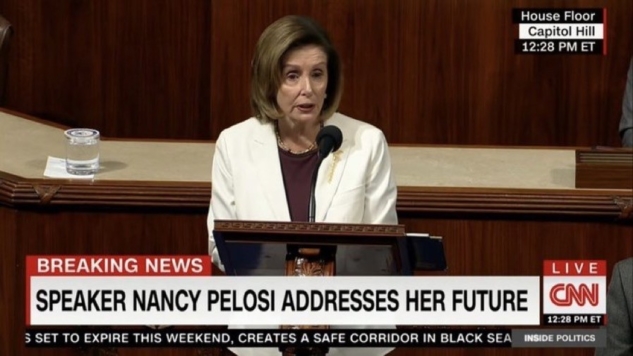
House Speaker Nancy Pelosi, who declared Thursday that she will not seek a leadership position in the next Congress, has been lauded as a master of legislative procedure, a unifier of her caucus, a skilled tactician – and as someone who broke the “marble ceiling” for women in the halls of Congress.
“Nancy Pelosi steps down as the most accomplished congressional leader of her era, and probably the most successful House speaker of all time in terms of legislative impact.” – Washington Post, 11/17/22
No small part of Pelosi’s legislative legacy are the many bills that Pelosi, 82, shepherded through Congress to improve older Americans’ health and well-being. In her valedictory speech on the House floor, she wove seniors’ programs into a grand vision of congressional legacy:
“In this room, our colleagues across history have abolished slavery; granted women the right to vote; established Social Security and Medicare; offered a hand to the weak, care to the sick, education to the young and hope to the many.” – House Speaker Nancy Pelosi, 11/17/22
Speaker Pelosi guided the Inflation Reduction Act through the House, which finally allows Medicare to negotiate prices with drug-makers (although the number of drugs subject to negotiation is limited). The Inflation Reduction Act also capped Medicare beneficiaries’ out-of-pocket drug costs at $2,000 per year and limited their insulin costs to $35 a month – long-awaited steps to reduce seniors’ health care costs.
In 2010, Speaker Pelosi was indispensable to the passage of the Affordable Care Act (ACA), also known as Obamacare, which has provided health coverage to tens of millions of Americans who would otherwise be uninsured – including many “near seniors” previously priced out of the market. The ACA also benefitted Medicare patients. It included wellness check-ups at no cost and eliminated cost-sharing for most preventive services.
As Speaker Pelosi remarked upon the 10th anniversary of the ACA in 2020:
“The Affordable Care Act stands today among the greatest pillars of American health and financial security: Medicare, Medicaid, Social Security and the Affordable Care Act.” – House Speaker Nancy Pelosi, 3/23/20
Her stepping down as leader of the Democratic party in the House represents a passing of the torch to younger leaders. “The hour has come for a new generation to lead the Democratic Caucus that I so deeply respect. And I am grateful that so many are ready and willing to shoulder this awesome responsibility.”
The presumed frontrunners for a new leadership slate include Rep. Hakeem Jeffries (D-NY) for Speaker, Rep. Katherine Clark (D-MA) for Minority Whip, and Rep. Pete Aguilar (D-CA) for House Democratic Caucus chair. NCPSSM President and CEO Max Richtman says that the National Committee to Preserve Social Security and Medicare “looks forward to a close working relationship on issues vital to America’s seniors with whomever emerges as the next Democratic leadership team in the U.S. House.”
- Published On: November 9th, 2022Categories: Congress, Democrats, Election 2022, Medicare, President Biden, Republicans, Retirement, Senate, Social Security
As the country awaits full election results, The National Committee to Preserve Social Security and Medicare congratulates the many seniors’ champions who prevailed in key races across the nation. More than 70 of the candidates who the National Committee enthusiastically endorsed have emerged victorious in crucial House and the Senate contests.
“These wins represent a resounding rejection of MAGA-nomics by voters in bellwether districts and states. While clearly concerned about inflation, these voters have said ‘No’ to more tax cuts for the wealthy and powerful corporations – and no to cuts in workers’ Social Security and Medicare benefits, including reducing COLAs or raising the eligibility ages for both programs.” – Max Richtman, NCPSSM President and CEO, 11/9/22
Here are a few of the candidates NCPSSM endorsed who won election to the 118th Congress:
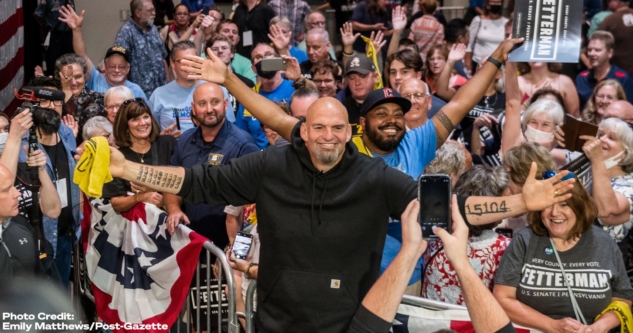
Sen.-elect Jon Fetterman (PA)
Sen. Mark Kelly (AZ)*
Sen. Michael Bennett (CO)
Sen. Maggie Hassan (NH)
Rep. Dan Kildee (MI)
Rep. Marcy Kaptur (OH)
Rep. Matt Cartwright (PA)
Rep.-elect Seth Magaziner (RI)
*not called yet
Current projections are that Republicans will win a slim House majority, while control of the Senate hinges on the outcome of races that have yet to be called – and possibly on a runoff race in Georgia. A House majority would give Republicans an opportunity to try to force through some of their proposals that jeopardize Americans’ earned benefits.
Key Republican leaders have threatened to use the inevitable battle over raising the nation’s debt limit in 2023 to compel the White House and Democrats to accept cuts to Social Security and Medicare. “The debt ceiling wrangling will be the biggest risk,” says Maria Freese, senior policy analyst at NCPSSM.
During the 2022 campaign, President Biden promised to fight any attempts to undermine seniors’ earned benefits, but Freese says that he will be under “tremendous pressure” from the GOP to make a deal, in order to forestall the nation from defaulting on its debts.
“If Republicans do control the House, seniors will be counting on President Biden to be a bulwark against harmful changes to Social Security and Medicare, beginning with the upcoming debt ceiling negotiations. As the President said, ‘GOP leaders have vowed to crash the economy by putting the U.S. in default unless we yield to their demand to cut Social Security and Medicare.’” – Max Richtman, 11/09/22
In his first post-election news conference on November 9th, President Biden pledged once again to defend the nation’s two most important social insurance programs:
“Under no circumstances will I agree to cut or make fundamental changes to Social Security and Medicare. It’s not on the table. I will NOT do that.” – President Biden, 11/9/22
During the mid-term campaign, key Republicans said they want to “save” Social Security and Medicare, but their proposals beg the question: at what cost to the very people who depend on those programs? The 2022 House Republican Study Committee blueprint called for raising the retirement age to 70, reducing COLAs, and cutting benefits for “high earners,” an odd characterization since the cuts eventually could extend to workers earning $40,000 per year.
“Anyone who says they’re going to ‘save’ Social Security but refuses to bring more revenue into the program is really talking benefit cuts for the heart of the middle class,” says Freese.
NCPSSM President and CEO Max Richtman calls on seniors and their families not to take anything for granted – and continue to remind their elected representatives that they insist Social Security and Medicare be protected:
“There are multiple ways to reach out to members of Congress – to remind our elected leaders that after a deadly pandemic that took a huge toll on seniors, the soaring cost of retirement, and ongoing wealth inequality, Americans depend on Social Security and Medicare to retire with dignity now more than ever.” – Max Richtman, 11/09/22
Related Posts