- Published On: February 3rd, 2023Categories: Boost Social Security, Budget, Congress, Democrats, GOP, Medicare, Republicans, Social Security

In recent weeks, several of our social media commenters have challenged us to “NAME ONE REPUBLICAN PROPOSAL TO CUT SOCIAL SECURITY AND MEDICARE!” OK, how about: Senator Rick Scott’s proposal that Social Security and Medicare be subject to and up or down vote every five years? That could not only cut these programs, but potentially end Social Security and Medicare as we know them; Senator Ron Johnson’s proposal to change Social Security and Medicare from “mandatory” to “discretionary” spending programs – subjecting them to the volatility of annual budget negotiations; and the House Republican Study Committee’s 2022 blueprint, which would reduce Social Security COLAs and means test benefits.
But none of these plans would cut benefits as blatantly as GOP proposals to raise the Social Security full retirement age from 67 to 70. This would amount to a 23% lifetime benefit cut for some seniors. Why? Because when you claim Social Security before full retirement age, your monthly benefits are permanently reduced.
Conservative backers of this idea insist that life expectancy has increased and people are able to continue working and earning income well into their 60s, so no harm, no foul. Except that neither is really true. Life expectancy for many demographic groups has actually decreased in the past few years, especially for communities of color. Secondly, Americans in physically demanding jobs may not be able to continue working until age 70. They would have no choice but to claim benefits early and lose sorely-needed income.
The L.A. Times’ Michael Hiltzik drives home this point in a column aptly entitled, The Stupid and Dishonest Idea of Raising the Social Security Retirement Age is Back:
“As for whether it’s ‘easier’ to work into one’s 70s than it used to be, that may be true for authors of think tank papers in air conditioned offices, but not for the millions of Americans who spend their careers hauling, digging, driving and building…” – Michael Hiltzik, Los Angeles Times, 2/2/23
The proposal’s backers insist that something must be done to shore up Social Security’s finances before the projected 2035 insolvency date of the program’s trust fund – and raising the retirement age would save money. A key House Republican told the Washington Post‘s Tony Romm:
“We have no choice but to make hard decisions.” – Rep. Kevin Hern (R-OK), chair of the House Republican Study Committee
For conservatives, those “hard decisions” always seem to demand that seniors bear the burden through benefit cuts, rather than by bringing more revenue into the program. Democrats have introduced legislation do increase revenue by adjusting the payroll wage cap — so that high-earners begin contributing their fair share to Social Security. That alone could extend the solvency of the trust fund for decades. (Later this month, millionaires will stop paying into Social Security for the rest of the calendar year.)
Not a single GOP member of Congress has signed onto legislation to adjust the payroll wage cap. Instead, key Republicans insist that “entitlements” (Social Security and Medicare) must be reformed.
“GOP lawmakers have been counseled by a wide array of right-leaning groups, including the Heritage Foundation, that the new majority should consider significant changes to entitlements as part of their commitment to cutting spending and balancing the budget.” – Washington Post, 1/24/23
Many congressional Republicans conflate seniors’ earned benefits with the federal debt issue, even though Social Security and Medicare Part A are completely self-funded by American workers and employers. They don’t contribute a penny to the debt. None other than Ronald Reagan declared in 1984, “Social Security has nothing to do with the deficit.”
According to the Center on Budget and Policy Priorities, the number one driver of the debt is tax breaks. But Republicans ignore the $2 trillion that the Trump/GOP tax cuts added to the debt. Instead of calling for repeal of those tax cuts, the GOP wants to make them permanent. This is a dubious set of priorities at a time when the wealthy and profitable corporations are by and large thriving, while some seniors — racked by the pandemic and high inflation — are barely surviving.
Related Posts
- Published On: January 27th, 2023Categories: COLAs, Democrats, GOP, healthcare, Kevin McCarthy, Medicare, Republicans, Retirement, Senate, Social Security
Republican proposals to cut taxes for the wealthy and undermine Social Security and Medicare have come back like a bad dream with the GOP takeover of the House and the debt ceiling standoff. We spoke to our senior legislative representative, Maria Freese, about what these proposals would really do — and who they benefit. Hint: the answer is NOT working people and retirees.
Q: The debt ceiling standoff and the GOP takeover of the House seem to have brought back some really bad ideas.
A: That’s true. Suddenly we’re hearing about the Balanced Budget Amendment and the Fair Tax Act, along with other proposals that would undermine Social Security and Medicare, like the TRUST Act.
Q: The TRUST Act would allow lawmakers to enact cuts to seniors’ earned benefits without really getting their fingerprints on it. But how would, say, the Fair Tax Act affect these programs?
A: The Fair Tax Act replaces all federal taxes with a national sales tax. Not only is that extremely regressive, because it would hit lower income people the hardest, but it would eliminate the payroll taxes that fund Social Security and Medicare. This means all current retirees would be forced to pay for their benefits twice – once through the payroll taxes they already paid through their working lives and again every time they buy a loaf of bread or pay for a prescription.
Q: Republicans in Congress like to talk about “saving” Social Security and Medicare, which do face significant funding challenges. But their solutions always seem to involve benefit cuts.
A: Absolutely. They want seniors themselves to bear the burden of restoring the fiscal health of Social Security and Medicare, when there are revenue-side solutions that would do the job — including eliminating or adjusting the payroll wage cap on FICA contributions — so that the wealthy begin paying their fair share into the system.
Q: Conservatives are careful to say that they’re not going to do anything that affects current beneficiaries, as if adults who haven’t yet reached retirement can afford to have their future benefits cut.
A: That’s right. If anything, today’s younger adults will rely on Social Security and Medicare even more than current retirees do. And that’s because of multiple factors like ongoing wealth inequality, flat wages, soaring student debt, the demise of traditional pensions, and other things that prevent younger people from saving enough for their senior years. And by the way, one of the most common conservative proposals, adopting the ‘Chained CPI’ for calculating Social Security COLAs, would definitely reduce today’s retirees’ benefits.
Q: Yes, the conservatives are pretty cagey. They never come right out and say they’re going to “cut” benefits, but that’s exactly what most of their proposals would do.
A: Right. They make their proposals sound like technical or procedural changes. But raising the retirement age to 70 is a benefit cut. Means testing Social Security is a benefit cut. Reducing payments to Medicare providers could ultimately reduce the quality and affordability of care for seniors – which effectively is a benefit cut.
Q: You have a metaphor for what they’re doing. Remind us what it is?
A: The so-called procedural or technical changes Republicans propose are like what a magician does with misdirection. Magicians direct your attention to their left hand — “Nothing going on here!” — while the right hand steals your watch. In other words, “We’re not touching your Social Security and Medicare, we’re just making these little changes over here.” But the only way to achieve their austerity goals (without raising revenue) is by gutting Social Security and Medicare.
Q: So why do we see conservatives trying to undermine Social Security and Medicare (while claiming to want to “save” them) year after year?
A: They keep doing it because they are determined to shrink the size of the government, which means you can’t raise taxes. The only thing left to do is gut programs. This benefits their wealthy and corporate patrons who constantly are striving to pay less in taxes. This approach shifts responsibility further away from the wealthy elites and toward the middle and working classes. Plus there’s an ideological element to it. “Everyone must have skin in the game! No government handouts!” Of course, working people pay into Social Security and Medicare for most of their lives. They’ve earned those benefits, and no one should take those away.
Related Posts
- Published On: January 19th, 2023Categories: Budget, Congress, Debt, Kevin McCarthy, Medicaid, Medicare, President Biden, Social Security
Thursday’s breaching of the debt ceiling by the U.S. government is making seniors’ advocates very nervous. The federal government is now on track to default on its financial obligations (including the ability to make Social Security and Medicare payments) as early as June — unless Congress lifts the debt ceiling, which House Republicans refuse to do without spending cuts. NCPSSM legislative director Dan Adcock told CNBC that the country is heading for a fiscal “train wreck” if the GOP maintains its hardline position.
Raising the debt ceiling is supposed to be a routine matter of business so that the government can meet its existing financial obligations. In fact, Congress has raised the debt ceiling 78 times since 1960. If the debt ceiling is not adjusted before the Treasury Dept. exhausts “extraordinary measures” to pay the federal government’s bills, the U.S. will default on its debts, which would induce severe economic turmoil. Nonetheless, House Republicans are refusing to raise the debt ceiling unless Democrats agree to cut crucial programs. As CNN’s Jake Tapper put it, “Republicans are vowing to cut future spending before agreeing to pay bills that are already due.”
NCPSSM’s President and CEO, Max Richtman, warns that a federal default would not only invite economic catastrophe, but could negatively impact older Americans:
“Congressional Republicans are playing with fire by risking a government default on its financial obligations — an outcome that is more likely today as the U.S. reached its legal borrowing limit. A default would hit the nation’s seniors especially hard, as the payment of Social Security, Medicare, and Medicaid benefits would be jeopardized.” – Max Richtman, 1/19/23
Without the legal authority to borrow beyond the current debt ceiling, Social Security, Medicare, Medicaid, and other payments may not be made on time and in full unless Congress approves an increase in the debt limit. Even a short delay in the payment of Social Security benefits would be a burden for the millions of Americans who rely on their earned benefits to pay for out-of-pocket health care expenses, food, rent and utilities.
Republicans have threatened to use the debt ceiling crisis to extract concessions on spending from Democrats and the White House. Seniors’ advocates became especially concerned when key GOP members seemed to suggest that this crisis presented an opportunity to force changes to ‘entitlements.’
President Biden has vowed to veto any legislation that would cut Social Security, Medicaid, and other vital social safety net programs. Today, the White House announced that the President would not negotiate with Congressional Republicans about the debt ceiling. Senate Republican Leader Mitch McConnell told CNN today that negotiations are inevitable, but that “America has never defaulted on its debt and never will.”
While cooler heads may prevail in the Senate, the ultra-MAGA faction of the House GOP caucus has insisted that there cannot be a ‘clean’ lifting of the debt ceiling without pre-conditions. In order to become House Speaker, Kevin McCarthy agreed to demands by right-wing Republicans that raising debt ceiling must be tied to spending cuts.
“If the House GOP refuses to raise the debt limit and replaces responsible governance with fiscal extortion, our most vulnerable citizens will pay the price. This is definitely not what the American people voted for last fall.” – Max Richtman, 1/19/23
In 2011, Tea Party Republicans pushed the country to the brink of a default in an attempt to force spending cuts. Democrats stood firm against the GOP’s demands, but the outcome of that debt battle included GOP-imposed spending caps which hobble Congress to this day — and the downgrading of the United States’ credit rating around the world. Senator Chris Coons (D-CT) said Thursday afternoon, “I was here 12 years ago and it didn’t work out for (Republicans) then, and I don’t think it will work out for them now.”
Related Posts
- Published On: January 6th, 2023Categories: Congress, Democrats, Medicare, Republicans, Social Security
Kevin McCarthy’s battle for the House speakership made for compelling political theater this week, but it could have dramatic implications for America’s seniors. According to news reports, McCarthy (R-CA) made concessions to holdout House members that would empower right-wingers in Congress who want to slash Social Security and Medicare — in order to fulfill his personal ambition to become Speaker.
CNN’s Manu Raju reported Friday afternoon that McCarthy agreed to demands from Freedom Caucus members regarding upcoming debt ceiling negotiations. In the putative deal, McCarthy reportedly has pledged not to raise the debt ceiling (so that the federal government can pay its existing obligations) without concessions on spending from Democrats and the White House on domestic programs.
If this reporting is accurate, it means that McCarthy has effectively agreed to risk a U.S. government default on its financial obligations (and the financial chaos that would ensue) in order to force cuts to Social Security, Medicare, and other safety net programs — despite the fact that these programs are incredibly popular and vital to the well-being of American seniors. (Not to mention that lifting the debt ceiling is essential for the U.S. to pay its existing bills.)
This scorched-earth strategy, which one CNN analyst characterized as “taking us to the brink of destruction,” is not what voters demanded in the 2022 elections. In fact, in denying Republicans an anticipated “Red Wave” last fall, the electorate clearly rejected MAGA extremism and MAGA-nomics.
Nevertheless, a small cadre of right-wing Freedom Caucus members are the ‘tail wagging the dog’ in McCarthy’s bid for the speakership. These extremists oppose spending on social programs no matter how important or popular those may be. (One commentator rightly branded them as “nihilists” who don’t believe in a functional federal government.)
We have seen this before. In 2011, Tea Party members instigated a battle over the debt ceiling that resulted in harmful caps on domestic spending that haunt us to this day. “I was around in 2011,” said former Obama advisor David Axelrod on CNN today, “and I remember that Republicans took us to the precipice of what would have been a catastrophe,” by risking a federal default on its financial obligations.
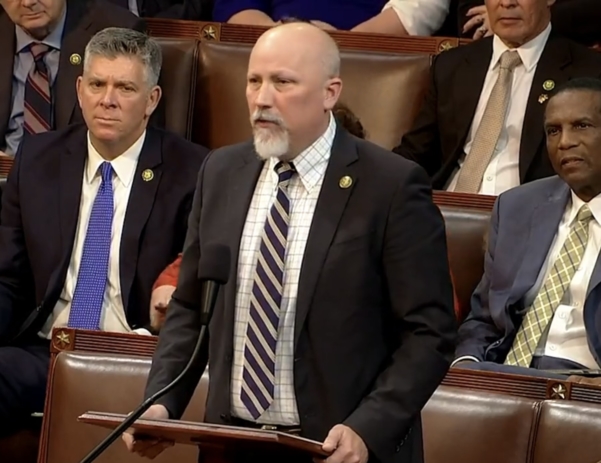
Rep. Chip Roy (R-TX) helped negotiate concessions from Kevin McCarthy
Beyond the debt ceiling maneuverings, Freedom Caucus members reportedly are wringing other concessions from McCarthy in return for their votes that also could be devastating for older Americans. These include rule changes that could make it harder to raise revenue and easier to cut spending on social programs.
The hard right would get approval power over some plum committee assignments, including a third of the members on the influential Rules Committee, which controls what legislation reaches the floor and in what form. And spending bills would have to be considered under so-called open rules, allowing any member to put to a vote an unlimited number of changes that could gut or scuttle the legislation altogether. – New York Times, 1/6/23
“That does not bode well for programs like Social Security and Medicare that are going to need an infusion of revenue,” says Maria Freese, policy advisor here at NCPSSM. “The new rules would make it easier for House Republicans to keep cutting taxes for the wealthy while gutting programs that everyday Americans depend on.”
If Kevin McCarthy does prevail (which as of Friday afternoon looks increasingly likely) and achieves his years-long dream of being House Speaker, seniors will be among those everyday Americans paying the price.
Related Posts
- Published On: December 14th, 2022Categories: Budget, Congress, Democrats, Medicare, Social Security, Social Security Administration (SSA), Social Security Disability Insurance
Congressional negotiators have avoided a government shutdown by reaching a compromise agreement on federal spending for the remainder of FY 2023. The Hill newspaper reported that lawmakers had “reached a bipartisan, bicameral framework that should allow them to finish an omnibus appropriations bill that can pass the House and Senate and be signed into law by the President.’” We spoke to NCPSSM legislative director Dan Adcock about the spending deal and whether it impacts Social Security and Medicare.
Q: What basically happened here?
Adcock: Republicans and Democrats were able to forestall a government shutdown that would have been triggered on Friday had they failed to agree on spending for the remainder of FY 2023. Late yesterday the two parties arrived at a compromise agreement on appropriations for the rest of the fiscal year, which began on October 1, 2022. The result will be an “Omnibus” spending bill because it combines all congressional appropriations into a single piece of legislation.
Q: Does this process affect Social Security and Medicare benefits?
Adcock: Not directly. Social Security and Medicare are considered “mandatory spending,” and are funded according to the laws that created them. They are not part of the annual appropriations process. What Congress is wrangling over now is called “discretionary spending,” which goes toward the day to day operation of the federal government. On the other hand, if there had been a government shutdown, Social Security Administration customer service could have been disrupted.
Q: What about funding for the Social Security Administration?
Adcock: Funding for SSA is, indeed, part of the annual appropriations process. We have urged Congress to appropriate $14.8 billion for Fiscal Year 2023, which is the level that President Biden requested in his budget. SSA badly needs these funds in order to improve customer service after more than a decade of budget cuts – and to work through the huge backlog in disability claims that built up during the pandemic.
Q: The current process is different than the debt ceiling negotiations, right?
Adcock: Yes. This week’s negotiations were about agreeing on appropriations to fund the daily operations of the government and avoid a shutdown. The debt ceiling issue is separate. Sometime during 2023 (most likely during the 3rd quarter), the federal government will have exhausted its ability to borrow money to meet its financial obligations — unless Congress raises or suspends the debt ceiling. Republicans, who will have a majority in the House in the 118th Congress, have threatened to use next year’s debt ceiling negotiations to extract cuts to Social Security and Medicare. Democrats will have to stand firm in the face of GOP pressure and refuse to consider cuts to Americans’ earned benefits.
Q: Is the spending agreement a done deal?
Adcock: The two parties have reached a tentative agreement on top-line numbers, but they still must determine the line item amounts for each federal agency and program in the actual spending bill. There’s also a lot of backroom work that goes into assembling a thousand-plus page bill like this. The congressional leadership are incentivized to finish by the end of next week so that they can head home for the holidays.
Related Posts