Should Daylight Savings Time be year-round? We, as a country, seem to ask ourselves that question every time we set the clocks ahead an hour in March. Making Daylight Savings Time (DST) permanent would have enormous implications for all Americans – especially seniors – and is worthy of debate. Earlier this month, Senator Marco Rubio (R-FL), reintroduced the bipartisan Sunshine Protection Act, which would permanently replace Standard Time (ST) with DST beginning in November of 2023.
The legislation, which did not come up for a vote in the House last year, is spurred by mounting concerns about the negative effects of lurching back and forth between DST and ST.
“Some researchers blame the switch between Standard and Daylight Saving Time for a number of social ills, including lost productivity and increased health stress, as people’s bodies adjust to the time change.” – Fortune, 3/16/22
There has been significant discussion of how making Daylight Saving Time permanent might affect children and teens – but scant dialogue about the impact on seniors. Is permanent Daylight Saving Time good for older people? There’s no clear-cut answer. One thing is certain: switching back and forth from DST to ST isn’t healthy for anyone – seniors in particular. Here are some of the reasons why:
*Changes in sunrise and sunset times can cause sleep deprivation, which is linked to higher rates of obesity, diabetes, dementia, and other health issues. Seniors already are more susceptible to sleep problems than younger adults.
*Switching the clock twice a year can worsen the problem of “sundowning” in dementia — where cognitive issues in some seniors flare up when the sun sets.
*Disrupting normal sleeping and waking patterns can increase the risk of falls for older people.
*Changes in the clock also can compromise seniors’ ability to take medications on time and as directed.
The case against “springing ahead” and “falling backward” every year seems pretty solid. That leaves the question as to whether a permanent Daylight Saving Time is inherently unhealthy for seniors. The most serious objection to DST (relevant to older people) is that the sun rising and setting later in the day doesn’t align with most people’s biological rhythms or ‘body clocks.’
“Sleep scientists argue the choice of Daylight Saving Time over standard time would leave Americans permanently out of sync with their natural schedule and potentially lead to a range of health issues. – Fortune, 3/16/22
This means that seniors who naturally wake up and go to bed early may not be able to adjust to the darker mornings and brighter evenings of a permanent Daylight Saving Time. It could be especially problematic for older people in the Northernmost states, where the sun would not come up much earlier than 9 a.m. during the winter.
In addition to the health risks of seniors’ being physically out of sync with Daylight Savings Time, there are safety considerations, too. Seniors who venture out for groceries, medical appointments, and other priorities early in the morning before the sun rises may be more likely to injure themselves.
The winter sun would not rise until almost 9am in some Northern states if Daylight Savings Time is made permanent
“Seniors have the additional problems of not just decreased light, but the cold. People worry about icy sidewalks and slipping, falling and breaking a hip,” says Dr. Benjamin Liptzin, of Baystate Medical Center in Springfield, MA, who says that adjusting to the seasonal change may have negative consequences “if not managed properly.”
Nevertheless, public polling indicates that a majority of Americans support making DST permanent, which is probably one reason why the Senate rushed through the new legislation without even a roll call vote. Now that the bill is in the hands of the House of Representatives, seniors’ advocates can rightly insist that lawmakers consider all of the risks and benefits – not just to children and teenagers, but to older people – before altering something as fundamental as the way we keep time.
- Published On: March 9th, 2023Categories: Budget, Congress, Medicare, Medicare Advantage, Prescription Drug Prices, President Biden
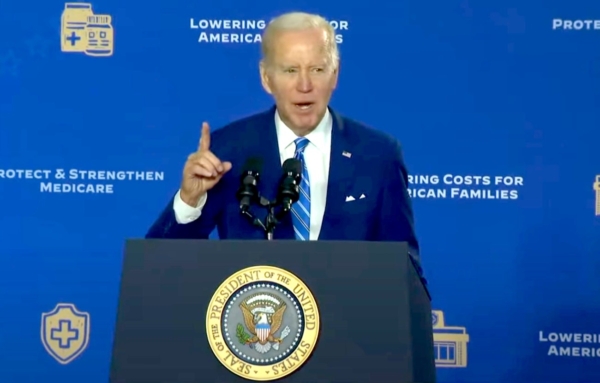
President Biden’s bold 2024 budget proposal puts him squarely on the side of working Americans in their ongoing struggle for retirement and health security. The new White House budget would keep the Medicare Part A trust fund solvent until 2050. That should reassure Americans concerned about projections that the trust fund will become depleted by 2028 absent any kind of pre-emptive action. This is the kind of action the American people want to see.
The President’s budget proposal arrives amid a contentious debate on Capitol Hill about the future of Social Security and Medicare, with Republicans promising not to cut benefits for today’s seniors while floating multiple proposals that threaten benefits for tomorrow’s retirees — including raising eligibility ages, means testing, and privatization.
“While the conservatives’ approach is to ‘cut, cut, cut!’ earned benefits for future generations of retirees, President Biden’s budget would fortify Medicare for the future by asking the wealthy to pay their fair share. Instead of ‘kicking the can down the road’ as some previous administrations and Congresses have done, the President’s budget confronts the trust fund shortfall head on — without burdening beneficiaries. In a society with massive wealth inequality, the wealthy can afford to pay a little more. Future seniors cannot afford benefit cuts.” – Max Richtman, President & CEO, National Committee to Preserve Social Security and Medicare
The President’s budget would increase the Medicare tax rate on earned and unearned income above $400,000 from 3.8 percent to 5 percent, in keeping with his pledge not to raise taxes on anyone earning less than $400K per year. The budget also would eliminate loopholes so that everyone earning over $400,000 per year would have to pay those taxes.
On the Social Security side, the budget offers no concrete plan for shoring up the system’s finances — but does say that “the Administration looks forward to working with the Congress to responsibly strengthen Social Security by ensuring that high-income individuals pay their fair share.” We have endorsed Senator Bernie Sanders’ Social Security Expansion Act and Rep. John Larson’s Social Security 2100 act, which extend the solvency of the program’s trust fund while expanding benefits by raising revenues (including adjusting the payroll wage cap so that high earners contribute their fair share).
The budget provides additional funding for the beleaguered Social Security Administration (SSA) to bolster the agency’s customer service capabilities. SSA’s customer service has suffered because of a decade of budget cuts and the strain that the pandemic put on the agency. The White House requests a 10% increase for SSA’s operating budget over 2023 enacted levels, totaling about $15.5 billion altogether.
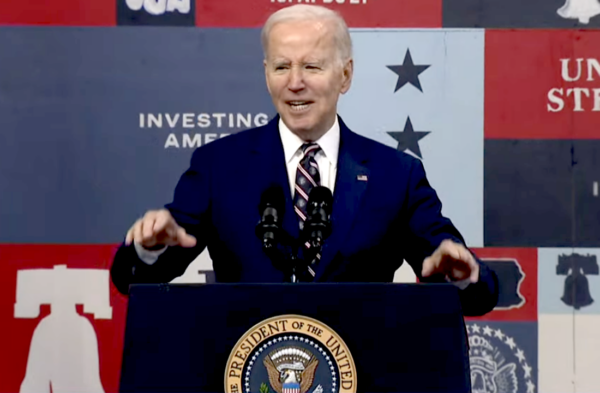
President Biden unveiled his 2024 budget in Philadelphia on Thursday, March 9, 2023
The White House budget also seeks to rein-in privatized Medicare Advantage (MA) plans. Some MA insurance providers have been maximizing profits while over-billing taxpayers and short-changing patients. The administration is imposing new regulations that will crack down on MA insurers gaming the system. One of the new regulations requires greater transparency in Medicare Advantage ads — the kind featuring celebrities like Joe Namath and William Shatner — that lure seniors into buying MA plans without important distinctions and disclaimers.
“We have been saying for years that the playing field between MA and original Medicare is tilted in favor of the privatized plans. The administration’s regulations finally will begin to level that playing field. MA plans are problematic for older and sicker beneficiaries. Thanks to the Biden regulations, seniors will be better informed about MA vs. original Medicare before making a choice that can be hard to reverse later.” – Max Richtman
In addition to these reforms, the Biden administration has proposed a rule that would prohibit some forms of prior authorization — and would clarify that MA plans must cover basic benefits to the extent they are covered in traditional Medicare.
The National Committee also lauds the President’s proposed enhancements to the prescription drug pricing reforms enacted last year in the Inflation Reduction Act. The President proposes to save $200 billion by making more drugs eligible for Medicare price negotiation with Big Pharma — and to accelerate the start dates for the new prices.
Finally, the budget invests $150 billion over 10 years to improve and expand Medicaid home and community-based services (HCBS). We have been advocating to boost HCBS funding so that seniors have more options for affordable care in their own homes and communities — a safer and healthier option than nursing homes.
Related Posts
- Published On: February 28th, 2023Categories: Joe Biden, Payroll Tax Cap, payroll taxes, Rep. John Larson, Social Security
Today is the day most millionaires stop paying into Social Security for the rest of the year, while most of us will continue contributing FICA payroll taxes through the end of December. The payroll tax cap for 2023 is $160,200 in annual wages. As of today, people grossing $1,000,000 a year in wages have now exceeded the cap. No more payroll contributions for millionaires until 2024! If that sounds unfair, it should be noted that billionaires stopped paying into Social Security in January!
In effect, higher income earners pay a significantly smaller percentage of their wages into Social Security than everyone else. This not only is patently unfair; it deprives Social Security of much-needed revenue. Without additional revenue, the combined Social Security trust fund will become depleted in 2035 (at which time the program could still pay roughly 80% of benefits).
It wasn’t always this way. In years past, 90% of wages earned in this country fell below the payroll tax cap. But due to rising wealth inequality in recent decades, only 82.5% of those earnings are now subject to the Social Security payroll tax.
“The extraordinary growth of income for those at the highest end of the wage scale was not anticipated by those who established the formulas that fund Social Security today. Wages for middle-and-lower income workers have remained stagnant for over a decade, while higher-wage workers have seen significant wage growth during that time.” – www.ncpssm.org
Even millionaires recognize this is unfair. As the advocacy group Patriotic Millionaires points out:
“The income cap is not only regressive, but unnecessary. It has been around since the tax began in 1937, but has not kept up with disproportionate wage growth or explosive wealth inequality. As a result, almost $2 trillion in earnings a year are not subject to the payroll tax, limiting the amount of revenue collected for Social Security.” – Patrioticmillionaires.org
The COVID pandemic reminded us that Social Security is a financial lifeline to millions of American families. The program is there for older workers who were forced by the pandemic to retire early. It is also there for widows, widowers, and children of family breadwinners who pass away. Working Americans cannot afford to see Social Security’s finances further eroded because the wealthy don’t pay their fair share.
For years, we and other seniors’ advocates have supported “scrapping” the payroll wage cap – either immediately or over a period of time. If Congress is able to muster the political will, Social Security’s finances can be strengthened in a fair and equitable way. In fact, public opinion polling indicates broad support for eliminating the wage cap.
Senator Bernie Sanders, Senator Elizabeth Warren, and Rep. Jan Schakowsky have re-introduced a bill, the Social Security Expansion Act, which would adjust the cap so that wages above $250,000 would now be subject to the payroll tax. Along with a tax on investments for the wealthy, this provision would keep the trust fund solvent until almost the end of the century. It would also fund the expansion of benefits to all beneficiaries — in addition to special increases for the most vulnerable seniors.
For his part, President Biden proposes to re-instate the payroll tax at $400,000 in annual wages. That closely tracks the payroll tax provisions in Rep. John Larson’s Social Security 2100 Act, which has not yet been reintroduced in the 118th Congress, but probably will. Rep. Larson’s bill would extend the life of the trust fund beyond the 2035 insolvency date and, like the Sanders bill, expand benefits across the board and for people who need an extra boost.
Republicans in Congress have not supported legislation that would adjust the payroll cap. They would rather protect high earners from paying anything more into the system and instead focus on “reforms” that would ultimately reduce benefits. Despite agreeing in theory that Social Security is “off the table” in the debt ceiling debate, many Republicans have proposed to to raise the retirement age, means test benefits, adopt a more miserly COLA formula, or gamble part of the Social Security trust fund on Wall Street. We disagree with these proposals. It’s unfair to ask seniors, workers with disabilities, and their families to bear the brunt of strengthening Social Security’s finances. The more equitable path is to ‘Scrap the Cap,’ so that the wealthy pay their fair share — and all Americans can count on the benefits they’ve earned over a lifetime of work.
Related Posts
- Published On: February 27th, 2023Categories: Disability, Medicare, National Committee to Preserve Social Security and Medicare, Politics, President Biden, Republicans, Social Security
All but the most upper-income seniors would be hurt by cuts to Social Security and Medicare — the kind which Republicans have been proposing in the name of “entitlement reform.” But older Americans with disabilities or pre-existing conditions would be hit especially hard. Whether these cuts apply to future generations or today’s seniors, they are unsustainable for the people these programs are designed to protect.
We reached out to our social media community to ask about the potential impact of Social Security and Medicare cuts. The testimonials we received were quite poignant – and to the point. “I live with depression, Graves disease, and COPD,” wrote a Facebook follower named Susan. “Without Medicare, I would be paying well over $500 dollars a month for medicine. If I don’t have medication to breathe, I will be a dead woman.”
Another Facebook user, Martin, is on Social Security Disability Insurance after suffering a head injury. “Social Security checks pay for my rent and utilities and internet. Without it, I couldn’t pay my bills,” he writes. Martin has seizures controlled by medication. “Medicare keeps my medical bills low,” he says.
Facebook user Natalie had a heart attack and suffers from COPD. She is severely disabled and bedridden. She wonders, if Social Security and Medicare are cut, “Who will pay for my rent and the utilities and my medications or groceries?”
For each of these stories, there no doubt are millions more across the country: Americans who worked hard and paid into Social Security and Medicare their entire lives, and now depend on those benefits for financial and physical survival.
Republicans insist that they have taken Social Security and Medicare cuts off the table in the debt ceiling debate. Even Senator Rick Scott (R-FL) backtracked on his 2022 proposal to ‘sunset’ all federal programs after five years, including Social Security and Medicare. He has introduced legislation to make it harder to cut either program.
“If cutting Social Security and Medicare is your dream, I’m your nightmare,” says President Biden.
This softening on the part of some Republicans is the result of political backlash to various GOP plans (of which Senator Scott’s original proposal was one of the most egregious) which would result in cuts to Americans’ earned benefits. These include: Senator Ron Johnson’s plan to switch Social Security and Medicare to “discretionary” rather than “mandatory” spending.; the House Republican Study Committee blueprint that would raise the retirement age, means-test benefits, and adopt a more miserly COLA formula; and the Cassidy-King plan to invest part of the Social Security trust fund on Wall Street, a scheme that would require benefit cuts in order for its math to add up.
After President Biden seemingly coaxed Republicans to agree on live tv not to cut Social Security or Medicare during the State of the Union, we wrote in a blog post that advocates do not consider seniors’ benefits to be completely safe. “It’s not like the verbal agreement at the State of the Union was signed in blood or anything,” observed Dan Adcock, our director of government relations and policy. “We’re not going to let our guard down.”
President Biden continues vigilant on this issue, as well, vowing to veto any legislation that would reduce senior’s benefits.
“I know that a lot of Republicans, their dream is to cut Social Security and Medicare. Well, let me say this: if that’s your dream, I’m your nightmare.” – President Biden, Tampa, FL,
Circling back now to older Americans with disabilities and pre-existing conditions, why would cuts to these programs impact them so dramatically? For one thing, many people with disabilities are unable to work. Disability makes older Americans more financially vulnerable, and often results in diminished income.
“Because of their disabilities and chronic health conditions, these people couldn’t save as much for retirement,” explains our senior policy advisor, Anne Montgomery, an expert in health advocacy and disability issues. “Their incomes may be more limited than healthier individuals.” A retiree named Lorraine told us via Facebook that she would be “out on the street” without her earned benefits.
Martin, whose testimonial we included above, is one of about 8 million people who receive Social Security Disability Insurance (SSDI) to remain financially secure. These beneficiaries cannot afford benefit cuts. (It should be noted that President Trump proposed cutting SSDI by billions of dollars in successive budgets his administration sent to Congress, even though Trump famously promised “not to touch” Social Security.)
There also are millions of disabled retirees on Social Security. They are among the nearly 50% of retirees who rely on Social Security for most of their income. Again, seniors with disabilities are likely to be less financially well-off than other retirees, making their monthly benefits all the more crucial.
Just as they rely on their retirement benefits for financial security, older people with disabilities and pre-existing conditions especially depend on Medicare for health security. Without Medicare, seniors with pre-existing conditions would not be able to purchase private insurance — or would have to pay exorbitant rates (also known as “age rating.”) This is the reason Medicare was created in the first place; too many retires couldn’t obtain coverage in the private insurance market.
As a Facebook follower named Wendy wrote, “Not only am I disabled, I was just diagnosed with breast cancer. My husband is deceased. If Medicare is cut, what do they expect me to do?”
“If Social Security and Medicare were cut, I wouldn’t have enough money to pay monthly expenses for food, housing, transportation, or medical expenses.” – Lois, Social Security and Medicare beneficiary, 2/23/23
A just-released Gallup poll indicates that nearly two-thirds of older Americans think the programs are “just fine the way they are.” The Gallup survey suggests that overall satisfaction with the programs has been increasing over the years.
“Social Security and Medicare are bedrock programs. They’ve been with us for a very long time,” says Anne Montgomery. “They should be safeguarded and shored up through common sense policy, without cutting benefits for current or future seniors.”
Related Posts
- Published On: February 17th, 2023Categories: ageism, Bernie Sanders, Election 2024, seniors
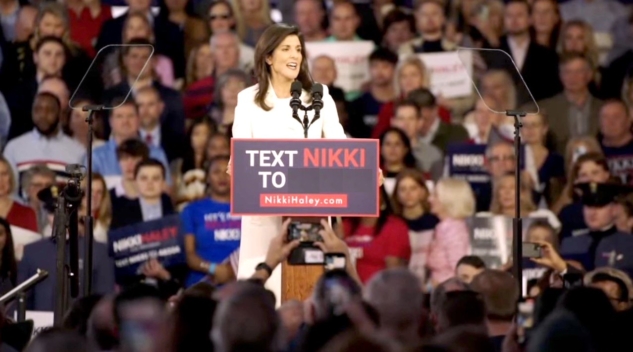
Upon kicking off her presidential campaign this week, Nikki Haley said politicians 75 years of age or older should be subject to mental competency tests. It was a cheap political shot at President Biden and her rival in the primaries, Donald Trump. But it was more than that. Haley’s statement is blatantly ageist. Of course, of all the -isms (racism, sexism, able-ism, classism, etc.), the targeting of older people remains one of the most socially acceptable – probably leading Haley to believe that her jab at senior politicians was safe. That doesn’t make it any less offensive.
Haley’s comment was not an outlier. During a panel discussion Wednesday on CNN Tonight spurred by Haley’s remarks, pundit Patrick McEnroe complained that there are too many older politicians in Washington. There was no pushback from the rest of the panel, of which McEnroe and anchor Alisyn Camerota were by far the oldest members (at 56). Imagine if a CNN panelist (or presidential candidate) commented that there were too many members of a particular race or ethnic group — or people with disabilities — in politics. The pushback would have been intense and immediate. Not so for ageism. Apparently, it’s still okay.
President Biden is the target of almost daily ridicule and criticism about his age. Many pundits argue that he is simply “too old” to serve a second term. (Note that the Founding Fathers did not impose an upper age limit on eligibility for the Presidency, only a lower one – 35 years of age.) While President Biden may suffer from verbal gaffes, a speech impediment, and some memory lapses, his chronological age should not disqualify him from serving a second term.
Age and hard-earned wisdom should be considered an asset in politics. As writer Jack Goldstone noted in the Financial Review “A leader with decades of experience is likely to have encountered various crises before and to know how to respond effectively.” To this point, the mainstream media were rightly impressed when President Biden skillfully baited Republicans into agreeing not to cut Social Security and Medicare as part of the debt ceiling debate during the State of the Union. Pundits correctly noted that his five decades as a politician and public office holder equipped him with the skills to outsmart the opposition on live tv in front of millions of viewers.
Rather than being judged by his chronological age, the President should be assessed by his performance in office, including his list of legislative accomplishments and handling of both domestic and foreign policy crises. Primary and general election voters should decide for themselves whether he is competent and fit to serve, not ageist candidates and pundits.
Unfortunately, the ageism directed at President Biden is typical. Despite their enormous contributions to our country, seniors are continually devalued as members of society. When someone calls another person “old,” it’s understood as an insult, not a sign of respect.
“In our society, older people too often are considered to be absent and invisible,” says our senior policy expert, Anne Montgomery, a longtime advocate for seniors and people with disabilities. “There are other cultures, though, where you are considered more important as you get older. The elderly have lived longer and accumulated wisdom that is useful to society.”
She’s right. In the U.S. and some other Western societies, “elder” is a bad word instead of a sign of respect. “Ageism is everywhere – in the workplace, in media, in Hollywood, in schools and in health care, and it is something that most everyone will experience at some point in their lives,” writes Michele Dinman of the Harvey A. Friedman Center for Aging at Washington University in St. Louis.
Ageism is not a benign phenomenon. According to Dinman, older adults experience discrimination in employment, housing, health care, and in their daily lives. In a 2019 survey, 82% of older adults said that they “regularly experienced at least one form of everyday ageism.”
The consequences are real. As Dinman writes, ageism can lead to poor physical health and shorten lives. It also can lead to “increased social isolation and loneliness.” In 2021, the World Health Organization reported that ageism can cost society billions of dollars in lost productivity and opportunity.
So, what about the claim that older politicians shouldn’t hold high public office? There have been plenty of members of Congress who have served admirably – and in lofty leadership positions – well into their late 70s and 80s. Rep. Maxine Waters (D-CA) is 84. Rep. Bill Pascrell (D-NJ), an outspoken member of the House Social Security Subcommittee, is 86. Former House Speaker and current congresswoman Nancy Pelosi (D-CA) is 82. Legendary Congressman and voting rights crusader John Lewis (D-GA) served nobly until he died at age 80.
On the other side of the Capitol, Senator James Inhofe (R-OK) is 88. Senator Chuck Grassley (R-IA) is 89. Senator Bernie Sanders (I-VT) is 81. Some of these members of Congress are controversial, but arguably fully mentally competent and more than capable of representing their constituents and leading their colleagues.
When considering elder lawmakers of years past, we remember former House Speaker Tip O’Neill (who retired in his mid 70s), powerhouse Michigan Rep. John Dingell (D-MI) (who stepped down at 87), or former Senator John Glenn (D-OH), who served until he was 77 and flew on the space shuttle that same year!
On the flip side, there have been plenty of members of Congress whose mental acuity is questionable, regardless of age. When we tweeted about Nikki Haley’s ageist comment, one of our followers aptly responded: “Then we need competency tests for ALL of them!”
There are myriad examples of highly accomplished seniors who have been leaders in their respective fields:
Warren Buffett, business magnate, investor, philanthropist (92)
Fran Gehry, legendary architect (93)
LaDonna Harris, Native American leader/activist (91)
Jasper Johns, world-renowned artist (92)
Ralph Lauren, fashion mogul (83)
Norman Lear, tv producer/creator of “All in the Family” (100)
George Takei, actor and activist (85)
Gloria Steinem, feminist writer and activist (88)
To the best of our knowledge, no one has demanded that these leaders step down or take mental competency tests. If they can continue doing what they do well into their 80s and 90s, why shouldn’t the President of the United States, surrounded as he (or she) is with an immense support infrastructure, from White House staff to advisors and cabinet members? In the year 2023, it is time for our society to re-examine its biases toward seniors. If racism, sexism, able-ism and all the other “isms” have no place in a society striving for tolerance, then neither should ageism.
Walter Gottlieb is Director of Communications at the National Committee to Preserve Social Security and Medicare