


Seniors’ Programs in Jeopardy if Republicans Retake Majority
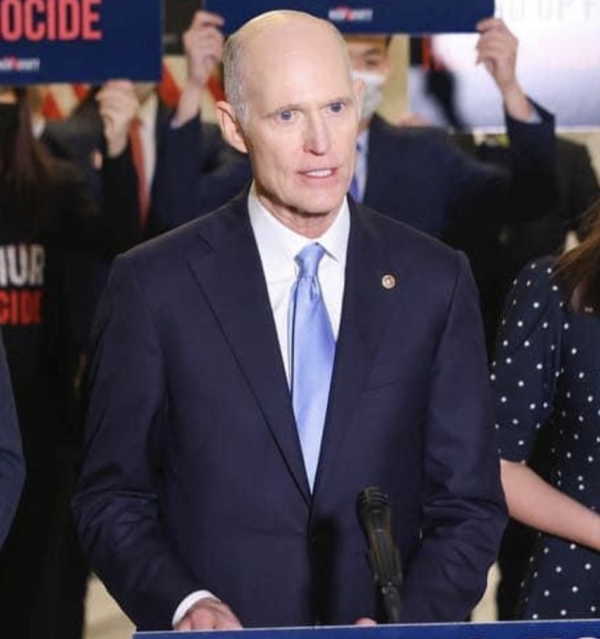
Sen. Rick Scott (R-FL), Wikimedia Commons
Any older voters inclined to put the GOP back in control of the House and Senate in November’s elections might well remember what the Republicans have long wanted to do to their earned benefits. As if to provide that very reminder, Senator Rick Scott, chair of the National Republican Senatorial Committee, released a plan last week that could effectively terminate Social Security and Medicare.
“Scott’s agenda would require Congress to reauthorize every federal law after five years, a step that could imperil Social Security and Medicare should a future Congress choose not to renew the programs.” – Business Insider, 3/4/22
This plan comes from the man responsible for crafting the GOP’s messaging for re-taking the Senate in 2022. But it drew a quick rebuke from Republican Senate leader Mitch McConnell.
“We will not have as part of our agenda a bill that… sunsets Social Security and Medicare after five years. That will not be part of the Republican Senate majority agenda.” – Sen. Mitch McConnell, 3/1/22
While it could be reassuring that Senator McConnell dismissed Scott’s plan so quickly, the GOP has always been fairly good at claiming to support Social Security and Medicare, while offering policies to undermine them. Just before President Trump took office, Rep. Sam Johnson (then the chair of the House Social Security Subcommittee) unveiled a plan that would cut benefits by 30% by raising the retirement age. Later, Republicans from both houses of Congress demanded “entitlement reform” after the Trump/GOP tax cuts added more than $1 trillion to the federal debt. President Trump himself played fast and loose with Social Security, suspending the payroll tax that funds the program despite promising “not to touch” the program.
With the 2022 mid-term elections fast approaching, older voters would be wise to remember that many in the Republican party opposed Social Security and Medicare from the beginning and have never wholly supported either program, despite rhetoric to the contrary. During the past four decades, plenty of Republicans have advocated shrinking federal programs that older and economically vulnerable Americans rely on, while cutting taxes for the wealthy and promoting ‘corporate welfare.’
“Thousands of big American corporations rake in billions each year in government subsidies, bailouts, and tax loopholes—all funded on the taxpayer dime, and all contributing to higher stock prices for the richest 1 percent who own half of the stock market.” – Fmr. U.S. Labor Secretary Robert Reich, 9/18/21
In fact, Senator Scott’s plan for a new GOP majority would actually raise taxes on working people. The Washington Post reports that Scott’s proposal would affect more than 100 million Americans, including “the 32 million who (currently don’t) file returns, such as retirees.”
As if to re-emphasize the GOP’s hostility to programs that help everyday Americans, another prominent Republican Senator, Ron Johnson (WI) said he would like to see his party repeal the Affordable Care Act (ACA) if they win back the majority in November. When they held majorities in both houses during the first two years of the Trump administration, Republicans belied no hesitation to strip away health coverage from some 30 million Americans holding ACA policies. Fortunately, they failed. But only because Sen. John McCain cast the deciding vote against a “skinny repeal” in 2017.

Republicans would have succeeded in stripping health coverage from 30 million Americans in 2017… but for Sen. John McCain’s “No” vote
The Affordable Care Act is important to ‘near seniors’ (aged 55-65), who are not yet eligible for Medicare but tend to require care for chronic and severe conditions. Before the ACA, insurers could charge older patients five times as much in premiums as younger customers. The ACA also enhanced Medicare, including annual wellness visits with no out-of-pocket costs.
Threatening the very existence of Social Security and Medicare – and vowing to repeal the ACA – should show voters who the GOP really are, and what their true agenda is. Many seniors voted in their own interest and migrated over to the Democrats in the 2018 and 2020 elections. Senators Scott and Johnson have just reminded older voters what’s at stake in 2022.
President Takes on Big Pharma, Nursing Homes in SOTU speech
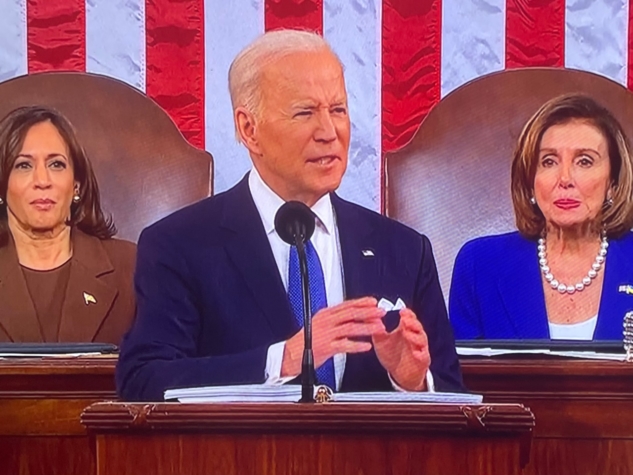
In his first State of the Union speech, President Biden addressed the ever-rising prescription drug prices that continue to plague Americans — especially seniors — and called on Congress to pass legislation to provide relief. “Let’s cut the cost of prescription drugs. We pay more for the same drug produced by the same company than any other country in the world,” said the President Tuesday night. “And while we’re at it, let Medicare negotiate lower prices for prescription drugs, like the VA already does.”
“President Biden was right to keep urging Congress to lower prescription drug prices during tonight’s address. Millions of seniors are suffering from sky high prescription prices. The President’s Build Back Better plan would have been a good start in taming drug costs. But with that legislation now stalled in the Senate, the President is correct that it’s incumbent on Congress to find another way to pass prescription drug reform legislation.” – Max Richtman, President and CEO of the National Committee to Preserve Social Security and Medicare.
The National Committee to Preserve Social Security and Medicare maintains that any meaningful reform must, at the very least, include Medicare price negotiation and caps on Americans’ out-of-pocket drug costs. But even those commonsense measures have confronted a wall of opposition from Big Pharma. The drug industry has unleashed a relentless lobbying campaign against even the most basic reforms — and has continued to shower Congress with hefty campaign contributions. Meanwhile, during the first month of 2022, drug-makers increased the prices of over 700 medications.
“Many seniors find themselves rationing vital medications or simply not filling prescriptions due to cost. The President is on the right track. Lawmakers must decide whether their allegiance is to the American people — who support prescription drug price reform by overwhelming majorities — or to torrents of drug industry dollars.” – Max Richtman
The President has made his priorities for America’s seniors clear. Now it is up to Congress to act, not only to lower prescription drugs, but to expand and strengthen seniors’ earned benefits. Congress must act soon to ensure that Social Security’s trust fund reserves do not become depleted as projected by 2034. At the same time, Social Security benefits must be boosted to meet the growing costs of growing old in America.
Rep. John Larson’s bill, the Social Security 2100: A Sacred Trust, would both protect and expand Social Security. It has 200 cosponsors in the U.S. House of Representatives and should be brought up for a vote this spring.
Meanwhile, Medicare must be expanded to include much-needed hearing, vision, and dental coverage. Last year, all three of these were under consideration as part of the President’s Build Back Better plan, though only hearing benefits survived in the final package.
“Roadblocks in the Senate prevented passage of the entire Build Back Better plan, killing Medicare expansion for now. Though the President did not include this in the State of the Union, seniors are counting on lawmakers to consider their most urgent needs moving forward. And they are counting on the President to keep the pressure on Congress to do the right thing.” – Max Richtman
The President also addressed shortcomings at U.S. nursing homes made glaringly evident during the COVID pandemic. He noted that “quality in those homes has gone down and costs have gone up,” adding, “That ends on my watch.” He promised that Medicare will set higher standards for nursing homes “and make sure your loved ones get the care they deserve and expect.”
The Connection Between Social Security and Black History Month

On the surface, Social Security may not seem to be a relevant topic for Black History Month. But it is. Social Security has helped provide Americans with basic financial security for generations of retirees, the disabled and their families. It has been especially beneficial to Black Americans – whose average earnings and retirement savings are lower than their white counterparts’.
One-third of elderly Black couples and nearly two-thirds of unmarried Black seniors rely on Social Security for almost all of their monthly income. It is a bedrock of financial stability. Without Social Security, 50% of Black Americans would be living in poverty.
In a 2020 article entitled, “Viewing Social Security Through the Civil Rights Lens,” NAACP President Derrick Johnson wrote about the program’s crucial role in the Black community:
“Today’s Social Security program protects Black families through retirement, disability, or death. Its insurance benefits are critical for African Americans who have fewer resources and become disabled at higher rates. Its progressive structure helps low-income earners — many of whom are African American — receive more benefits in relation to past earnings than high-wage earners.” – Derrick Johnson, NAACP President, 8/14/20
People of color rely more heavily on Social Security because of a lack of other income in retirement. Few elderly Black Americans receive income from pensions and assets. White families have about six times more in average retirement savings than black families. This is because workers with lower earnings have a harder time saving. The average white man earns $2.7 million over a lifetime, while the average Black man earns $1.8 million. But Social Security is even more crucial for Black women, who typically live longer than men and have to stretch their financial resources over a longer span of years.
“For Black women, Social Security is a critical lifeline out of poverty. Given their longer lifespan and caregiver responsibilities across multiple generations, many of them have an increased reliance on Social Security during retirement. In addition, Black women’s lower lifetime earnings — which lag behind those of White men and women and Black men — make them even more dependent on Social Security’s progressive structure.” – NAACP, 8/14/20

When President George W. Bush tried to privatize Social Security in 2005, the NAACP, the Congressional Black Caucus, and seniors’ advocacy groups (including the National Committee to Preserve Social Security and Medicare) successfully fought against it. President Bush sought to rationalize privatization (in part) by falsely claiming that Social Security was not a fair deal for Black Americans, who don’t typically live as long as other demographic groups and collect benefits for a shorter period of time.
“Recognizing the shorter life expectancy of people of color is commendable, but placing them further at risk is no solution,” said Julian Bond, who was Chairman of the NAACP at the time. Bond urged President Bush to focus instead on “the long-term problems the system faces now.”
With Social Security’s trust fund projected to become depleted in 2034, protecting the program’s financial integrity is paramount – not only for Black Americans but for all current and future beneficiaries. Rep. John Larson, chair of the House Ways and Means Social Security Subcommittee, has put forth legislation to extend the solvency of the program and boost benefits for the most vulnerable retirees – including widows/widowers and those living close to the poverty line.
Perhaps the most eloquent summary of the connection between Black History Month and Social Security was penned by Rep. Barbara Lee (D-CA). “Black History Month is an accounting and a representation of a generation’s work and pride distinguishing itself in our great country,” she wrote in 2011. “Social Security, too, is an accounting and representation of our lives spent working, paying into a system and being rewarded for it in our old age.”
Medicare To Cover At-Home COVID Test Kits

Wikimedia Commons
Seniors on Medicare soon won’t have to pay for over-the-counter COVID test kits, thanks to a rule change from the Centers for Medicare and Medicaid Services. CMS announced Wednesday that Medicare will begin covering the cost of home kits sold at pharmacies and other retailers starting in early spring.
It’s a reversal of course for the Biden administration, which last month required insurance companies – but not Medicare – to cover retail at-home test kits. Seniors and their advocates strongly objected to the original policy. On January 24th, the National Committee to Preserve Social Security and Medicare, along with 50 other advocacy groups, sent a letter to Health and Human Services (HHS) Secretary Xavier Becerra and CMS administrator Chiquita Brooks-LaSure, urging that Medicare cover over-the-counter test kits:
“The Administration’s efforts to increase outreach and education about vaccines, boosters, testing, and masks are important. However, we are urging HHS to do more to truly center its response on protecting the lives of older adults and people with disabilities in communities most at risk (by extending) coverage of at-home over-the-counter COVID-19 testing, with no cost-sharing, for all people on Medicare.” – Advocates’ letter to HHS and CMS, 1/24/22
As CNN reported, some seniors on Medicare complained that their over-the-counter COVID tests should be covered like everyone else’s. Many beneficiaries live on fixed incomes and cannot afford to buy the tests.
“The shift means that Medicare and Medicare Advantage enrollees will be able to pick up home tests at no cost. The agency will release a list of participating pharmacies and retailers when coverage begins.” – CNN, 2/02/22
The rule change will give seniors a convenient option for COVID testing. Medicare already covered COVID tests administered by doctor’s offices and laboratories – along with testing for patients with a prescription from their health care provider.
Beginning in early spring, Medicare enrollees – like patients with private insurance – will be able to order eight free home test kits per month. Before the new coverage goes into effect, the administration recommends that beneficiaries wishing to acquire home test kits at no cost visit the recently-launched government distribution site at covidtests.gov.
Seniors’ Champions in Washington State Continue to Lead the Way on Long-Term Care, Despite Roadblocks

The Washington State capitol in Olympia, cradle of the nation’s first comprehensive, public long term-care insurance program (Wikimedia Commons)
In 2019, the state of Washington plunged headlong into the treacherous waters of public long-term care insurance with WA Cares – the first comprehensive program of its kind in the country. WA Cares was born out of the realization that most seniors will need some form of long term-care at some point in their lives, but may not be able to afford the exorbitant costs – which can amount to tens – if not hundreds – of thousands of dollars per year. Policymakers wanted the state to be prepared for the swelling number of Baby Boomers who would eventually require care but not be able to pay for it on their own.
The need for government-sponsored long-term care insurance has become increasingly obvious. The private long-term care insurance market is in retreat. Private policies are expensive and hard to find. Many people falsely believe that Medicare covers long-term care, but it doesn’t (except for a limited amount of time after hospitalization or acute illness). Nonetheless, a recent AARP survey indicates that 78% of voters think that Medicare pays for extended long-term care.
“Middle-income families do not anticipate how much long-term care is going to cost. Unless they have extra financial resources, they’re stuck with the cost of long-term care. And their only alternative is to spend down to poverty and go onto Medicaid. This is about giving people a choice about how they want to age and live out their lives when they need long-term care.” – Cathy MacCaul, advocacy director at AARP Washington, 1/26/22
AARP Washington was a prime mover in the creation of WA Cares, working with Governor Jay Inslee, the state Department of Social and Health Services (DSHS), other members of the advocacy community, and Democratic state legislators. The coalition celebrated the enactment of WA Cares three years ago, only to run into severe political turbulence today.
The current controversy surrounds the .058% payroll tax to fund the program, which was imposed beginning January 1st, 2022. Republicans insist it’s a burden for taxpayers – a bad deal – and claim that the program is insolvent, none of which is true. (More on that below.) Nevertheless, the legislature has voted to suspend the payroll tax for 18 months, and is in the process of revisiting the original law.
“Democrats hope by then to erase concerns about the future solvency of their initiative to provide workers with money to defray the costs of long-term care. Republicans hope by then to kill the program as now designed, and maybe replace it with something else.” – Forbes, 1/9/22
Advocates acknowledge that WA Cares was not properly marketed to the public once the law was enacted in 2019. In fairness, the COVID pandemic came less than a year later, shoving other issues aside. Suddenly, people were talking about seniors dying from COVID, not WA Cares. Advocates say the ‘messaging vacuum’ gave the program’s conservative opponents (including the private insurance industry) an opportunity to sweep in and turn the public against it.
“We were caught not controlling the narrative,” says AARP Washington’s policy director, Cathy MacCaul. “The first message consumers got was, ‘This is not good,’ with no context, without any information regarding the actual need for public long-term care insurance.”
While Republicans pledge to use the year-and-a-half delay to “kill” the program, advocates view the 18-month hold as an opportunity to improve the law. Similar to the Affordable Care Act, WA Cares’ authors knew that the original law wasn’t perfect and would need adjustments. Targeted improvements include ensuring that near-retirees can access benefits – and enacting payroll tax exemptions for people who worked in Washington state but moved elsewhere, military spouses, and some veterans.
MacCaul compares the program to a train that needs a fresh coat of paint. “Do you try to paint the train while it’s rolling down the track, or do you stop the train and paint it? We think it makes sense to hold the train, look at all the data we’ve accumulated, and make sure everything is in place that the program needs.”
WA Cares provides a $36,500 lifetime benefit for those who paid into the program for ten years and need long-term care at some point in their lives. The benefit is to be paid directly to providers by DSHS. With the .058% payroll tax, a resident earning $50,000 in annual income would contribute less than $300 per year in exchange for the long-term care benefit. It’s a classic social insurance model, patterned after Social Security and Medicare Part A. MacCaul says actuarial projections indicate that, with the payroll tax revenue invested in U.S. treasury notes, WA Cares will remain solvent until at least 2075, contrary to Republicans’ claims.
To the GOP’s argument that the $36,500 benefit is “insignificant,” MacCaul responds that while a few months of nursing care can cost that much, the benefit also applies to less expensive in-home care. “The benefit might be put toward 4-5 hours a day of in-home care for more than a year. It could be used for a home modification for a patient with disabilities, for home-delivered meals, or to pay a family caregiver,” she says, reflecting a newer, broader concept of long-term care beyond sticking seniors in nursing homes.
AARP’s October, 2021 survey suggests the need for more public outreach about the positives of the WA Cares program. In that survey, 51% percent of voters supported the program, 33% opposed it, and 15% were unsure.
“Support for the program increases as people learn more about the specific features of WA Cares and how it differs from what is currently available from private long-term care insurers.” – AARP Survey, October, 2021
The absence of a federal long term care insurance program has left individual states like Washington to explore solutions on their own. The National Committee to Preserve Social Security and Medicare has long advocated for a federal program. There have been efforts in Congress, most recently from Rep. Thomas Suozzi (D-NY), to craft federal long-term care legislation, but so far those efforts haven’t gained traction. (The ill-fated federal CLASS Act, enacted under President Obama, would have provided consumers with help paying for long-term care, but proved to be financially infeasible and had to be shut down in 2011.) While advocates continue to press the federal government to enact a long-term care program at some point in the future, Washington state is doggedly leading the way.