



Iowa GOP Senate candidate Ashley Hinson scolds Millennials for not saving enough for retirement
It’s been quite a week for Republicans telling us how they really feel about Social Security – from the President to GOP candidates in key races. On Wednesday, President Trump admitted that he wanted to privatize Social Security “so badly” after he won in 2016, but “Democrats and some Republicans” stopped him, because it was “risky.” You think?
“I wanted to ride with Social Security being fully invested in the stock market, in the first month of my first year. I wanted to do it so badly.” – Trump, 9/7/26
Read here why gambling workers’ earned benefits on Wall Street is such a terrible idea – albeit one that would line the pockets of Trump’s pals in the financial sector.
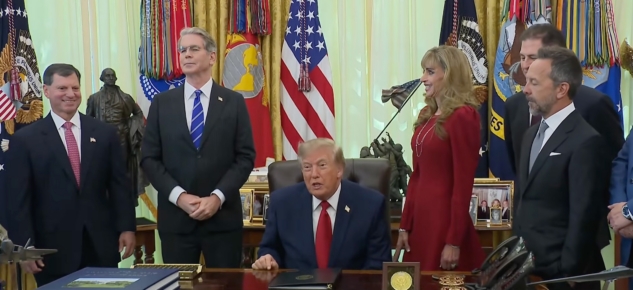
Trump made the privatization remarks at an Oval Office event touting his so-called “Trump Accounts” for children, which the President has described as “a version” of what Social Security privatization could look like. It wasn’t reassuring that Social Security Commissioner Frank Bisignano – who has overseen the decimation of the agency (SSA) that administers the program – stood beaming by Trump’s side.
Meanwhile, GOP Senate candidates in key races seemed anxious to share their own reckless ideas about Social Security. Houston Public Media reports that Texas Republican senate candidate Ken Paxton called for “cuts to mandatory spending,” which includes Social Security. (Paxton’s comments were captured on audio during a private fundraiser with Washington lobbyists.)
Paxton’s Democratic opponent, James Talerico, opposes benefit cuts and supports raising more revenue for Social Security by requiring wealthy earners to pay their fair share. “Every Texan deserves to know they’ll be able to retire and reap the benefits of Social Security,” Talerico told AARP. “I will fight to ensure all Americans can afford to retire and stand up against any and all attacks on Social Security.”
In Iowa, Republican Senate candidate Ashley Hinson, now a member of the U.S. House, said in 2020 that she was “open” to raising the Social Security retirement age for today’s younger adults – a huge lifetime benefit cut. In an apparent attempt to alienate younger voters even more, Hinson chastised Millennials for failing to save for retirement, calling them “the worst group of savers” during a debate segment this week about Social Security.
The subtext is that we could cut Social Security if only these youngsters would save more money! Apparently, no one has told Hinson that many Millennials are grappling with exorbitant living costs, crushing student debt, and unaffordable home prices that just might affect their ability to sock money away for retirement. Absent employer-provided pensions (increasingly rare), Millennials will depend on Social Security even more than today’s seniors do. But Hinson is open to making them wait longer to retire.
During the Iowa debate, Hinson’s Democratic opponent, Josh Turek, advocated for strengthening Social Security by adjusting the payroll wage cap. “Let’s make sure that billionaires and large corporations are paying their fair share. That will move the needle in a very serious way to keep Social Security solvent.”
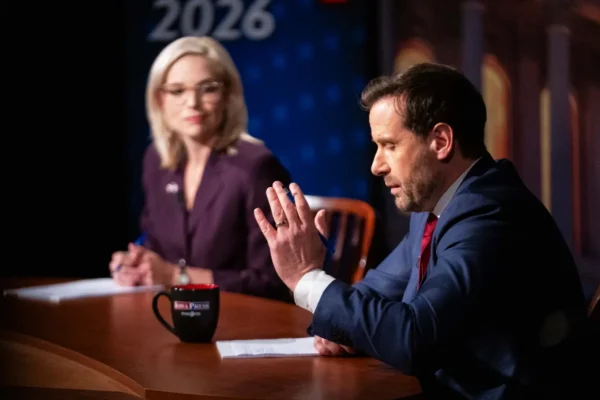
Iowa Democratic Senate candidate Josh Turek says: Make the wealthy pay their fair share for Social Security
Hinson and Paxton are not alone among Republican candidates. Michigan Senate contender Mike Rogers “pushed for overhauling Social Security, including supporting measures to privatize the program” as a member of Congress. Yahoo! news reports that “Rogers’ various campaign committees have accepted more than $1.4 million from businesses that would benefit from the privatization of Social Security.”
In New Hampshire, Republican Senate candidate John Sununu helped lead the charge on Capitol Hill during George W. Bush’s campaign to privatize Social Security in 2005, co-authoring a privatization bill with Rep. Paul Ryan. Thankfully, that effort stalled in the face of massive public pushback. But do we want a Social Security privatizer in the next U.S. Senate?
When it comes to Social Security, Democrats are squarely aligned with the public. Polling during the past two years indicates that large, bipartisan majorities of voters support Social Security and do not want to see it cut or privatized. These polls further suggest that people are willing to pay more for Social Security if it means the program will be preserved for the future.
Many Republicans say they “support” Social Security. But they push proposals – germinated in corporate and billionaire-funded think tanks – to cut and privatize it, which would only jeopardize workers’ retirement security. House Speaker Mike Johnson said, rather cryptically, that Republicans have a “plan” to “fix” the program next year, but hasn’t disclosed exactly what that plan is. This is why we say that Social Security is most definitely on the ballot in November.
With the Social Security trust fund reserves projected to become depleted in 2032 (triggering a huge automatic benefit cut) absent congressional action, members of the next House and Senate must determine the future course of Social Security. We know what the financial elites want: to end the program as we know it. Likewise, we know from polling where the majority of the public stands — but it’s up to voters who want Social Security strengthened to make their voices heard in November.
*************************************************************************************
Check our ratings of your elected representatives on our 2026 Legislative Scorecard.