- Published On: February 21st, 2020Categories: Congress, Don't Cut Pills Cut Profits, Max Richtman, Medicaid, Medicare, President Trump, Social Security, Uncategorized

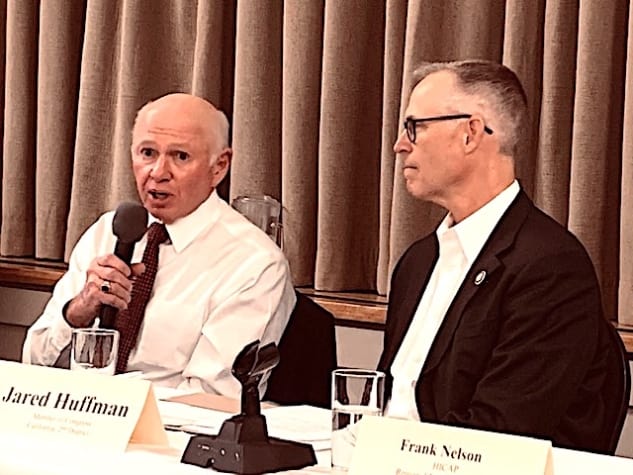
National Committee president Max Richtman brought a message of optimism and vigilance to a gathering of seniors in the San Francisco Bay area yesterday. He joined Congressman Jared Huffman (D-CA) for a packed town hall with seniors and community leaders in Mill Valley, California. Richtman warned attendees that their earned benefits could be threatened in a second Trump administration, while insisting that grass roots advocacy – and voter engagement – can protect older Americans’ retirement and health security.The town hall took place just one week after President Trump unveiled a budget plan that would slash half a trillion dollars from Medicare, while cutting $900 billion from Medicaid and $90 billion from Social Security Disability Insurance, which his budget chief once insisted was not part of Social Security.
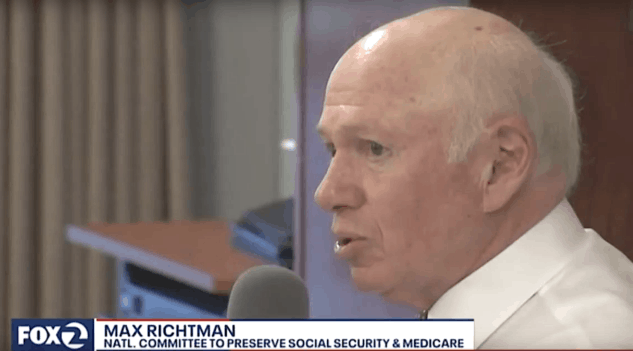
Watch television coverage of the town hall with Max Richtman and Rep. Huffman here
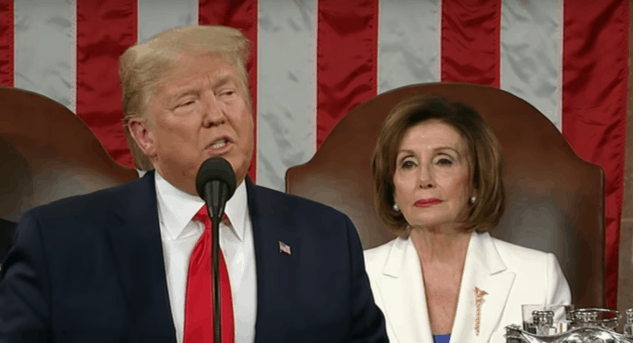
Richtman told seniors at the town hall that the budget proves President Trump cannot be trusted when he vows to “protect” Social Security, Medicare, and Medicaid – as he did during the State of the Union on February 4th, a sentiment affirmed by Rep. Huffman:
“The federal budget is a statement of values: it’s not a tweet, it’s not a speech – it’s the cold hard truth of where you plan to spend the taxpayers’ money. Unlike the president, I’m committed to keeping promises, and I won’t back down when it comes to protecting Medicare, Medicaid, and Social Security.” – Rep. Jared Huffman, 2/20/20
Both Richtman and Huffman sought to undercut the language of fiscal hawks, who speak of “entitlement reform” to mask their intention to cut benefits. “Make no mistake,” said Richtman, “Social Security and Medicare are not ‘entitlements.’ They are earned benefits that you paid for during your entire working lives. Seniors need every penny of those benefits in order to remain financially and physically healthy — and cannot afford benefit cuts.”
President Trump said he’d protect Americans’ earned benefits, but his budget belies those claims
The National Committee has fought for and endorsed the Social Security 2100 Act, which would boost benefits and keep the program on a sound financial course for the rest of the century. Congressman Huffman is a strong supporter and one of the bill’s more than 200 co-sponsors in the U.S. House.
“The Social Security 2100 Act will provide an across-the-board increase for all beneficiaries, strengthen the Social Security trust fund by ensuring that millionaires and billionaires pay into the system, and improve cost of living adjustments going forward.” – Rep. Jared Huffman, 2/20/20
Rep. Huffman and Max Richtman pushed back against the President’s proposed cuts to Medicaid, which helps pay for seniors’ long term care services and supports. Even if the Trump budget is, as predicted, dead on arrival in Congress, the administration is actively working to undermine Medicaid through the rulemaking process – including maneuvers to promote harmful block grants and onerous work requirements that could cause older beneficiaries to lose health coverage.
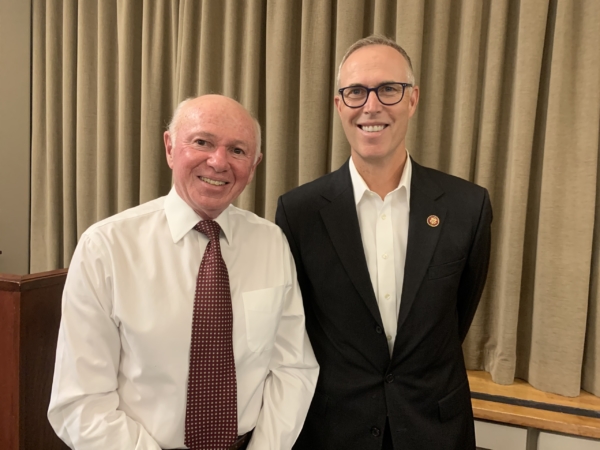
National Committee president Max Richtman and Rep. Jared Huffman (D-CA)
Richtman has been engaging with seniors around the country, hearing their concerns and encouraging support for candidates this election year who support Social Security, Medicare, Medicaid — and lowering prescription drug prices. He heads next to Vacaville, CA for a town hall with Rep. John Garamendi (D-CA) and area veterans on February 24th.
- Published On: February 10th, 2020Categories: Budget, Disability, Election 2020, entitlement reform, healthcare, Meals on Wheels, Medicaid, Medicaid Budget, Medicare, Social Security
President Trump’s just-released 2021 budget proposal would leave seniors and other vulnerable citizens hungrier, sicker, and poorer. The spending plan betrays the president’s promises “not to touch” Social Security, Medicare and Medicaid. The administration wants to slash $478 billion from Medicare over a decade, which could compromise health care access for millions of seniors. It would gut Medicaid with some $1 trillion in cuts over 10 years, undermining older Americans’ access to long-term care. Social Security Disability Insurance (SSDI) and Supplemental Security Income (SSI) also would be slashed. Other cold-hearted cuts include the elimination of grants that feed low income seniors and help keep their homes heated in the winter. Though the budget proposal likely won’t be adopted by Congress, it does reveal the president’s cruel priorities heading into the 2020 election.
“One would hope that in an election year when politicians like to put forward their most popular ideas, the President would understand the benefits of protecting our most cherished income and health security programs. It’s time he delivers what the American people have been asking for, as indicated by poll after poll, and not the dangerous proposals of his fiscal axe-men.”- Max Richtman, president and CEO of the National Committee to Preserve Social Security and Medicare
Among other things, the President’s FY 2021 budget:
-
Cuts $478 billion from Medicare over ten years.
-
Cuts Social Security [Disability Insurance and SSI] benefits by 90 billion over 10 years.
-
Cuts $1 trillion from Medicaid and Affordable Care Act subsidies over ten years.
-
Eliminates all federal block grant programs that help to fund Meals on Wheels.
-
Eliminates the Low Income Home Energy Assistance Program (LIHEAP)
-
Eliminates the Senior Community Service Employment Program
“This budget foreshadows a broader attack on seniors’ earned benefits that President Trump hinted at in a recent interview, when he said that cutting ‘entitlements’ is ‘the easiest of all things.’ Our most vulnerable citizens should not be expected to pay for policies that favor the wealthy and big corporations, most notably the Trump/GOP tax cuts of 2017,” said National Committee president and CEO Max Richtman.
Sign our petition to stop President Trump’s budget cuts!
-
- Published On: February 5th, 2020Categories: Election 2020, entitlement reform, Max Richtman, Medicare, President Trump, Social Security
National Committee president and CEO Max Richtman issued the following statement in response to last night’s State of the Union address:
“President Trump paid lip service to preserving Social Security in his State of the Union address tonight, but obscured his true intentions regarding a program that covers 178 million workers — and which another 64 million Americans depend on for basic financial security. The President owed it to the American people tonight to honestly explain his plans for the program’s future, including his recent comments that he would consider cutting ‘entitlements’ because ‘it’s the easiest thing to do.’ By failing to be forthright, President Trump empowers fiscal hawks who want to slash and privatize the program, while breaking his campaign promise to protect seniors’ earned benefits.
In touting a ‘strong’ economy, the President ignores the $1.6 trillion in annual economic stimulus that Social Security benefits provide. The President should realize that cutting Social Security would hurt the vaunted ‘Trump economy.’
The President also was not forthcoming tonight about his efforts to reduce prescription drug prices. He has failed to support legislation to allow Medicare to negotiate costs directly with Big Pharma. His own proposals have been weak, tossed out by the courts, or withdrawn. President Trump has yet to demonstrate a willingness to take on Big Pharma in a meaningful way, preferring to work around the edges. If our economy is as prosperous as President Trump claims, then why are so many citizens cutting pills or forgoing the groceries they need to feed their families? We must take concrete action now to lower exorbitant drug prices. Congress should pass meaningful prescription drug legislation now, and President Trump should sign it into law.
President Trump did little tonight to reassure seniors and their families that he will protect their financial and health security. His administration will continue to favor the wealthy and large corporations, while targeting Americans’ earned benefits and tearing away at the social safety net. For a president who seeks re-election, he clearly is on the wrong side of these life and death issues.”
- Published On: January 29th, 2020Categories: Democrats, Disability, Social Security Administration (SSA), Social Security Disability Insurance, Trump Administration
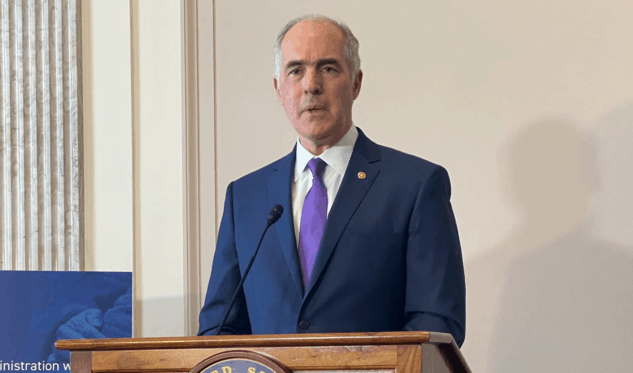
Senator Bob Casey spearheads event to protest Trump administration disability rule
Calling a proposed new Trump administration rule a “brutal and vile attack on the Social Security Disability Insurance (SSDI) system,” lawmakers and advocates pledged on Tuesday to fight back “with all their might.” The Social Security Administration wants to impose a new layer of disability review on SSDI beneficiaries – effectively forcing them to “re-prove” their disabilities every two years. This new step (which advocates say amounts to an “audit”) will compel beneficiaries living on fixed incomes to produce additional medical and financial records – and could ultimately strip millions of their disability benefits.
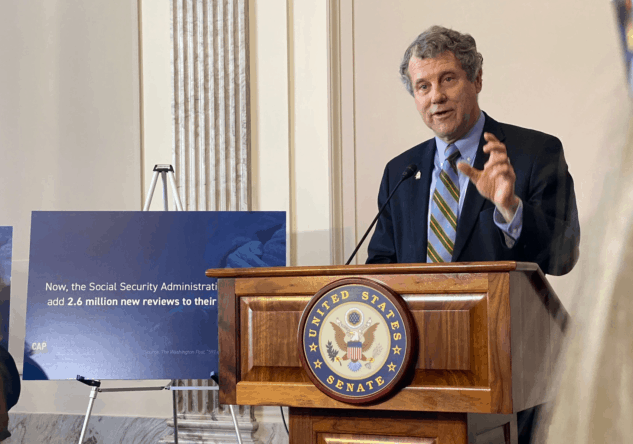
Senator Bob Casey (D-PA), Senator Sherrod Brown (D-OH), and Rep. Brendan Boyle (D-PA) joined representatives from national seniors and disability organizations on Capitol Hill to passionately denounce the new rule.
“This proposal is wrong. It’s a mistake. And it’s adverse to people with disabilities.” – Sen. Bob Casey, 1/28/20
“This new rule is cruel, wrong, and not in keeping with our vision of a just society.” – Rep. Brendan Boyle, 1/28/20
“There is no other reason for this rule than cruelty or mean-spiritedness. We need to energetically push back.” – Sen. Sherrod Brown, 1/28/20
Forty-one Senators (including Casey and Brown) have sent a letter to the Social Security Administration opposing the “harmful and unnecessary” rule. On the other side of the Hill, more than 100 members of Congress (including Rep. Boyle), signed a similar letter demanding the administration reverse course.
The public has a chance to comment on the new rule through the end of the work week. Lawmakers and advocates urged concerned Americans to make their voices heard before it’s too late. They point out that roughly one third of American households include a person with disabilities who currently relies on SSDI benefits or may at some point in the future.
Senator Sherrod Brown: “There is no other reason for this rule than cruelty or mean-spiritedness.”
The lawmakers accuse the administration of intentionally undermining the Social Security program through administrative action (or, as Senator Casey put it, “Death by a thousand cuts”), knowing that legislative ‘reforms’ would be overwhelmingly unpopular with the public. (GOP Senator Joni Ernst famously proposed the problem be solved “behind closed doors.’)
Advocates took special umbrage at the fact that the current Social Security Disability review process is already overly burdensome for beneficiaries.
“They’re going to use an already flawed process to harm older Americans and children,” said Jonathan Stein, Executive Director Emeritus at Community Legal Services in Philadelphia.
Stein pointed out that the Reagan administration imposed a similar rule that wracked “devastation on the lives of hundreds of thousands of people” in the 80s and was ultimately revoked under public pressure. The Trump administration’s rule, he says, represents a “replay of this terrible history.”
Advocates believe the Trump administration’s apparent enmity toward programs that help society’s most vulnerable is mainly ideological. The objective, they say, is to cut safety net programs (including Social Security, which is 100% self-funded) in order to re-distribute wealth to the rich, noting that the deficit-swelling Trump/GOP tax cuts mostly benefitted the top 1%.
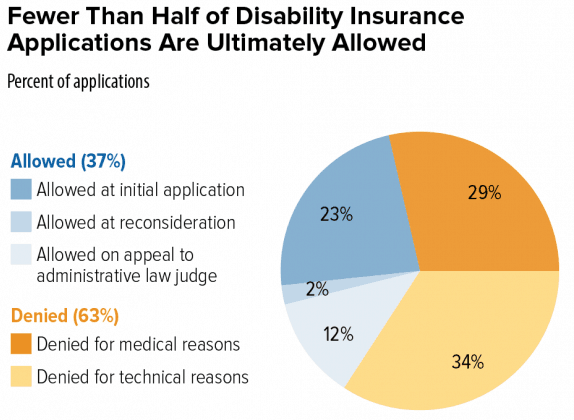
Social Security Disability Insurance is incredibly difficult to obtain (Source: Center for Budget and Policy Priorities)
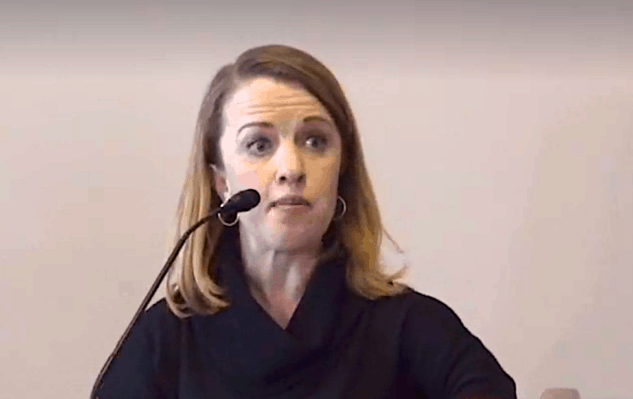
To some extent, this latest scheme capitalizes on common misperceptions that federal disability recipients are somehow scamming the system. To the contrary, Rebecca Cokley of the Center for American Progress reminds the public that disability beneficiaries are “not fakers, takers, or money makers.” It is incredibly difficult to receive SSDI (six in ten claimants are rejected). The average monthly SSDI benefit is a mere $1,200 or roughly $14,000 annually. (The federal poverty level is about $12,500.) Some disabled beneficiaries receive significantly less. Beneficiaries already undergo periodic disability reviews for which they must produce medical records and other documentation, usually without any outside help.
Rebecca Cokley of the Center for American Progress: “Disability beneficiaries are not ‘fakers, takers, or money-makers.'”
Adding the new level of review will cost the government nearly $2 billion, without producing significant net cost savings. Yet the proposed rule will snag more than 2.6 million disabled Americans, many of whom could be stripped of their benefits (though Rep. Boyle accused the administration of hiding the projected numbers).
“Ultimately,” said Rep. Boyle, “We will figure out the human toll of misery” that the new rule exacts on children, older adults, and other Americans with disabilities – unless, of course, the public lets the Trump administration know by Friday that its mean-spirited proposal is completely unacceptable.
********************
The National Committee urges anyone opposing President Trump’s disability rule to comment here.
Sign our petition to Boost Social Security now!
- Published On: January 15th, 2020Categories: Democrats, Election 2020, GOP, Long term care, Max Richtman, Prescription Drug Prices, Social Security
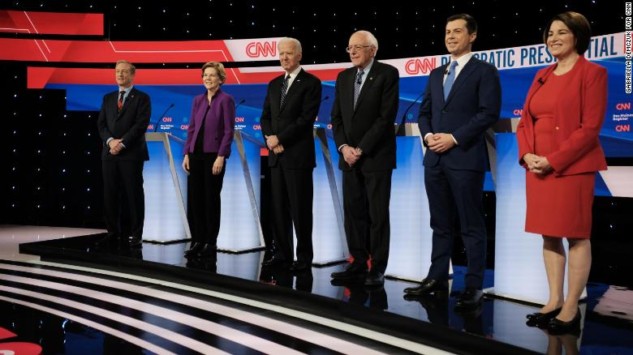
We have just witnessed the seventh Democratic presidential debate of the 2020 election cycle without a single question about Social Security. The candidates tussled over foreign and domestic policy, but no one mentioned the program that 64 million Americans depend on for basic financial security – at a pivotal time when Social Security could be expanded and strengthened, or weakened and cut.
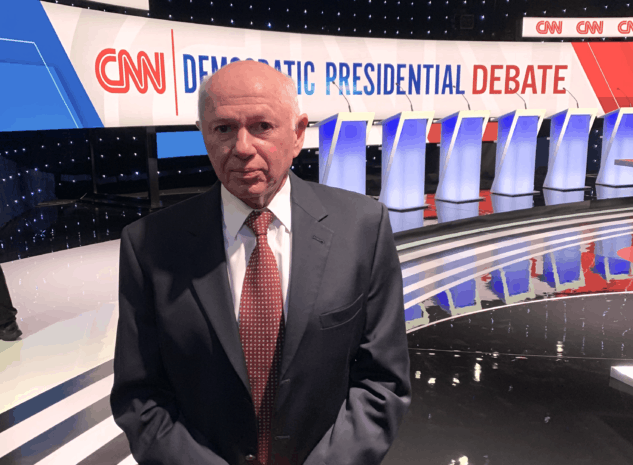
“I thought the moderators would, at long last, ask the candidates about Social Security,” said National Committee president and CEO Max Richtman, who attended last night’s debate at Drake University in Des Moines. “Needless to say, I was very disappointed.”
On Tuesday, the Des Moines Register (which cosponsored the debate with CNN) published an op-ed by Richtman and former Iowa Senator Tom Harkin, insisting that Social Security receive the attention it warrants:
As President Franklin Roosevelt made clear when he signed Social Security into law, the program is a ‘cornerstone in a structure… which is by no means complete.’ He understood that the program would need to be expanded over time. Presidential contenders in the party of Franklin Roosevelt must be asked about Social Security’s future on the debate stage. Seniors deserve to hear their answers. – Fmr. Senator Tom Harkin and National Committee President Max Richtman, Des Moines Register
For the past seven months, the National Committee has repeatedly called upon debate moderators to ask the candidates about their plans for Social Security, but once again those appeals have fallen on deaf ears.
Most of the Democratic presidential candidates have touted their own proposals for boosting and strengthening Social Security on the campaign trail, but debate-watchers may not be aware.
Much is at stake for current and future retirees, the disabled, and their families. Just one day before the debate, the National Institute on Retirement Security released a new report which found that 40% of older Americans rely entirely on Social Security for retirement income. (Only 7% receive income from Social Security, a pension, and a defined contribution account like a 401K.) The average monthly benefit of $1,500 is barely sufficient to keep many seniors out of poverty. That’s why the National Committee endorses legislation that would give seniors a boost in benefits while keeping Social Security financially healthy through the end of the century.
Meanwhile, prominent conservatives – from Trump budget director Mick Mulvaney to Senate GOP leader Mitch McConnell – have called for Americans’ earned benefits to be “reformed” (which really means cut and privatized). These “reformers” blame the swelling national debt on Social Security, even though the program is self-funded. In fact, ‘tax expenditures’ – especially the Trump/GOP tax cuts of 2017 – are the main driver of the federal debt. The Democratic presidential candidates should rebuke this ploy to cut benefits. The debates provide a platform with millions of viewers who need to know.
National Committee president Max Richtman at the Democratic presidential debate in Des Moines
Although the candidates did not address Social Security last night, they did confront another issue that disproportionately impacts older Americans – soaring prescription drug prices.
“Senator Elizabeth Warren doubled down on a pledge to lower drug prices on her first day as president, using executive action to make it easier for generic drug makers to move in on brand-name drugs that were created using federally funded research.” – Stat News, 1/14/20
Candidates Joe Biden, Pete Buttigieg, Amy Klobuchar, and Bernie Sanders joined Warren in pledging to lower drug prices by various means, including price controls and allowing Medicare to negotiate drug costs with pharmaceutical companies. Senator Klobuchar also raised another crucial issue for seniors – the lack of affordable long-term care insurance:
“What should we do about long-term care, the elephant that doesn’t even fit in this room? We need to make it easier for people to get long-term care insurance. We need to make it easier for them to pay for their premiums.” – Sen. Amy Klobuchar, 1/14/20
“I was glad to see some of the candidates address prescription drug prices and long-term care,” said Richtman. “But the upcoming primary debates must include one of our most important social insurance programs, Social Security. We’ve been trying to put this on the radar for so long, and we’re going to keep trying.”