


Schumer-Manchin Negotiations May Yield Some Wins for Seniors
Wikimedia Commons
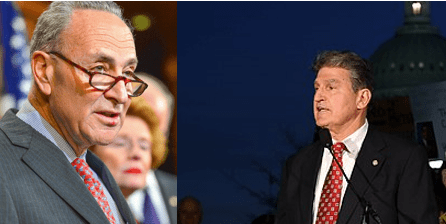
The negotiations between Senate Majority Leader Chuck Schumer and Senator Joe Manchin (D-WV) over a new budget reconciliation deal have been great fodder for political journalists, but they are also incredibly important to American seniors. Senators Schumer and Manchin are haggling over a pared-down version of the Build Back Better legislation, which the West Virginia Senator effectively killed earlier this year, designed to pass with only Democratic votes via the reconciliation process. The new package reportedly retains some crucial items for older Americans: prescription drug pricing reform and Medicare solvency.
According to press reports, the Schumer-Manchin deal finally would allow Medicare to negotiate prescription drug prices with Big Pharma – a marquee provision of the old Build Back Better plan. Drug price negotiation could save the Medicare program some $288 billion over ten years and exert downward pressure on prescription prices in general. This would be welcome news for seniors on fixed incomes who are skipping medications because of prohibitive costs.
“Under the Drug Price Negotiation Program (DPNP) that would be established in the Senate proposal, beginning in 2023, the secretary of health and human services would be required to negotiate lower prices for 10 of the most expensive drugs that lack market competition, with these prices going into effect in 2026. The number of drugs would increase to 20 by 2029.” – Center for American Progress, 7/12/22
The reconciliation bill reportedly also would cap Medicare Part D beneficiaries’ out-of-pocket drug costs at $2,000 per year. Currently, there is no limit on how much Medicare patients – whose median annual income is $26,000 – must pay out of pocket for prescriptions. The Schumer-Manchin deal would go further, requiring drugmakers to pay rebates for any price hikes exceeding the rate of inflation. “Just this year, some drug companies increased prices upward of 16 percent (more than double the rate of inflation), making already expensive drugs even more unaffordable,” observes the Center for American Progress.
There is more good news for Medicare in the reconciliation package. The Schumer-Manchin deal would bolster the solvency of the Part A Trust fund by closing a tax loophole so that wealthy business owners pay the 3.8% Net Investment Income Tax (NIIT). Revenue generated from the NIIT would be diverted to the Medicare Part A trust fund, which is currently projected to run dry in 2028. This provision would extend the life of the Part A trust fund for at least a decade from now, according to Rep. Lloyd Doggett, who introduced similar legislation in the House this week. NCPSSM President and CEO Max Richtman lauded Doggett’s legislation as a reasonable step to ensure Medicare’s financial health:
“The justifiably acute concern for the future solvency of the Medicare Trust Fund calls for common sense, immediate solutions that do not impose additional financial burdens on beneficiaries… (This legislation) meets both requirements by claiming misdirected tax revenue from the Treasury back to the Medicare Trust Fund.” – NCPSSM President and CEO Max Richtman, 7/11/22
None of this is certain. Senator Manchin signaled agreement with the Build Back Better plan throughout the past year, only to withdraw his support at the last minute. The current negotiations – which Senator Schumer is conducting virtually during his COVID isolation in Brooklyn – could fall apart at any time. Manchin told Politico, “(Senator Schumer) knows exactly where I’m at. Now whether (the Democrats) can get there or whatever, we’ll see.”
The deal reportedly taking shape is not nearly as ambitious or sweeping as Build Back Better, which would have expanded Medicare to cover basic hearing care. But seniors’ advocates, including NCPSSM, will gladly accept a partial victory that includes improved Medicare solvency without benefit cuts and the long-sought goal of prescription drug price negotiation. As the Center for American Progress so aptly put it, “After decades of inaction, Congress cannot let this effort for reform simply come and go.”
House Members Urge CMS to Expand Medicare Dental Coverage

More than 100 members of the U.S. House have sent a letter to the head of the Centers for Medicare and Medicaid Services (CMS) in an effort to expand Medicare dental coverage. (Traditional Medicare only covers “medically necessary” dental care in a narrowly defined way that excludes not only routine care, but many illness-related treatments.) The members implored CMS administrator Chiquita Brooks-LaSure to broaden the definition of “medically necessary” to cover many more types of dental care.
“To improve patient outcomes, promote greater health equity, and reduce Medicare spending, we urge CMS to use existing regulatory authority to improve coverage of medically necessary oral and dental care.” – House members’ letter to CMS, 6/29/22
Some 66% of Medicare beneficiaries have periodontal disease, but do not have dental coverage. Those who do have coverage can face high premiums, significant co-pays, and coverage limitations. In fact, many private dental plans only cover between $1,000-2,000 of dental care per patient per year.
The dearth of coverage and often unaffordable private insurance leaves many seniors without proper dental care. Neglecting dental care not only is bad for the teeth, but can negatively impact seniors’ overall health.
“Periodontal disease has been linked to other (medical) conditions, including diabetes, stroke, heart disease, kidney disease, and cancer. Nearly twenty percent of seniors have lost all their teeth and 68 percent have gum disease, resulting in seniors eating unhealthy foods that are easier to chew, but lead to elevated blood sugar and uncontrolled diabetes.” – House members’ letter to CMS
Expanding dental coverage also would significantly reduce Medicare’s costs. Simply by providing coverage for the treatment of periodontal disease for patients with heart disease, stroke, and diabetes, one study estimates that Medicare could save $63.5 billion over ten years.
In their letter, the House members urge CMS to expand Medicare dental and oral care coverage to include “all medically necessary situations,” including emergency room visits, hospitalizations for dental conditions in which oral bacteria is the underlying cause, Parkinson’s-related issues, multiple sclerosis, cancer treatment, organ transplant, and rheumatologic disease, among others.

Rep. Lloyd Doggett (D-TX), who had previously introduced a bill to expand dental coverage in traditional Medicare, signed the House letter to CMS
Even if CMS were to widen “medically necessary” coverage, that still would leave traditional Medicare patients without routine dental insurance – something the National Committee and other seniors’ groups have long advocated. Routine dental coverage in Medicare was included in early versions of the President’s Build Back Better plan but later removed. Expansions for hearing and vision coverage also were considered, to be paid for by savings from Medicare prescription drug price negotiation, but the entire bill stalled in the face of opposition from Senator Joe Manchin (D-WV).
The National Committee will continue to lobby on Capitol Hill for expansion, so that seniors’ teeth, eyes, and ears are more fully covered by traditional Medicare. Meanwhile, the House members’ advocacy for broadening Medicare regulations to include more types of dental care is a really good start.
For more information on dental care for seniors, visit our Aging, Health & Care web resource.
Republican Roundtable Revives Wrongheaded Ideas for Social Security
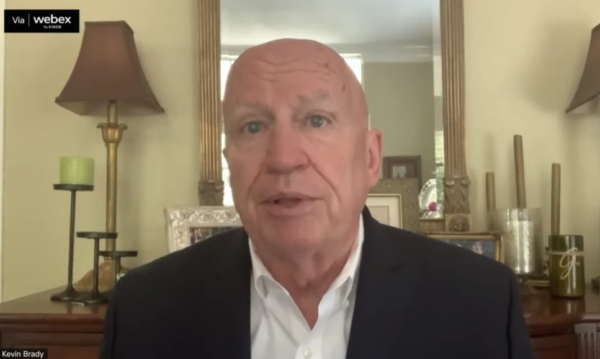
Ranking House Ways & Means Committee member Kevin Brady (R-CA) claims that Social Security “discourages work”
GOP members of the House Ways and Means Committee held an all-Republican roundtable on the future of Social Security on June 29th. That’s a little like holding an all-Red Sox roundtable on the future of the Yankees. Republicans have spent at least four decades devising ways to undermine Social Security – including their triad of terrible ideas: raising the retirement age, means-testing benefits, and privatizing the program. Now that Democrats have a viable bill (subcommittee chair John Larson’s Social Security 2100 act) to fortify the program and improve Americans’ earned benefits – Republicans are reviving tired arguments to oppose it.
“(Democrats) are more interested in crippling tax hikes and unsustainably expanding these programs – all of which will make the programs more expensive and make things harder on current and future workers,” said ranking House Ways and Means member Kevin Brady (R-CA), setting the tone for the entire roundtable.
What Brady refers to as a “crippling tax hike” is Rep. Larson’s commonsense proposal – supported by large bipartisan majorities of the American people – to adjust the Social Security payroll wage cap so that high earners pay additional contributions to the program based on wages exceeding $400,000 per year. That is hardly “crippling” to people with mid-six-figure incomes, and would bring much-needed revenue into the program, revenue that has been diminished by growing wage inequality pushing more and more people over the current $147,000 wage cap.
With that revenue, the Larson bill extends the solvency of the combined Social Security trust fund, which is projected to become depleted by 2035 if Congress takes no pre-emptive action. Equally as important, the bill improves benefits across the board – welcome news for seniors struggling to make ends meet on an average of less than $20,000 a year.
Ways and Means Republicans strained the anti-tax rhetoric further by suggesting that adjusting the payroll wage cap for people earning over $400,000 would “discourage younger individuals from participating in work,” according to ranking member David Schweikert (R-AZ). First of all, other than athletes and wildly successful tech entrepreneurs, most younger adults do not earn anywhere near $400,000 per year. Secondly, it’s unlikely that younger workers are refusing full-time jobs because Social Security contributions are deducted from their paychecks (with employers matching what the workers put in).
Those payroll contributions not only count toward young adults’ eventual retirement (and according to current projections, they are going to need every cent of Social Security benefits in old age), but provide them and their families with roughly $600,000-worth of disability and life insurance should anything happen to them in the meantime. Yet, conservatives continue to try to pit the younger and older generations against each other by suggesting that Social Security somehow is a raw deal for Millennials.
Charles Blauhaus of the Koch-backed Mercatus Center at George Mason University insisted, without citing evidence, that Social Security is a deterrent to workforce participation. “You need benefit changes, eligibility changes, a little bit of everything,” in order to reform Social Security, Blauhaus urged. By “eligibility changes,” he means raising the retirement age as high as 70, which represents a sizable cut in lifetime benefits. It’s also grossly unfair to workers in poor health or who have physically demanding jobs and cannot continue working to age 70.
Republicans reflexively reject reasonable revenue-side solutions to Social Security’s long-term funding challenges, even though payroll taxes haven’t been adjusted in roughly 40 years. The system can acquire much-needed revenue by adopting Rep. Larson’s bill, which has over 200 Democratic cosponsors in the House – and zero Republicans. Meanwhile, Senator Bernie Sanders (I-VT) and Rep. Peter DeFazio (D-OR) have offered their own bill, the Social Security Expansion Act, which is similar to Larson’s but has a lower wage cap and taxes some high-income investment gains. It would extend the solvency of the Social Security trust funds for 75 years and boost benefits.
While Democrats make good faith, pragmatic efforts to improve Social Security, conservatives’ feet are stuck in ideological cement: no new taxes of any kind, even if they only impact wealthier Americans; no expansion of federal programs regardless of the human need involved. Conservatives have never met a government program, including Social Security, that they don’t want to cut and privatize. Wealthy and powerful interests who simply want to shrink the federal government (except for Defense) at all costs, and who oppose federal programs that help everyday Americans, spend multiple millions of dollars to influence public debate.
The campaign of now-deceased plutocrat David Koch, who ran for president on the Libertarian ticket in 1980, called Social Security “the most serious threat to the future stability of our society next to the threat of nuclear war.” Today, nearly half of retirees rely on this “most serious threat” (Social Security) for all or most of their monthly income, as they struggle with the increasing cost of prescription drugs, health care premiums and co-pays, and other essential living expenses. They need a raise, plain and simple. And workers and retirees of all ages need assurance that Congress will act to strengthen the benefits they have earned over a lifetime of work. They do not need dog and pony shows on Capitol Hill offering tired platitudes from GOP committee members and conservative ideologues.
Don’t Trust Insurance Industry “News” about Medicare Advantage
Deb Gordon’s piece in Forbes entitled, 88% Of Medicare Advantage Enrollees Are Happy With Their Health Insurance, New Study Shows, is more like an industry press release than a bona fide news story. The problem begins with the headline, which leads readers to believe that 88% of all enrollees are happy with their Medicare Advantage (MA) plans, according to a new study. In fact, the “new study” on which the entire story is based was conducted by an insurance company called E-Health, which sells Medicare Advantage plans!
Unlike other surveys cited by journalists, this one was not conducted scientifically using a random sample of the general MA population whose attitudes it purports to analyze. It’s quite the opposite in this case. “The findings presented in this report are based on a voluntary survey of Medicare beneficiaries enrolled in Medicare Advantage plans purchased through eHealth’s website,” says E-Health.
In other words, the 88% figure is not truly representative of all Medicare Advantage enrollees and certainly not of all Medicare beneficiaries as a whole. It merely means that 88% of the company’s own customers who volunteered to answer the survey responded that they were happy with their MA plans. That is a bit like your employer asking you if you are happy with your job.
Customers who hold negative feelings about their insurance plan are unlikely to volunteer to answer a survey from their insurer. The enrollees with positive feedback for the company are much more likely to share their feelings in a survey, like the 88% who are “happy with their plans.” Ditto for the 86% who told E-Health that they would recommend Medicare Advantage to a friend or family member and the 61% who said they preferred MA over traditional Medicare.
This gets to another problem with the survey and Gordon’s coverage of it. The phrasing of the questions is not exactly neutral. As the Gallup organization points out, “differences in question wording on a specific topic can make a difference in how people respond.” It’s not hard to see how some of the e-Health survey’s questions would lead the respondent to answer the way the company wants:
“In your opinion, is Medicare Advantage a good example of cooperation between government and private enterprise?”
“How satisfied are you with your Medicare Advantage plan?”
“Would you recommend Medicare Advantage to family or friends?”
These might be okay for an internal customer satisfaction survey, but not for a survey that is going to be the basis for a piece of journalism. Why does this matter? Because the public already is subjected to millions of dollars of advertising and propaganda from the Medicare Advantage industry – including those famous tv ads featuring celebrities like Joe Namath and Jimmy Walker. By contrast, traditional Medicare does not run marketing ads and, during the Trump administration, was under-emphasized in government enrollment materials vs. Medicare Advantage.
Naturally, the industry’s advertising and propaganda machine does not include the disadvantages of Medicare Advantage – which can be substantial. Medicare Advantage offers HMO-like plans with limited networks of providers, giving enrollees fewer options for care. They may not even be able to see their favorite physician or specialist without paying for it themselves. And MA plans’ marketing materials do not always disclose crucial details that might affect access to care or coverage limits.
In fact, the HHS Inspector General’s office issued a report in April, showing that some MA plans are denying “medically necessary” claims and pre-authorizations that should be covered under Medicare rules. The motive seems to be reducing outlays at the expense of patient care.
Medicare Advantage plans were created in 2003, allowing private insurers to compete with the traditional, federally-run Medicare program, under the assumption that the plans could provide the same if not better level of care more cost-effectively. Quite the opposite has happened. Investigators have caught some MA plans overbilling the government by billions of dollars:
According to MedPAC, a government watchdog panel, the federal government incurred $12 billion in “excess payments” to Medicare Advantage plans in 2020. MedPAC projected the figure will swell to $16 billion next year. – Entitled to Know, 6/10/22
Meanwhile, federal investigators are probing allegations that some MA plans are billing the Medicare program for patient care based on “outdated or irrelevant” diagnoses, in order to make more money. Medicare Advantage plans have long been accused of “upcoding,” which means “submitting bills for more severe and expensive diagnoses or procedures than (were) diagnosed or performed.”
The Forbes article briefly touches upon some of these allegations, but in the end brushes them off. “There’s always room for improvement,” writes Deb Gordon, as if allegations of fraud and wrongful denials of patient claims were minor inconveniences. She then quotes a high-ranking executive of e-Health:
“It’s important to listen to the consumer and understand what works and what doesn’t. As shown in our report, for the strong majority, affordability and convenience trump other considerations.” – Bob Rees, e-Health Vice President of Medicare Sales
The combined effect of the misleading headline, the understatement of serious allegations against MA plans, and the presentation of the survey as anything but propaganda, amounts to a whitewashing of the Medicare Advantage program at a time when it is coming under growing – and appropriate – scrutiny. Older Americans considering their best options for Medicare coverage should take a hard look at the facts, and question industry propaganda posing as journalism.
Medicare Advantage Plans Are Under Increasing Scrutiny
Medicare Advantage (MA) plans – the privatized alternative to traditional Medicare – are coming under growing scrutiny for a number of questionable practices that undermine patient care and overcharge taxpayers. This week, the Washington Post reported about a whistle-blower from a Medicare Advantage outfit in California who is working with federal investigators looking at alleged, widespread malfeasance on the part of MA plans. According to the Post:
“The Justice Department is pursuing civil lawsuits against multiple companies that participate in the privatized system, from huge insurers to prestigious nonprofit hospital systems, alleging they have cheated the system for unfair profit.” – Washington Post, 6/5/22
Investigators are probing allegations that some MA plans are billing the Medicare program for patient care based on “outdated or irrelevant” diagnoses, in order to make more money. These include conditions like heart disease, depression, obesity, and cancer that patients had already surmounted — or that they never had in the first place. Critics say that in addition to overcharging the government for care for these patients, MA plans billing for outdated or false diagnoses could stigmatize patients “who were improperly deemed obese, malnourished or mentally ill.”
“The point of larding the medical records with outdated and irrelevant diagnoses such as cancer and stroke — often without the knowledge of the patients themselves — was not providing better care, according to a lawsuit from the Justice Department; (it was to make higher profits).” – Washington Post, 6/5/22
Some Medicare Advantage plans have long been accused of “upcoding,” which means “submitting bills for more severe and expensive diagnoses or procedures than (were) diagnosed or performed,” according to the National Center for Biotechnology Information. Plain and simple, this is a form of fraud. The victim is the Medicare program — and the workers, taxpayers, and enrollees who fund it.
The irony is that Medicare Advantage plans, which began during the George W. Bush administration, were supposed to save the Medicare program money. Instead, these privately-run, for-profit plans are “costing taxpayers more money to run than traditional fee-for-service Medicare,” notes the Washington Post.
According to MedPAC, a government watchdog panel, the federal government incurred $12 billion in “excess payments” to Medicare Advantage plans in 2020. MedPAC projected the figure will swell to $16 billion next year.
Meanwhile, the HHS Inspector General’s office issued a report in April, showing that some MA plans are denying “medically necessary” claims and pre-authorizations that should be covered under Medicare rules. Again, the motive seems to be squeezing more money out of the federal government at the expense of patient care.
“The Inspector General’s report explains that because the Centers for Medicare and Medicaid Services (CMS) pays Medicare Advantage plans a flat fee regardless of the amount they spend on care, they have a ‘potential incentive…to deny beneficiary access to services and deny payments to providers in an attempt to increase profits.’” – Common Dreams, 6/8/22
Despite the mounting evidence of wrongdoing on the part of some MA plans, Medicare Advantage continues to grow in popularity. MA is on the brink of capturing more than half of the Medicare market, which up to now has been dominated by traditional Medicare. This is thanks, in so small part, to the torrent of television ads featuring celebrity pitchmen, promising lower premiums and free benefits like gym memberships and rides to the doctor’s office.
The ads, of course, do not mention that MA plans offer limited networks of providers – or that medically necessary claims and pre-approvals may be denied so the plans can make more money. Nor do Joe Namath and Jimmy Walker tell viewers that some plans are over-billing the government for false or outdated diagnoses, and without patients’ knowledge.
Instead of being held truly accountable, Medicare Advantage plans are being rewarded with an 8.5% revenue increase from the federal government for 2023. Since this privatized version of Medicare was created, for-profit companies have gained increasing influence in the care of one of our most vulnerable populations – the elderly. It is welcome news that the Justice Department and HHS Inspector General’s office are intensifying their scrutiny of Medicare Advantage. At stake is nothing less than billions in taxpayer dollars and the wellbeing of millions of America’s seniors.