- Published On: November 13th, 2026Categories: Older Americans, Social Security

Many on the political right contend that Americans are living longer*, so they should be working longer. But what happens when technological changes — largely developed by the “Tech Right” — make that harder to do?
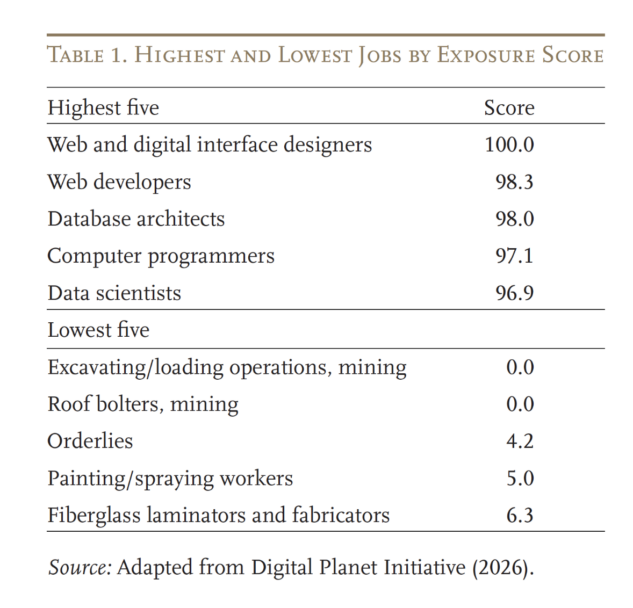
On a recent episode of our “You Earned This” podcast, economics professor Geoffrey Sanzenbacher of Boston College says that many older workers in occupations highly exposed to artificial intelligence (AI) are exiting the workforce. Sanzenbacher’s June 2026 brief for Boston College’s Center for Retirement Research compares changes in employment before and after ChatGPT’s November 2022 launch.
Sanzenbacher found that some older workers are being laid off as AI takes over. Others are voluntarily leaving the workforce, wary of AI changing their jobs. He says these workers are asking themselves, “Do I want to learn this whole new technology, which I’ll only be using for a relatively short period of time before I retire?”
“When you’re learning new things when you’re young, you have a lot of time to use that knowledge. It’s worth it to learn because you can use it for forty or fifty years. When you’re near the end of your career, it’s not quite as worth it,” Sanzenbacher observes.
He points out that while previous tech revolutions hit blue collar workers harder, the ascendancy of AI is displacing white collar employees – especially older ones. Many may become unemployed before they are eligible for Social Security, leaving them without a stable income. The earliest claiming age is 62 (with reduced benefits); the full retirement age is now 67, having been gradually raised from 65 by the last major Social Security reforms in 1983.
Finding a new job that might be less exposed to AI can be difficult for older workers, because of ageism in hiring – among other factors. Just as these workers may be exiting the job market before they’re eligible for Social Security, the political right is pushing to raise the retirement age again – to 69 or even 70. The timing couldn’t be worse for the type of workers in Sanzenbacher’s study.
Professor Geoffrey Sanzenbacher of Boston College & the Center for Retirement Research
“Raising the retirement age is a benefit cut,” says Sanzenbacher. “You’re collecting less in benefits over the remainder of your life. At the same time, we have this technology coming along that could very well force many workers out of the labor force faster.”
Sanzenbacher says this doesn’t mean that every older worker should retreat from the emergence of AI in the workplace. He argues that AI can empower employees who are willing and able to harness it. AI can handle routine tasks, allowing experienced workers to focus on activities that require human judgment, relationships, and creativity.
His advice is twofold: learn how AI can help, and strengthen your skills that it cannot readily replace. “I think it’s both learning how to use these tools so that you can use them if you need to,” he said, “but also focusing on the things that AI can’t do.”
Prof. Sanzenbacher’s brief, Are the Careers of Older Workers Being Cut Short by AI? is available here.
______________________________________________________________________
*While overall life expectancy for Americans has rebounded since the Covid epidemic, it remains lower for most minority groups.
- Published On: November 6th, 2026Categories: seniors, Social Security, Tax Cuts
Not only do majorities of Americans want to see Social Security strengthened by making the wealthy pay their fair share, so does the chairman of Patriotic Millionaires. During a taping of the new “Intellectual Property” tv series, Morris Pearl affirmed his support for adjusting the payroll wage cap, which exempts income above $184,500 from Social Security contributions.
“It’s a regressive tax. High earners pay a far lower percentage of their income into Social Security than people who earn less income,” Pearl told host Russell Hodge in response to a question from the audience.
The current payroll wage cap deprives Social Security of trillions of dollars in revenue that could be used to keep the system solvent for decades – if not till the end of the century. This is key because the program’s trust fund reserves are projected to become depleted in 2032 unless Congress takes preventive action.
Because of the payroll wage cap, billionaires and millionaires stop paying into Social Security in the beginning of every January; most everyone else contributes all year. Pearl says that when he was working on Wall Street and earning huge annual bonuses, he used to think that everyone stopped paying into Social Security during the first month of the year “because I only paid it in January.”
As Senator Elizabeth Warren puts it, “A teacher earning $60,000 pays Social Security taxes on every dollar she earns. A worker earning $184,500 does too. But someone earning $10 million pays tax on just the first $184,500? That doesn’t make sense. We can protect Social Security if everyone pays their fair share.”
Senator Warren and Sen. Bernie Moreno (R-OH) ), are calling for eliminating the Social Security payroll tax cap. The proposal would require higher-wage earners to pay Social Security taxes on more of what they earn. (It’s the first bipartisan proposal to make the wealthy pay their fair share.) Other Democrats, including Senator Bernie Sanders, Senator Sheldon Whitehouse, Rep. Brendan Boyle, and Rep. Val Hoyle have already introduced legislation to bring more revenue into the system without cutting benefits. Sanders’ bill modestly expands benefits — and would subject some of the wealthy’s investment income to Social Security taxation, a policy that Pearl supports.
“I think that investment income and earned income… should be taxed the same way,” Pearl told the audience at the Weinberg Center in Frederick, MD, where the episode of “Intellectual Property” was taped on October 16, 2026.
Pearl and the Patriotic Millionaires believe that the wealthy should be paying more in general income taxes, too, including themselves. “This tax system charges people who work for a living a big percentage of their income – 20%, 30% — while people who are already rich and don’t have to work pay either nothing or a much lower percentage,” Pearl says. “That’s the problem.” In some years, billionaires like Jeff Bezos and Elon Musk paid zero to 1% of their income in taxes.
“I think part of the role of government is evening out this gross inequality… by having those people who had the good fortune of becoming rich… to pay more taxes.” – Morris Pearl
Voter frustration with festering income inequality helped power Democratic victories in the midterms. “The Democrats raged vertically at the billionaires and elites who rule the U.S. political system, blaming them for rising income inequality that leaves Americans feeling like it’s impossible to get ahead,” observed The Guardian news site.
While Social Security was not the number one issue this year, it figured prominently in the minds of older voters. Ninety percent of voters 50-plus said it was “very important” or “extremely important” for elected officials to prioritize preventing benefit cuts, according to a survey by a nonpartisan research organization at the University of Chicago.
We endorsed more than 50 congressional candidates who won on November 3rd, because they vowed to strengthen Social Security with no benefit cuts. Morris Pearl encourages Americans to dialogue with their elected leaders – and their fellow citizens – to effectuate change. Given the results of the midterms, they should find plenty of lawmakers willing to listen.
********************************************************************************************************
Intellectual Property, a production of 3 Roads Communications, is a sixty-minute discussion program with American thought leaders. The series will broadcast nationally on PBS and stream through major outlets including Amazon Prime Video and Tubi. For more information, visit intellectualpropertytv.com The Morris Pearl episode is available on YouTube now.
- Published On: November 4th, 2026Categories: Democrats, DOGE, Election 2026, Medicaid, Medicare, Social Security, Trump
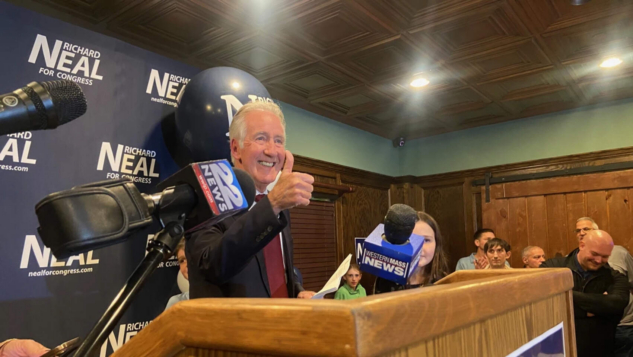
Newly re-elected Rep. Richard Neal (D-MA) likely will chair the House Ways & Means Committee
Seniors and their families can join Americans of all ages in celebrating Tuesday’s Blue Tsunami. It was a Silver tsunami, too – in the sense that the Democrats’ winning control of both house of Congress presents a historic opportunity to strengthen Social Security and make older Americans’ health care more affordable. Or… given that Trump still has veto power, Democrats can at least lay the groundwork for progress in 2028 and beyond.
Our PAC endorsed more than 50 congressional candidates who won big on Tuesday, including in marquee races that helped flip control of the Senate: Josh Turek (IA), Roy Cooper (NC), Sherrod Brown (OH), James Talarico (TX), and Abdul El-Sayed (MI). (For a complete, state by state list of candidates we endorsed, visit www.ncpssm.org/pac.)
“So many champions of Social Security and Medicare were elected or re-elected last night, and we could not be more gratified,” says NCPSSM President and PAC board member, Max Richtman, who crisscrossed the country this fall to endorse candidates. “We said that Social Security is on the ballot. To win our endorsement, candidates pledged to support strengthening Social Security by making the wealthy pay their fair share, without privatization or benefit cuts… and to protect Medicare.”
Sen. Jon Ossoff, endorsed by NCPSSM’s PAC, won a decisive re-election victory in Georgia
Among our endorsed candidates was Georgia Senator Jon Ossoff, who set a high bar for the new Democratic congress in his re-election victory speech last night:
“Now our task is to reawaken that great national spirit that defeated fascism and established Social Security, that put men on the moon and passed civil rights laws.” – Sen. Jon Ossoff (D-GA), NCPSSM PAC-Endorsed
It is no accident that Ossoff mentioned Social Security not only as a reference to the party’s New Deal heritage, but also as a critical focus for the newly elected class of Senators. (Senators elected Tuesday must confront the projected shortfall in the Social Security trust fund in 2032 — with an automatic 22% benefit cut – unless Congress takes action.)
Social Security, along with Medicare, Medicaid, and prescription drug pricing fit squarely into the ‘Affordability’ narrative of the 2026 midterms.
“Affordability was the key issue in this election and voters were looking for candidates committed to helping solidify Social Security, Medicare, and Medicaid,” says Jim Crounse, a political consultant and NCPSSM’s Board Chair. “Our endorsed candidates stood tall and committed to protecting and improving these crucial benefits.”
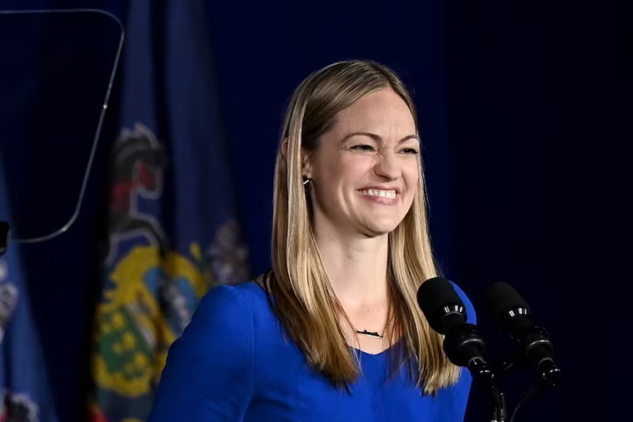
Congresswoman-elect and NCPSSM PAC endorsee Paige Cognetti (D-PA-08) described Social Security as a fundamental promise to American workers
Jim Roosevelt, grandson of President Franklin D. Roosevelt and vice-chair of our advisory board, says, “The election results hold great promise for restoring our federal government going forward — and for addressing the real need to strengthen Social Security.”
Rep. Richie Neal (D-MA), presumptive chair of the powerful House Ways and Means and Committee in the new Congress, said Tuesday night: “I want to give you a bedrock guarantee: We’re going to make sure Social Security is there for all of you.” Our senior legislative representative, Maria Freese, predicts that Democrats will re-introduce legislation from the current Congress to strengthen Social Security, without benefit cuts.
Jim Crounse says that “Social Security could be a key focal point for cooperation between Congress and the President.” Of course, the President is sending typically mixed signals. On Tuesday, Trump posted a meme of a red hat with the word “VETO” emblazoned across the front. But he also told NBC News that he would “work with Democrats.”
We and other seniors’ advocacy groups believe that Democrats can also make progress on reducing Americans’ health care costs – especially prescription drug pricing — which have soared under the Trump administration.
Maria Freese expects that the Democrats will conduct investigations into some of Trump’s questionable prescription drug pricing ‘deals‘ with Big Pharma – and ramp up oversight into whether the administration is adhering to the 2022 Inflation Reduction Act, which authorized Medicare to negotiate prices with drugmakers.
“We are clear-eyed about the scale of the challenges we face, whether expanding access to health care, saving Social Security, or holding this administration accountable.” – Senator-elect Chris Pappas (D-NH), NCPSSM PAC-Endorsed
Health care advocates, including NCPSSM, want to see Congress undo the nearly1 $1 trillion in Medicaid cuts (to fund tax breaks for the rich) in the Trump/GOP Big, Ugly Bill. Most of those cuts take effect on January 1, 2027 – a Republican ploy to push the painful consequences of the bill beyond the midterms.
Thankfully, voters punished Trump and the Republicans for their reckless actions to further enrich the wealthy at the expense of everyday people. But— it could be too late for now to stop the Medicaid cut juggernaut, which is expected to strip millions of health coverage over the coming years.
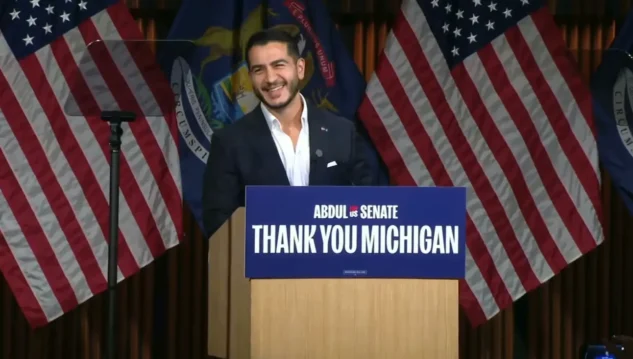
Senator-elect Abdul El-Sayed (endorsed by NCPSSM PAC) warned that Trump’s Medicaid cuts would unleash a “nuclear bomb” on America’s healthcare system!\
“Probably the best that we can hope,” says Freese, “is that Democrats can lay the groundwork to restore the nearly $1 trillion in Medicaid funding, which may have to wait until (and if) Democrats win the White House and hold the House and Senate in 2028. In the meantime, political analysts say the new Congress can pass ‘messaging’ bills to undo Trump/Republican cuts that can be used in the 2028 campaign.
Jim Roosevelt sees an opportunity to restore the federal government’s commitment to ensuring basic financial and health security for seniors, a legacy of his grandfather’s New Deal and President Johnson’s Great Society. “MAGA and DOGE have tried to tear down the New Deal and the Great Society,” he says, “Voters have now set up a barrier wall against those attempts.”
When asked what FDR would think of Tuesday’s Blue Tsunami, Roosevelt said, “I’m sure he’s up there with a big smile on his face.”
- Published On: November 2nd, 2026Categories: Democrats, Election 2026, PAC, Politics, Republicans, Uncategorized
NH Senate candidate Chris Pappas shows off a pair of NCPSSM boxing gloves
As our Social Security on the Ballot campaign draws to a close, polling suggests that midterm candidates who support strengthening the program (and oppose benefit cuts) will largely prevail on Tuesday.
“Even if Social Security isn’t voters’ top issue, per se, it plays into the number one concern in this campaign: Affordability,” says Max Richtman, NCPSSM President and PAC board member. “Social Security is a lifeline for seniors on fixed incomes who are being squeezed by ever-rising prices in Trump’s economy. Ditto for younger voters struggling to afford housing, health insurance, and student debt payments — who will need every dollar of their earned benefits when they retire.”
Battleground state voters who will decide control of the U.S. Senate say that Social Security will be a deciding factor in their choice, according to a report by CNBC. Voters surveyed in Georgia, Michigan, North Carolina, Ohio and Texas say they are “far more likely” to vote for candidates who have a plan to protect Social Security.
“Social Security is much more top of mind for voters than in past election cycles,” says NCPSSM PAC director Luke Warren, mostly because the program’s trust fund reserves will become depleted in 2032 unless Congress takes action. “It’ll fall on the shoulders of the next Congress to deal with this,” says Warren, “That’s why WHO we send to Washington this cycle will determine Social Security’s future.”
Meanwhile, says Richtman, voters are worried about the anticipated 22% automatic benefit cut in 2032 if Congress fails to act. “They’re nervous, and they have a right to be.”
NCPSSM President Max Richtman endorses Democrat Josh Turek for Senate in Iowa
NCPSSM’s PAC has endorsed more than 60 candidates for House and Senate this cycle. At in-person events, representatives of the PAC have handed each candidate a pair of red boxing gloves, cementing their status as fighters for seniors. “What unites these candidates?” asked Richtman in an October 30 Substack post, “A commitment to strengthening Social Security for the future – without cutting benefits or gambling workers’ contributions on Wall Street.”
Here are some of the candidates our PAC has endorsed in key races around the country:
Senate:
Sherrod Brown (OH) vs John Husted
Roy Cooper (NC) vs. Michael Whatley
Abdul El-Sayed (MI) vs Mike Rogers
Dan Osborne (NE) vs Pete Ricketts
Jon Ossoff (GA) vs Mike Collins
Chris Pappas (NH) vs John Sununu
Mary Peltola (AK) vs Dan Sullilvan
James Talerico (TX) vs Ken Paxton
Josh Turek (IA) vs Ashley Hinson
House:
Rebecca Bennett (NJ-07) vs Tom Kean, Jr.
Christina Bohannon (IA-01) vs Mariannette Miller-Meeks
Matt Dunlap (ME-02) vs Paul LePage
Sam Forstag (MT-01) vs Aaron Flint
Will Lawrence (MI-07) vs Tom Barrett
Tom Perriello (VA-05) vs John McGuire
Denise Powell (NE-02) vs Brinker Harding
Manny Rutinel (CO-08) vs Gabe Evans
Stefany Shaheen (NH-01) vs Anthony DiLorenzo
Mike Thompson (CA-04) vs Eric Jones
For a complete, state-by-state list of the candidates we’ve endorsed, visit www.ncpssm.org/pac.
As we mentioned in an October blog post, many of these candidates’ Republican opponents have histories of supporting positions to privatize Social Security or raise the retirement age, including Ken Paxton (TX), Ashley Hinson (IA), John Sununu (NH), and Mike Rogers (MI). “Now, some of those candidates conveniently disavow those positions, but the record is clear,” says NCPSSM director of government relations and policy, Dan Adcock.
These candidates don’t always state their true intentions in public. Take GOP Senate candidate Ken Paxton, who is running against Democrat James Talerico for an open Senate seat in Texas. At a private fundraiser hosted by Washington lobbyists in September, Paxton said “we have to suck it up” and cut mandatory spending, which includes Social Security and Medicare. (Incumbent candidates’ records on Social Security can be vetted using our Congressional Scorecard.)
Texas GOP Senate candidate Ken Paxton told lobbyists we have to “suck it up” and cut Social Security
Overwhelming majorities of the public across party lines oppose benefit cuts and have consistently told pollsters that they want Social Security’s finances shored up by making the wealthy pay their fair share. Adjusting or scrapping the payroll wage cap, which currently limits how much higher earners pay into Social Security, would go a long way toward restoring the system to full solvency; so would including some of high earners’ investment income in Social Security revenues.
All of the candidates we have endorsed support one or both of those solutions — while many of their opponents either want to hide behind a ‘fiscal commission’ that could suggest cuts to Social Security — or slash and privatize the program outright. Up to now, there has been a disconnect between many politicians’ rhetoric on Social Security and what Americans say they want. This election represents a historic opportunity to align voters and their representatives in Washington on what, for some, is an existential issue — the future of Social Security.
- Published On: October 23rd, 2026Categories: Democrats, DOGE, Social Security, Social Security Administration (SSA), Trump, Trump Administration
It’s funny, because when Donald Trump was re-elected, we didn’t hear a hew and cry from the voters to prioritize “waste and fraud” at the Social Security Administration (SSA). In fact, we remember Trump promising voters multiple times “not to touch Social Security.” The opposite has happened. He and Musk and DOGE ‘touched it’ in ways that affect everyone who relies on the SSA.
The latest cause for alarm is news from the SSA that it has “fixed” millions of people’s Social Security records and is working on even more. It’s an odd priority for an agency that gutted its own staff when Trump came into office and undermined customer service, as part of a phony hunt for ‘waste and fraud.’ In other words, SSA has scrambled its remaining employees to try to plug holes created by massive firings and buyouts, but somehow finds the resources to scrub Social Security records.
SSA, under Commissioner Frank Bisignano, says that it is updating people’s death and citizenship statuses. President Trump made bogus claims in 2025 that 360 year-olds were somehow collecting Social Security after DOGE bros raided and misconstrued agency data. As for the citizenship part, we already know that Trump is obsessed with harassing immigrants, legal and otherwise.
In his 2025 address to Congress, Trump claimed 360 year-olds were receiving Social Security
In order to “fix” Social Security’s citizenship records, the agency is using The Department of Homeland Security’s controversial SAVE database. As part of its campaign against immigrants and concomitant voter suppression efforts, the Trump administration has tried to compel states to compare their voter rolls with SAVE data.
Everyone from voting rights groups to civil rights organizations have warned that the SAVE database is incomplete and prone to errors. “The SAVE database is notorious for having inaccurate data,” says our president and CEO, Max Richtman. “Now, some of the SAVE inaccuracies will be transferred into SSA’s files, doubling down on the use of inaccurate data and making it even more difficult to find an uncorrupted file to check data against.”
The SAVE system has mistakenly flagged eligible U.S. citizens—including naturalized citizens whose records have not been fully updated across every federal agency. Those same people could now be denied their rightful Social Security benefits.
“Everyone wants accuracy, but this administration has a track record of carelessness with people’s personal data and seems less concerned about accuracy,” NCPSSM senior Social Security analyst, Maria Freese.
Since Trump took office again, there have been numerous reports of the administration misusing Social Security data, including: a stated intent to transfer living people to the agency’s Death Master file; uploading Americans’ private data onto an unsecure cloud server; and DOGE staffers offering Social Security data to a right-wing political operative, among other abuses. Democrats in Congress have demanded accountability from the administration, but none has been forthcoming.
Long lines at Social Security field offices after Trump/DOGE cutbacks in 2025
Meanwhile, seniors who have seen their local field offices practically shut down or haven’t been able to reach a human being on the agency’s 1-800 phone lines (because of drastic cutbacks) have every right to ask how SSA can afford to focus on ‘fixing’ records right now.
“Where did they find the staff hours to do this?” Freese wonders. “They either pulled people off of other duties, leaving customers hung out to dry, or they’re using AI, which we know is far from foolproof.” If we sound skeptical, it’s because Trump, Bisignano, and DOGE have not earned the trust of Social Security advocates or the millions of people who expect SSA to focus on administering their earned benefits instead of the President’s craven political agenda.