


This post is a reprint of an article published on Substack by NCPSSM President & CEO Max Richtman
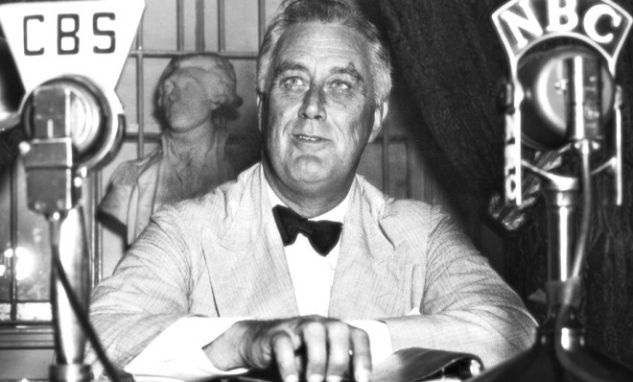
When President Franklin D. Roosevelt signed Social Security into law 91 years ago — on August 14, 1935 – he said its enactment was “historic for all time.” FDR was right. Nine decades later, Social Security remains one of the most successful – and most popular – federal programs ever.
In poll after poll, overwhelming majorities of Americans across party lines approve of Social Security – and don’t want to see it cut. Despite public sentiment, there’s been a well-funded, long-term movement to undermine this landmark achievement of FDR’s New Deal. Many on the political right have opposed Social Security from the very beginning.
The 1936 Republican presidential nominee, Alf Landon, called Social Security a “fraud on the working man.” Fast forward 90 years to GOP Senator Ron Johnson (WI) calling the program a “Ponzi scheme,” while his colleague, Republican Senator Tommy Tuberville (AL), refers to Social Security as “a scam.” (The political right apparently cannot abide a successful, self-funded social insurance program that provides basic financial security to retirees, people with disabilities, and their families.)
The 70 million Americans who rely on Social Security would be surprised to hear that their earned benefits are a ‘scheme’ or a ‘scam.’ Social Security has never missed a payment since the very first benefit check was issued to retired legal secretary Ida Mae Fuller in 1940. Fuller herself collected benefits every month until she passed away in 1975 at the age of 100! (Fuller even lived long enough to see Social Security benefits automatically adjusted for inflation.)
Today, nearly half of this country’s seniors rely on Social Security to cover all or most of their living costs. Perhaps that’s why one beneficiary told us, “Thank God for Social Security!” Doesn’t that say it all, especially amid the current affordability crisis? After all, seniors on fixed incomes are paying more for gas, groceries, and housing like everyone else.
Social Security was never meant to be set in stone, like the marble monuments here in Washington. It was expanded over the years to include spousal, survivors’, and disability insurance. President Roosevelt himself described Social Security as “a cornerstone in a structure which is being built but is by no means complete.” Today, the structure needs fortification to continue fulfilling its promise to the people.
Without Congressional action, the program’s retirement trust fund reserves are projected to be depleted in 2032. If that’s allowed to happen, beneficiaries will suffer an automatic benefit cut of about 20%. No one wants that outcome. But that doesn’t mean Social Security is “going broke” – as some claim; it only means that the program needs its financing brought back into balance. This can be achieved very straightforwardly by adjusting the payroll wage cap (now set at $184,500) – and including some taxation of high earners’ non-wage income in Social Security-related taxes.
Democrats on Capitol Hill have introduced legislation to bring more revenue into the program and keep Social Security financially strong for decades to come. Instead, some Republicans and right-leaning think tanks have proposed cutting benefits – by raising the retirement age, means testing, or lowering annual cost-of-living adjustments. But they haven’t put forth any legislation to avert the projected shortfall.
In lieu of introducing legislation, some Republicans (and a few centrist Democrats) prefer to create a fiscal commission to decide the future of Social Security. We oppose this idea, because it would provide individual lawmakers with political cover for cutting benefits. (‘Hey, the commission recommended it, so…’)
Besides, we’ve had enough commissions already. As AARP’s Chief Advocacy and Engagement Officer Nancy LeaMond told a Senate committee this month, “The history of fiscal commissions is littered with good intentions and failed results.”
Most Democrats are ready to move forward without a commission to tell them what to do. Senator Sheldon Whitehouse (D-RI) recently implored his Republican colleagues to “put up or shut up.” He urged GOP members to introduce their own Social Security legislation or to vote on bills like his, which adjusts the payroll wage cap and includes some non-wage income in order to extend trust fund solvency “as far as the actuarial eye can see,” with no benefit cuts. Legislation introduced by Senator Bernie Sanders, Senator Elizabeth Warren, Reps. Brendan Boyle, Val Hoyle, and John Larson would do much the same.
This is the public’s preferred solution, according to the National Institute for Retirement Security (NIRS). “There is a preference for raising revenues over cutting benefits,” NIRS reported after completing a thorough public survey in 2024. “Fully 85% of respondents chose options that protect benefits over benefit reductions.”
As Senator Whitehouse says, it isn’t complicated. Congress must act soon to avert a trust fund shortfall and automatic benefit cut. And the smart solution is there and ready to go. Yet Republicans continue to use straw man arguments. They claim the nation can’t afford Social Security as it now exists because of “debt.” In reality, Social Security is self-funded and does not contribute to the debt. In fact, Social Security is legally forbidden from incurring debt.
Some conservatives insist that Social Security should be privatized – with workers’ contributions gambled in the financial markets instead of safely invested in U.S. government bonds. No doubt, Wall Street fund managers would love to get their hands on the $2.6 trillion currently in the trust fund. But it’s a gamble that working people can’t afford. (Imagine an older worker on the cusp of retirement when the markets crashed in 2008.)
There is another misleading narrative emanating from conversative think tanks and spread by the mainstream media that the reason for the trust fund’s projected shortfall is demographics: declining birth rates coupled with a growing senior population equals fewer workers paying into the program. But, as labor economist Kathryn Edwards points out in an essay for the Roosevelt Institute: the real culprit is the massive income inequality of the past five decades that has deprived Social Security of revenue, driven by economic policies that favor the wealthy and big corporations. We can afford Social Security, Edwards argues, if federal policy is re-fashioned to benefit working people instead of financial elites.
The 91st anniversary is a pivotal moment for Social Security. Social Security is most definitely on the ballot in this year’s midterm elections. The next Congress likely will decide the very future of the program. In fact, Senators elected in 2026 still will be in office when the projected trust fund depletion date rolls around in 2032. The best way to honor Social Security’s successful 91-year legacy is to vote for candidates who support strengthening the program by bringing in more revenue – not by cutting benefits, and without the ‘help’ of a fiscal commission. Social Security truly is on the ballot in 2026! If the next Congress listens to the American people and acts accordingly, FDR’s crowning achievement and its 70 million beneficiaries will enjoy many more anniversaries to come.
******************************************************
Subscribe to Max’s Substack Social Security to the Max!
Watch our documentary about the history of Social Security
Listen to our podcast for Social Security’s 91st anniversary: “A Boomer, A Millennial, and a. Zoomer Walk Into A Studio…”