


Social Security is on the Ballot in 2026
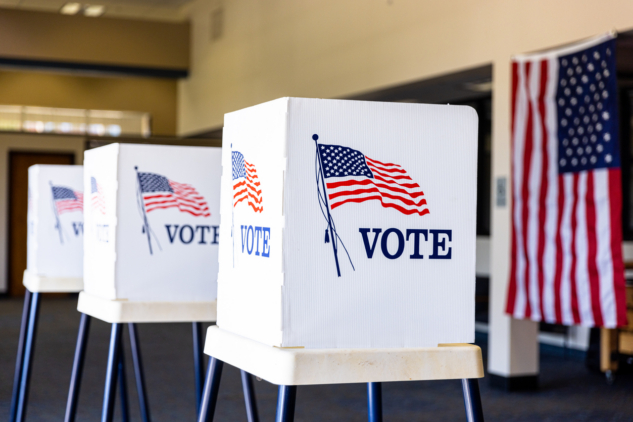
Istock photo
Every election year seems to be “the most important one in our lifetimes” – or the “most consequential election ever.” But… this election year really IS extremely pivotal for Social Security. That’s because the next Congress will no doubt begin grappling with the challenge of strengthening Social Security’s finances before the projected depletion of the trust fund in the early 2030’s.
In fact, U.S. Senators elected this year likely still will be in office through the end of 2032, when the trust fund will be on the precipice of insolvency… absent congressional action. Unless Congress wants beneficiaries to suffer an automatic 17-22% cut in benefits – it will have to act soon. Few who remember the reforms of 1983 want to see lawmakers once again wait until the very last minute, when options are more limited and costs steeper.
With that in mind, we have launched a new voter education campaign called “Social Security on the Ballot.” Its message is simple but urgent: when Americans go to the polls this November, they’ll be choosing candidates who will shape the future of Social Security.

As our President and CEO Max Richtman puts it:
“The stakes for current and future seniors couldn’t be higher. Depending on the composition of the next Congress, Social Security could be strengthened (and expanded) – or radically cut and privatized. It all depends on which course Congress takes, and that depends on your vote.” – Max Richtman, President & CEO, NCPSSM
Many, but not all, Republicans have staked out the position that Social Security should be cut in some way in order to restore solvency. They do not call their proposals “benefit cuts,” because that would be wildly unpopular. Instead, they speak of raising the retirement age, means testing, and lowering Social Security cost-of-living adjustments (or COLAs) – which are all benefit cuts!
Just last week, House Speaker Mike Johnson said that “entitlements” like Social Security are “a problem” – promising that Republicans have a “plan” to “fix it” next year. Though he didn’t specify what the GOP “plan” is, his remarks sent shivers up the spines of Social Security supporters. And rightly so.
Prominent Republicans also have raised the specter of privatizing Social Security – aka gambling workers’ payroll contributions on Wall Street. Last year, U.S. Treasury Secretary Scott Bessent admitted that Trump savings accounts for children actually were a “backdoor way of privatizing Social Security.”
In May, Senator Ted Cruz concurred that the Trump accounts were a Trojan Horse for privatization, calling it a “dirty little secret.” Not so secret anymore.

Senator Ted Cruz (left) & Treasury Secretary Scott Bessent (right) admit that the Trump administration is hoping to privatize Social Security (Wikimedia Commons/Brittanica)
This is why it’s no exaggeration when we say the stakes of the 2026 elections are enormously high. While Republican leaders signal their intention to cut benefits without offering any legislation, Democrats have actually introduced several bills to strengthen Social Security – largely by demanding that the wealthy begin contributing their fair share. Legislation introduced by Senators Sanders, Warren, and Whitehouse (along with Reps. Boyle, Hoyle, and Larson in the U.S. House) would extend the life of the trust fund for decades — without cutting benefits.
No doubt, voters have a lot to navigate heading into the 2026 midterms. Issues like affordability, health care, and Trump’s military misadventures are competing for attention. “We hope that our new public education campaign will remind voters that their earned benefits are on the line this year,” says CEO Max Ricthman. “They worked hard and contributed to Social Security with every paycheck and have very right to expect their benefits in full. We must not allow lawmakers to break that promise.”
Our political action committee has already begun endorsing Senate candidates in key battleground races who champion Social Security, such as Jon Ossoff (D-GA), Roy Cooper (D-NC), and Chris Pappas (D-NH). On the House side, we are supporting (among others) Christina Bohannon (IA-01), Rebecca Cooke (WI-03), and Paige Cognetti (PA-08).
While their opponents are promoting ideas that would put Social Security at risk, these candidates have distinguished themselves as advocates for today’s seniors and future beneficiaries.
This is not a one-off messaging opportunity or a single ad buy. As the election season unfolds, we will continue rolling out new content, resources, and organizing opportunities so that voters can stay informed and engaged right up to Election Day.
**********************
Watch our documentary about the history of Social Security, including the 1983 reforms here.
Read our Social Security is on the Ballot press release here.
Read about the campaign in 401K Specialist here.
Social Security Commissioner’s Sketchy Sales Pitch to Congress
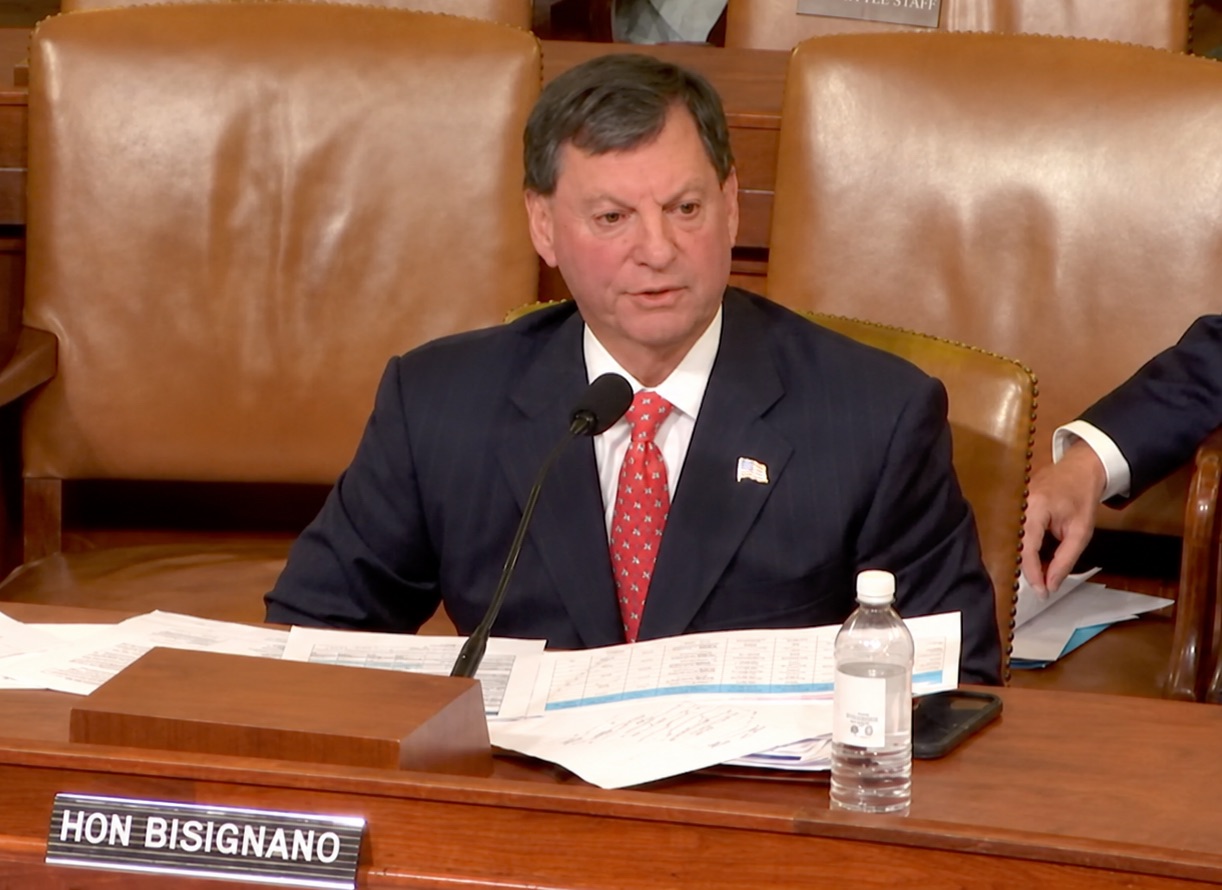
If Social Security Commissioner (and CEO of the IRS) Frank Bisignano brought anything with him from the corporate world, it is his ability to sell, sell, sell. At a June 10th hearing on Capitol Hill, the former Wall Street executive did his best to sell the fiction that EVERYTHING IS JUST GREAT at the Social Security Administration – despite massive understaffing, poor morale, and outright abuse of beneficiaries’ personal data.
While House Ways and Means Committee Republicans responded to Bisignano’s testimony with complete credulity, Democrats and Social Security advocates would have appreciated — pardon the pun — a little more Frankness. And maybe even a smidge of humility.
Bisignano bragged in Trumpian fashion about “the best all-around performance ever at the Social Security Administration” and tossed around business buzzwords like “best in class” as if SSA were an airline instead of a public agency serving some 330 million Americans. He declared that the “American people are winning” because of SSA’s performance. He should have added, “So much winning.”
“The American people’s experiences are very different from what the Commissioner is reporting,” said NCPSSM senior Social Security expert Maria Freese on this week’s edition of Capital Quick Takes. “The reality is not as rosy as they claim.”

2025 protest against Trump/DOGE cutbacks at Social Security field office in Evanston, IL (Matthew Eadie, Evanston Now)
Rep. Danny Davis (D-IL), the ranking Democrat on the House Work and Welfare Subcommittee, said Bisignano’s boasts of superior customer service do not align with what the congressman is hearing from his constituents in Illinois, who have complained of long waits at field offices, trouble making appointments, and problems getting help on the agency’s 1-800 number. “People across the country report waiting in long lines at Social Security offices or being turned away and told to make appointments, only to discover no appointments are available,” Davis said.
Commonsense alone would suggest that you cannot cut some 8,000 jobs at agency that was already at historic staffing lows (at a time when its customer base is rapidly growing), creating an enormous ‘brain drain’ of experienced employees who know how Social Security works… and expect that customer service would actually improve.
Kathleen Romig of the Center on Budget and Policy Priorities has done excellent work debunking SSA’s claims of ‘great success’ in serving customers.
“The loss of thousands of employees hit key customer service positions hard, including 3,800 staff who assist visitors at SSA field offices and callers to SSA’s national 800 number. SSA leadership responded by shifting thousands of remaining workers to new roles (with minimal training). But redistributing the too-few remaining workers to roles where they have little experience risks ameliorating one service delivery problem by exacerbating others.” – Kathleen Romig, Center on Budget and Policy Priorities
Under Bisignano, SSA has publicly released ‘data’ that purports to prove that customer service is “the best ever.” The data is a little fuzzy, to say the least. SSA claims to have reduced wait times on its 1-800 phone lines. What they don’t say is that they consider a call to have been completed and the wait time over when an AI bot answers or when a customer requests a callback. That doesn’t mean the callers’ question has been answered or their issue resolved.
“They fudge the numbers to get to some of these statistical claims,” says Freese, including the ludicrous claim that SSA has achieved an 80% drop in customer wait times!

CBPP’s Kathleen Romig has thoroughly debunked SSA’s claims of reduced wait times
Here’s a quick list of some of the misleading statements (if not outright falsehoods) that Bisignano peddled at the congressional hearing: “I inherited a mess from the Biden administration.” WRONG! Under former Commissioner Martin O’Malley, customer service was actually improving despite chronic underfunding fron Congress.
“We didn’t close down any field offices.” MISLEADING! In April, Business Insider reported that the Trump administration had at least temporarily closed in person services at more than a dozen field offices around the country, some for lack of resources due to DOGE cutbacks.“We didn’t shut down anything facing clients.” MISLEADING! While no customer-facing service has been permanently ‘shut down,’ SSA wants to cut back in-person service at field offices by 50%, forcing seniors and people with disabilities to seek on-line help. SSA also kept revising its phone service policies to limit the kinds of assistance customers could receive on the 1-800 number, forcing people online instead. Not every senior or person with disabilities has the technical resources to conduct all of their business online.“We are relentlessly fighting waste, fraud, and abuse.” MISLEADING! Actual Social Security fraud is exceedingly rare. Before the Trump administration took over, SSA was one of the most efficient federal agencies, with an overhead rate of less than 1%. But the Trump regime (beginning with Elon Musk and DOGE) used the excuse of hunting for waste and fraud to decimate the agency.
The real “abuse,” of course, is the administration’s misuse of Americans’ personal Social Security data for craven political purposes. The latest outrage was a whistleblower report that SSA planned to move 2.7 million living individuals onto the agency’s Death Master File as part of Trump’s war on immigrants. Our CEO called it “illegal and dangerous.” Bisignano glibly dismissed the report at this week’s hearing.
Two things are clear at this point: 1) Bisignano and his SSA will not truly be held accountable or expected to be straightforward until – and if – Congress changes hands next January and Democrats gain the power to do real oversight; (2) In the meantime, Bisignano will continue to try to convert SSA into a tech company instead of the sacred public trust it is meant to be.
****************************************************************************************
Post-Script
In his second role – CEO of the IRS – Commissioner Bisignano signed off on Trump’s $1.8 billion slush fund last month. Today, a federal judge indefinitely barred the Trump administration from moving forward with the fund, which was created for the bogus purpose of compensating people claiming they were “persecuted” by the government, including convicted January 6th insurrectionists.
READ our CEO’s written testimony for the 7/10/26 hearing here.
WATCH Capital Quick Takes with our senior Social Security expert Maria Freese here.
Making Sense of the New Social Security Trustees Report
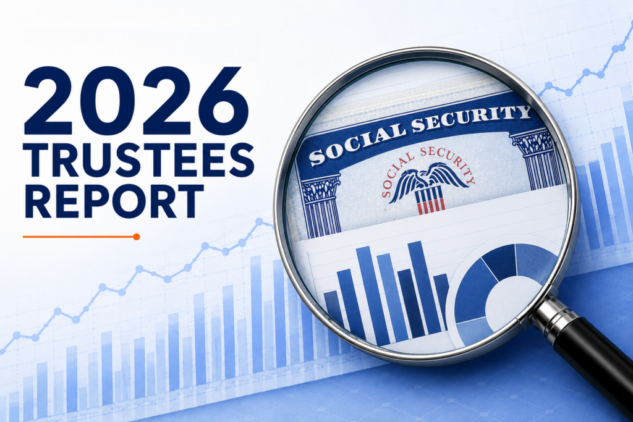
(Registered Social Security Analysts image)
On Tuesday morning, The Social Security Administration (SSA) released its highly anticipated Trustees Report for 2026. The trustees project that the depletion date of the combined retirement and disability trust fund (OASDI) surplus will hold firm at 2034, at which time the program still could pay 83% of promised benefits. (Advocates and analysts expected the date to creep up one year to 2033.)
Interestingly enough, the trustees report blames Trump administration policies for the acceleration of trust fund insolvency – pointing to the Big, Ugly Bill which decreased tax revenues flowing into Social Security… in addition to Trump’s anti-immigration campaign. (Less immigration means fewer workers paying into the system.)
While the combined OASDI trust fund is projected to run out in 2034, most media outlets fixated solely on the retirement trust fund (OASI), which is predicted to become depleted in 2032 and able to pay only 78% of promised benefits. We believe the OASDI is more accurate, because, if needed, the retirement and disability trust funds could be combined to pay full benefits until 2034.
Nonetheless, we saw the usual alarmist media headlines:::
Social Security Insolvency Now projected for 2032, Putting Benefits at Risk of a 22% Cut!
We are rapidly running out of time: Sounding the Social Security Alarm After 22% cut Confirmed!
Social Security Retirement Trust Fund Will Run Dry in 2032!
Regardless of whether the depletion date is 2032 or 2034, our response to the trustees report is that Congress must strengthen the program’s finances sooner than later:::
“The Social Security Trustees report is a clarion call for Congress to strengthen the program NOW before the looming depletion of the trust fund becomes a full-blown crisis. If Congress fails to act, the combined retirement and disability trust fund reserves will run dry in 2034 and beneficiaries will suffer an automatic 17% cut – a scenario few want to see happen.” – Max Richtman, NCPSSM
Democrats (including Senator Bernie Sanders, Senator Sheldon Whitehouse, Senator Elizabeth Warren, Rep. Brendan Boyle, and Rep. John Larson) have introduced legislation to strengthen Social Security by adjusting the payroll wage cap so that the wealthy begin paying their fair share. Some of these proposals would subject certain investment income to Social Security payroll taxes, as well.
Unfortunately, Republicans seem intent on doing the opposite. Just ask House Speaker Mike Johnson, who said on Monday that “entitlements” like Social Security are a “problem” and that the GOP has plans to fix them next year.

We know what that means: raising the retirement age, means testing, lowering COLAs, and other benefit cuts – if not outright privatization of the program. That is the GOP playbook on Social Security, coupled with rhetoric that insists Social Security is “going bankrupt” or “going broke.”
In reality, nothing in the report supports the claim that Social Security is “bankrupt” or “going broke.” As long as Americans are working and paying into the system, Social Security will continue to pay benefits. “For the program itself to go ‘broke,’ there would have to be 100% unemployment — a highly unlikely scenario,” said Richtman in a press release.
What often goes unmentioned in these conversations is the role of growing income inequality in Social Security’s financing gap. While critics frequently point to demographic changes like declining birth rates, that is only part of the story. As former Social Security Chief Actuary Steve Goss has explained in congressional testimony, a growing share of national income is concentrated among high earners — and much of that income is not subject to Social Security payroll taxes.
In other words, the system is not simply strained by demographics; wealth inequality is a significant aggravating factor.
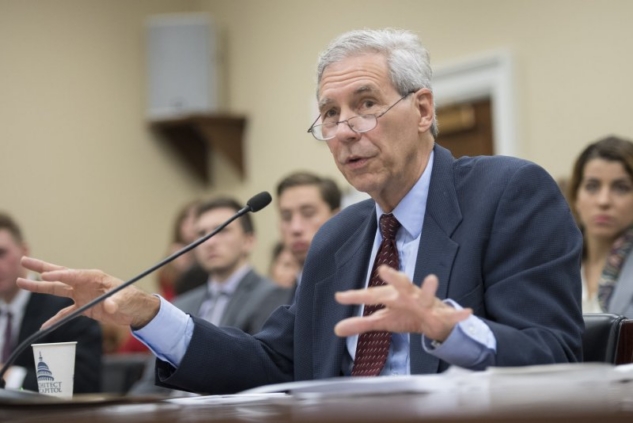
Fmr. Social Security Chief Actuary Steven Goss testified before Congress in 2023 that increasing wealth inequality has contributed to the program’s financing shortfall
Whether Social Security will be improved or cut depends on who is elected to Congress in 2026. That’s why we have launched a public education campaign entitled, “Social Security is on the Ballot,” to help voters identify candidates who will strengthen the program in an equitable way that protects current and future beneficiaries from cuts.
“The stakes for current and future seniors couldn’t be higher,” says Richtman. It all depends on which course Congress takes, and that depends on your vote.”
*******************************
Read our CEO’s response to the Trustees Report HERE.
Social Security Commissioner Helped to Facilitate Trump Slush Fund

Associated Press
Throughout his tenure in the Trump administration, Frank Bisignano — the Social Security Commissioner and “CEO” of the IRS — has established himself as a willing participant in some of the President’s most controversial political projects. That dynamic came to a head this month, when Bisignano used his position with the IRS to sign off on an agreement with the Justice Department that created the widely criticized “Anti-Weaponization Fund” intended to direct taxpayer dollars to January 6 defendants and other Trump allies.
According to news reports today, Trump is “tabling” the $1.8 billion slush fund under mounting public pressure — and bipartisan pushback on Capitol Hill. On May 29th, a federal judge ordered the fund to be temporarily frozen. The Justice Department said it would comply with that order.
As the Rachel Maddow blog reports, U.S. District Court judge Kathleen Williams “has ordered President Donald Trump to address allegations that he committed fraud on the court… and whether the deal was designed to improperly benefit Trump and his allies.”
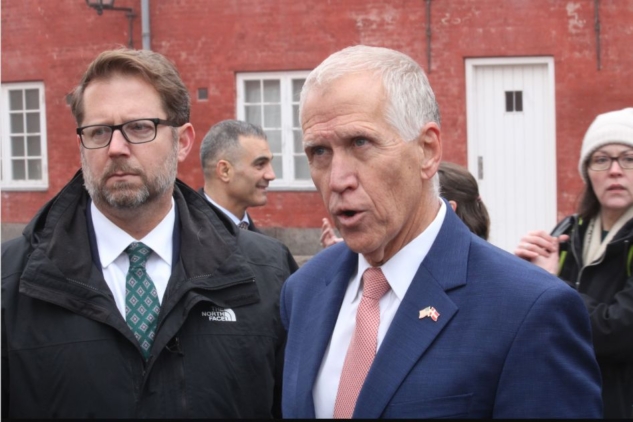
Senator Thom Tillis (R-NC) called Trump’s slush fund “stupid on stilts.”
None of this excuses Trump or his enablers, including Bisignano, from approving the fund in the first place.
“Bisignano’s chief talent is sycophancy and raising no questions about anything,” a former veteran Social Security Administration (SSA) employee told us. The same former SSA employee added that no career professional “would remain silent” in the face of an outrage like the “Anti-Weaponization Fund.” In fact, the Treasury Department’s top lawyer resigned his job immediately after the ‘slush fund’ deal was announced.
“The slush fund is so clearly a backwards admission of guilt, no career professional would remain silent for such sleaze. Trump learned in his first term, career folks actually are not morally and ethically bankrupt. The ‘deep state’ actually stands for the rule of law and the Constitution. That is why someone like Bisignano is in place instead of a career government professional.” – Former SSA Employee
That critique aligns with how Bisignano has operated across two of the federal government’s most sensitive agencies. As we’ve previously written, his tenure has coincided with the president’s efforts to concentrate decision-making among political appointees who prefer to operate the federal government in a way that aligns with Trump’s self-serving goals – not the public good.
Bisignano’s second job in the administration — IRS “CEO” — is a newly created position that was never approved by the Senate, further raising questions about accountability and oversight at a moment of consequence for Social Security.
What does this mean for SSA? If Bisignano has demonstrated a willingness to carry water for Trump at the IRS — even amid internal objections from career staff — he seems equally enthusiastic about facilitating Trump’s Social Security agenda, as well.
Senate Democrats have raised concerns about severe cutbacks at SSA (as part of a phony hunt for ‘waste, fraud, and abuse’) and DOGE data leaks – along with questions about Bisignano’s financial dealings in connection with his former Wall Street firm, Fiserv.

Meanwhile, advocates have repeatedly challenged Bisignano’s questionable claims about ‘improved’ customer service at the agency, in the aftermath of massive staffing cuts and reckless policy changes. See our recent blog post, “Fact Checking the Frankster 2.0.”
The veteran SSA employee who spoke to us described the Social Security Administration as “not even recognizable” under Bisignano’s reign, pointing to what he sees as a breakdown in long-standing norms, internal safeguards, and respect for career expertise. Others warn that the same leadership style could enable or obscure future controversies, including ongoing concerns surrounding DOGE data breaches.
Kathleen Romig of the Center on Budget and Policy Priorities just published another in a series of exposes detailing how Bisignano and Trump’s SSA has hurt, not helped, customers. “It’s hard for Congress and the public to (readily comprehend) how these radical changes affect the people SSA serves, from new babies being assigned a Social Security number, to workers at the beginnings and ends of their careers, to the surviving spouses and children of workers who die.”
To be clear, SSA operates under a different statutory framework than the IRS, with stronger structural protections around its funding and payment structure. Those guardrails make it far more difficult to redirect funds or unilaterally alter core functions of the program.
On the other hand, Trump and his minions (including Bisignano) have proven themselves willing to jump guardrails on a regular basis. The Social Security Commissioner’s role in this slush fund catastrophe should raise alarm bells for everyone who has entrusted the Social Security Administration with their hard-earned benefits.
**********
Read our past coverage of Commissioner Bisignano HERE
Read Sen. Elizabeth Warren’s letter to Treasury Secretary Scott Bessent and Commissioner Bisignano HERE
Listen to our podcast HERE
The Trump/Vance Medicaid Retribution Road Show
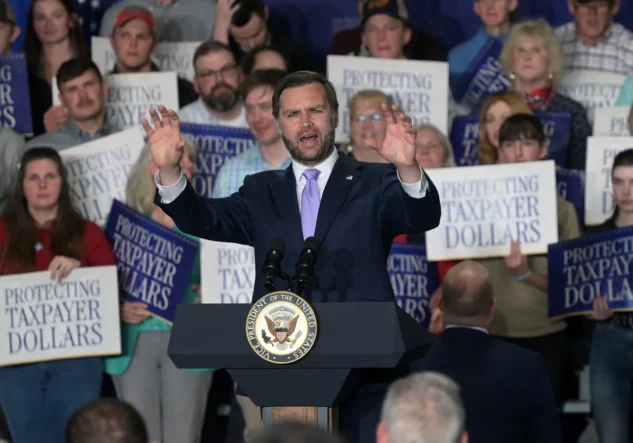
The Trump administration continues to weaponize Medicaid to punish Blue States under the phony cover of hunting for “waste, fraud, and abuse.” Trump named J.D. Vance ‘fraud czar’ – and the veep has wasted no time withholding billions of dollars in Medicaid funds from Democratic-run states.
Last week, Vance announced he’s holding back $1.3 billion in Medicaid reimbursements to California over allegations of “fraud.” There obviously is no love lost between the Trump administration and Governor Gavin Newsom’s state.
Earlier this year, Vance teamed up with Medicaid chief Mehemet Oz and froze $280 million in payments to Minnesota, after a beef with Governor Tim Walz in the wake of ICE abuses in Minneapolis.
“This is political retribution, plain and simple. Medicaid is the biggest hammer that the Trump administration can use to hurt states they don’t like,” says our senior health policy expert, Anne Montgomery. “We are seeing Medicaid get treated less like a public health program – and more like a lever of partisan punishment.”
While some 6% of Medicaid payments to health care providers and suppliers have been deemed “improper,” most of those are genuine mistakes that can be tracked and corrected. Actual malfeasance – “fraud” and “abuse”– is very rare.
“Waste, fraud, and abuse is a red herring for cutting services and benefits.” – Anne Montgomery, NCPSSM Senior Health Policy Expert
If anything, the Trump administration ITSELF is guilty of “abuse” by withholding funds that are supposed to go toward health care for lower income people – and for seniors needing long-term care. (Medicaid covers some 60% of long term care services and supports in the U.S.)

Medicaid covers more than 60% of long term care services and supports (iStockphoto)
Of course, this also is an ideological battle. Trump and his Republican co-dependents disdain the Medicaid program (and, by extension, the people who depend on it). Any federal program that does not service the wealthy and major corporate interests — or enrich the Trump family and their cronies — is unworthy in Trump’s eyes. The Trump/GOP “Big, Ugly Bill” notoriously cut more than $1 trillion from Medicaid and nutrition assistance for lower income people to help pay for a huge tax cut mainly for the rich.
Cutting Medicaid (and undoing LBJ’S Great Society in general) has been a long-held dream of the political right. It wasn’t that long ago that former Republican House Speaker and 2012 VP candidate Paul Ryan mused, “We’ve been dreaming of slashing Medicaid since my (college) kegger days.” Just last month, Trump actually called for the end of federal health coverage for seniors and low income people:::
“It’s not possible for us to take care of Medicaid (and) Medicare… You can’t do it on a federal level. We have to take care of one thing: military protection.” – Donald Trump, 4/1/26

In a system as large as Medicaid, improper payments are inevitable, and many of them stem from administrative mistakes, paperwork problems, or other errors, not systemic fraud. That is why oversight bodies like the Government Accountability Office (GAO) and inspectors general exist, and are able to make recommendations that push these programs to be more effective and efficient. Reporting from the Kaiser Family Foundation (KFF) outlines how GAO actually identifies “improper payments.” Spoiler alert: it’s completely at odds with cutting services.
The Trump administration has not provided California a clear corrective process here for alleged “waste, fraud, and abuse.” Instead, it has been hit with a massive financial threat first, then told to accept the administration’s accusations as sufficient explanation. That is not what good governance looks like.

The bogus Trump/Vance campaign against Medicaid ‘fraud’ hurts real people who depend on the program for health care
Unfortunately, the Trump/Vance retribution road show rolls on. Last week, Vance traveled to Maine, where he used his role as “fraud czar” for nakedly partisan purposes — in a state with crucial House and Senate races that will help shape the balance of power in Washington.
“Let’s kick (Democratic Governor and one-time Senate candidate) Janet Mills to the curb and send former GOP Governor Paul LePage (to the U.S. House) to fight the fraudsters and protect all of you,” Vance told a crowd in Bangor. Vance also expressed his support for incumbent GOP Senator Susan Collins. (Governor Mills subsequently dropped out of the Democratic Senate primary race.)
Which state comes next? Well, it’s fair to assume it won’t be a Republican one. As Anne Montgomery observes, “I don’t imagine they’re going to go after Red states like this.”
Trump’s real aim appears to be a mix of punishment and leverage. He’s escalating a personal and political war with Gavin Newsom, retaliating for redistricting in the Golden State that could help Democrats this election year, and forcing compliance with Trump’s warped priorities on the state’s health system.
Of course, the idea of Trump pursuing fraud is like the fox investigating the chickens. The president is the biggest fraudster in public office today (see Trump University, among other shady Trump schemes).
The hypocrisy is stunning. While the administration pursues ephemeral ‘fraud’ in Medicaid, Trump has pardoned more than 80 white collar criminals convicted of money laundering, bank fraud and wire fraud, among other charges. Meanwhile, the Trump family has pocketed nearly $2 billion – TWO BILLION DOLLARS – in “cash and gifts” since the 2024 election, while the Department of Justice and Republicans in congress turn a blind eye.
The hypocrisy would be funny if it weren’t doing so much damage. When it comes to the Trump administration and fraud, the call is coming from inside the house.