


(Registered Social Security Analysts image)
On Tuesday morning, The Social Security Administration (SSA) released its highly anticipated Trustees Report for 2026. The trustees project that the depletion date of the combined retirement and disability trust fund (OASDI) surplus will hold firm at 2034, at which time the program still could pay 83% of promised benefits. (Advocates and analysts expected the date to creep up one year to 2033.)
Interestingly enough, the trustees report blames Trump administration policies for the acceleration of trust fund insolvency – pointing to the Big, Ugly Bill which decreased tax revenues flowing into Social Security… in addition to Trump’s anti-immigration campaign. (Less immigration means fewer workers paying into the system.)
While the combined OASDI trust fund is projected to run out in 2034, most media outlets fixated solely on the retirement trust fund (OASI), which is predicted to become depleted in 2032 and able to pay only 78% of promised benefits. We believe the OASDI is more accurate, because, if needed, the retirement and disability trust funds could be combined to pay full benefits until 2034.
Nonetheless, we saw the usual alarmist media headlines:::
Social Security Insolvency Now projected for 2032, Putting Benefits at Risk of a 22% Cut!
We are rapidly running out of time: Sounding the Social Security Alarm After 22% cut Confirmed!
Social Security Retirement Trust Fund Will Run Dry in 2032!
Regardless of whether the depletion date is 2032 or 2034, our response to the trustees report is that Congress must strengthen the program’s finances sooner than later:::
“The Social Security Trustees report is a clarion call for Congress to strengthen the program NOW before the looming depletion of the trust fund becomes a full-blown crisis. If Congress fails to act, the combined retirement and disability trust fund reserves will run dry in 2034 and beneficiaries will suffer an automatic 17% cut – a scenario few want to see happen.” – Max Richtman, NCPSSM
Democrats (including Senator Bernie Sanders, Senator Sheldon Whitehouse, Senator Elizabeth Warren, Rep. Brendan Boyle, and Rep. John Larson) have introduced legislation to strengthen Social Security by adjusting the payroll wage cap so that the wealthy begin paying their fair share. Some of these proposals would subject certain investment income to Social Security payroll taxes, as well.
Unfortunately, Republicans seem intent on doing the opposite. Just ask House Speaker Mike Johnson, who said on Monday that “entitlements” like Social Security are a “problem” and that the GOP has plans to fix them next year.

We know what that means: raising the retirement age, means testing, lowering COLAs, and other benefit cuts – if not outright privatization of the program. That is the GOP playbook on Social Security, coupled with rhetoric that insists Social Security is “going bankrupt” or “going broke.”
In reality, nothing in the report supports the claim that Social Security is “bankrupt” or “going broke.” As long as Americans are working and paying into the system, Social Security will continue to pay benefits. “For the program itself to go ‘broke,’ there would have to be 100% unemployment — a highly unlikely scenario,” said Richtman in a press release.
What often goes unmentioned in these conversations is the role of growing income inequality Social Security’s financing gap. While critics frequently point to demographic changes like declining birth rates, that is only part of the story. As former Social Security Chief Actuary Steve Goss has explained in congressional testimony, a growing share of national income is concentrated among high earners — and much of that income is not subject to Social Security payroll taxes.
In other words, the system is not simply strained by demographics; wealth inequality is a significant aggravating factor.
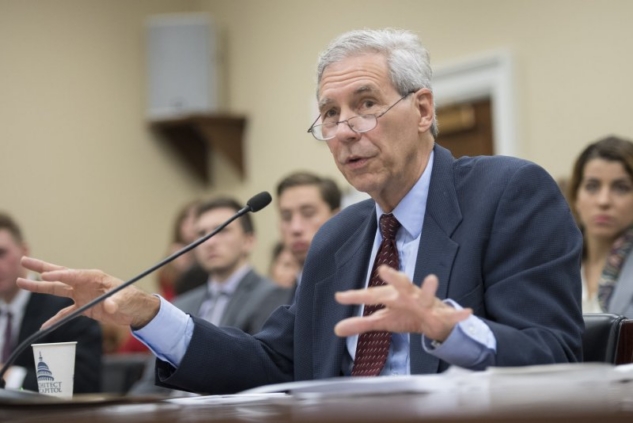
Fmr. Social Security Chief Actuary Steven Goss testified before Congress in 2023 that increasing wealth inequality has contributed to the program’s financing shortfall
Whether Social Security will be improved or cut depends on who is elected to Congress in 2026. That’s why we have launched a public education campaign entitled, “Social Security is on the Ballot,” to help voters identify candidates who will strengthen the program in an equitable way that protects current and future beneficiaries from cuts.
“The stakes for current and future seniors couldn’t be higher,” says Richtman. It all depends on which course Congress takes, and that depends on your vote.”
*******************************
Read our CEO’s response to the Trustees Report HERE.